Ant Hill in Your Yard: What the Mound Reveals About the Colony Below

Published: November 20, 2026
Introduction
You walk across the lawn and notice a fresh pile of loose soil. Yesterday, the ground looked smooth. Today, there is a small mound with ants moving around it.
It is natural to wonder where the mound came from, how many ants live beneath it, and whether it means something is wrong with your yard. The short answer is that an ant mound is usually evidence of excavation. As workers build and maintain an underground nest, they bring soil to the surface.
But there is more to the story. Mounds vary according to the ants involved, the soil they work in, and the weather. Some are easy to overlook, while others become a concern because of where they are located or because the ants can sting.
What Is an Ant Hill?
An ant hill is a visible accumulation of soil, sand, or other material associated with an underground ant nest. It often forms as worker ants excavate tunnels and chambers and carry the displaced material aboveground.
The mound is not the entire nest. It is the part you happen to see. Below the surface, a colony may occupy a network of passages and protected spaces where ants shelter, tend their young, and carry out other colony activities.
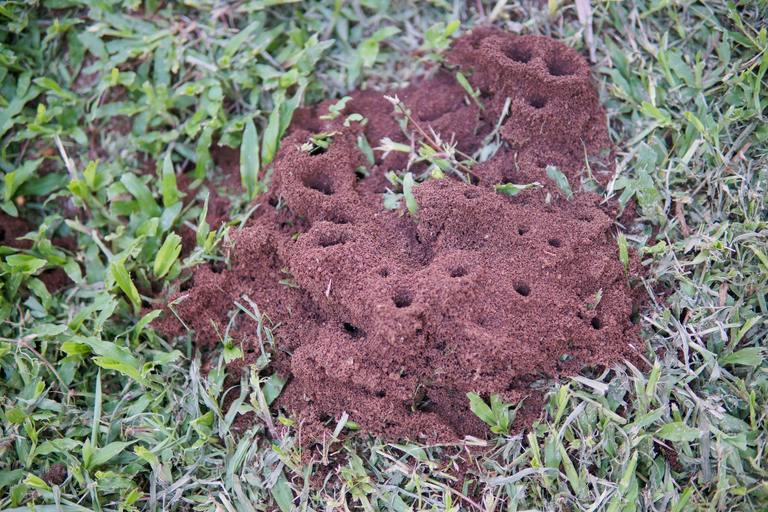
Some mounds have a clear opening surrounded by loose grains. Others look like irregular piles of soil with no obvious entrance. In lawns, grass may partly conceal the mound. Along sidewalks and patios, excavated material may collect in narrow cracks or at the edge of a paver.
Not all ants make a conspicuous mound. A colony can nest beneath a stone, board, patch of mulch, or section of pavement without producing a large pile in the open.

What Does an Ant Mound Look Like?
There is no single appearance that fits every mound. The shape and size can vary with the species, the surrounding soil, recent rain, and how long ants have been excavating.
You might notice:
- A small ring or cone of fine soil around an opening.
- Loose sand between patio pavers or along a sidewalk joint.
- A low, uneven pile in a lawn or garden bed.
- A raised mound without an obvious opening in its center.
- Several small deposits near the same landscaped area.
These features are useful observations, but they are not a reliable species identification on their own. A large mound does not automatically mean fire ants, and a small soil pile does not prove that the colony beneath it is small.
Take note of the mound’s location and appearance from a safe distance. If ants are visible, observe their movement without standing over the nest or putting your hands close to it.
What Is Under an Ant Hill?
Below the mound, ants excavate passages and chambers in the soil. The arrangement varies by species and nesting conditions, so a diagram of one ant nest should not be treated as a map of every nest.
An underground colony may include:
- Workers, which gather food, maintain the nest, and care for developing ants.
- One or more queens, depending on the species and colony.
- Eggs, larvae, and pupae, the developing stages that workers tend inside the nest.
- Tunnels and chambers, which connect different parts of the nesting area.
Only some of the workers are out searching for food at a given time. That means the number of ants visible on the surface is not a dependable count of the colony below.
Ants may also shift activity within the nest as conditions change. When soil temperature or moisture changes, workers can move developing ants to a more suitable part of the nest. What is visible at the surface is therefore only a snapshot of a much larger, changing system.
How Do Ants Build a Mound?
Worker ants loosen and carry particles of soil as they create or maintain spaces underground. Over time, the material deposited outside can form a mound.
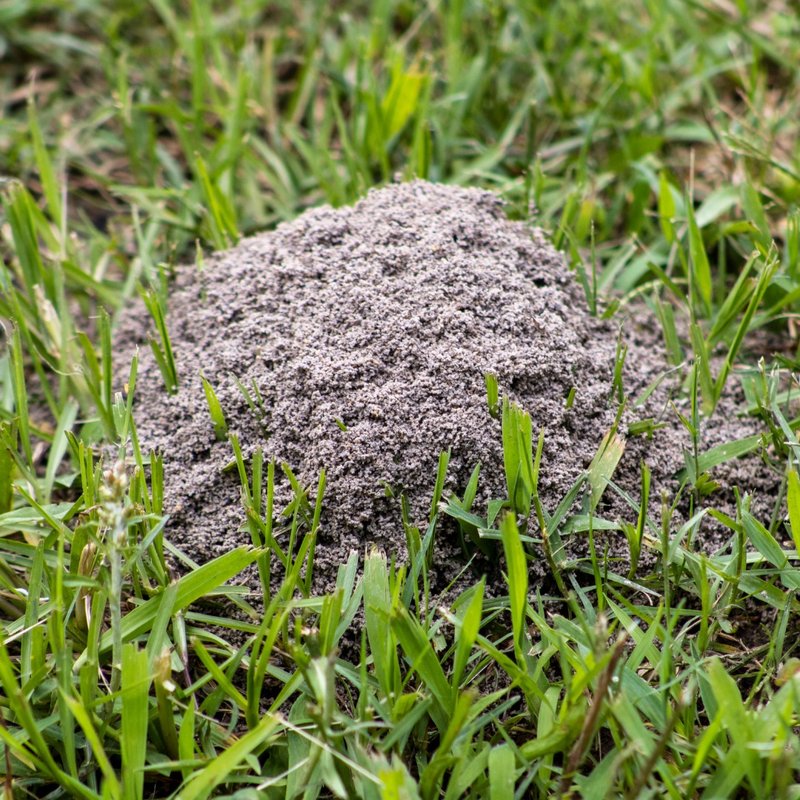
Soil makes a difference in what you see. In a sandy yard, excavated grains may form a loose, light-colored pile. In heavier soil, the material may clump or blend more closely with the surrounding ground. Grass, leaves, mulch, and foot traffic can also alter or conceal the mound.
A fresh-looking mound does not necessarily mean a new colony has just arrived. It may reflect renewed excavation or maintenance by ants that were already there. Likewise, a weathered mound does not establish that the nest is abandoned.
Why Did an Ant Hill Appear After Rain?
Rain can make a mound more noticeable by changing the soil and prompting ants to repair or adjust their nesting area. A colony may also move if its nesting site becomes too wet.
When a mound appears after a storm, several explanations are possible:
- Ants brought wet soil to the surface while maintaining tunnels.
- Rain flattened surrounding vegetation and exposed an existing mound.
- Soil washed into a more noticeable pile.
- Ants moved or established a nest in a different location.
The mound alone cannot tell you which explanation is correct. A useful next step is simply to observe its location and whether activity continues over time.
After heavy rain, take a careful look at lawns, paths, and play areas before children and pets return to them. Some stinging ants can be difficult to spot in grass, and floodwater can move ants away from their usual nesting sites. Avoid touching floating clusters of ants or newly visible mounds.

Which Ants Build Mounds?
Many kinds of ants nest in soil, and several may be found around the same property. Recognizing broad patterns can help you describe what you are seeing, but identification should not depend on mound shape or ant color alone.
Fire Ants
Fire ants are among the most important mound-building ants for homeowners to recognize because they can sting repeatedly when disturbed.
Their mounds may occur in lawns, open ground, landscaped areas, and near sidewalks or other structures. A fire ant mound often lacks an obvious central opening, although the absence of an opening does not confirm that fire ants are present. Mounds also vary in size and can be partly hidden by grass.
If you suspect fire ants, do not poke or step on the mound to test it. Keep people and pets away, photograph it from a safe distance, and consider a professional identification. All U Need Pest Control’s fire ant resource explains more about their activity around homes.
Bigheaded Ants
Bigheaded ants can nest in disturbed soil, beneath patios, and under objects resting on the ground. Soil deposits near pavers or lawn edges may accompany their activity, but other ants can leave similar evidence.
Workers in a bigheaded ant colony differ in appearance. Some have disproportionately large heads, while other workers are smaller and may be the ants a homeowner sees most often. Because the more distinctive workers are not necessarily visible, a quick glance at a trail may not settle the identification.
The bigheaded ant guide provides more context on where these ants may nest and forage.
Other Soil-Nesting Ants
Many other ants use soil for nesting. Some create small crater-like deposits, while others nest under stones, wood, or pavement. Field ants, for example, can build noticeable mounds and may be confused with fire ants in some areas.
Local species, soil, and climate all matter. An experienced pest professional or local extension specialist can often make a more useful identification when given clear photographs, a location, and a description of the activity.
Can You Identify Ants by Their Mound Alone?
Usually, no. The mound is a starting clue, not a definitive identification.
Two different species may leave similar soil piles, and the same type of ant may build a nest that looks different in sandy soil than it does in heavier soil. Rain, mowing, landscaping, and the nest’s location can change its appearance further.
For a more useful assessment, consider several observations together:
- Location: Is the mound in open turf, beneath a paver, beside a foundation, or in a garden bed?
- Soil pattern: Is the material arranged around an opening, spread loosely, or piled unevenly?
- Ant appearance: Can you safely photograph workers away from the mound?
- Activity: Are ants traveling along a path, entering a crack, or appearing in more than one area?
- Household impact: Is the nest near a place where people or pets regularly walk, sit, or play?
Do not deliberately disturb the nest to observe a defensive response. That can result in stings and is not necessary for a homeowner’s initial assessment.
The company’s broader ant identification guide can help you understand why different species may require different approaches.
Are Ant Mounds Bad for Your Lawn?
Not necessarily. A mound is evidence of ant activity, but it does not automatically mean the grass is diseased or that the yard has a serious pest problem.
Ants are part of the outdoor environment. Their activities can move soil, and many ants feed on other insects or organic material. University extension guidance notes that some lawn ant nests can be tolerated when they are not creating a meaningful problem.
That said, a mound can be inconvenient. Soil may accumulate on a walkway, cover a patch of turf, or make a frequently used area uncomfortable. Some species can also create more substantial deposits around landscaping or paved surfaces.
The most important question is not simply whether a mound exists. Ask whether the ants are causing a problem in that location. A small, non-stinging colony in an unused corner of the yard is a different situation from a suspected fire ant mound beside a child’s play area.
Does an Ant Hill Mean Ants Will Enter the House?
An outdoor mound does not guarantee an indoor infestation. Many ants live outside and forage there without establishing a nest in the home.
However, some species travel between outdoor nesting areas and buildings in search of food, water, or shelter. An exterior trail leading toward a foundation, door, or utility opening is worth noting, especially if ants are also appearing indoors.
If you find both a mound and ants in the kitchen, do not assume they are connected. The indoor ants may be a different species or may be coming from another nesting area. Photographs and notes about where the trail begins and ends can help an inspector sort out the relationship.
Keep ordinary attractants in check by cleaning spills, storing food securely, addressing leaks, and maintaining suitable seals around doors and utility openings. These steps support a less inviting indoor environment, even though they will not eliminate every outdoor ant nest.
Why Are There Several Mounds in One Yard?
Several mounds can mean several different things. They may be associated with separate colonies, multiple nesting sites, or different openings used by ants in the area. The answer depends on the species and cannot be determined simply by counting piles of soil.
A yard also may contain more than one kind of ant. A small crater near a patio and a larger mound in open grass should not automatically be treated as the same problem.
Rather than assuming the mounds are connected, make a simple record:
- Mark their approximate locations on a rough sketch of the yard.
- Note which areas are close to doors, play equipment, pet spaces, or regular walking routes.
- Photograph the mounds from a safe distance.
- Record whether visible activity changes after rain or over the following days.
- Note any ant trails entering the home.
This information helps a professional evaluate the pattern without requiring you to disturb the nests.
Do Ant Mounds Disappear in Cooler Weather?
A mound may become less visible or appear quieter during cooler weather, but that does not necessarily mean the colony has died. Ant activity can change as temperatures and soil conditions change, and ants may spend more time below the surface.
Weather patterns differ across the regions where All U Need Pest Control serves homeowners. Mild winter periods may allow some outdoor ant activity to continue, while colder conditions can make it much less noticeable.
Look at the pattern over time rather than drawing a conclusion from one quiet afternoon. Even in a season when ants are less visible, keep an eye on frequently used outdoor areas and avoid disturbing an unfamiliar mound.
What Should You Do When You Find a Mound?
Start with observation and safety. You do not need to disturb every mound or assume that every colony requires treatment.
Keep your distance. Do not kick, dig into, or stand on the mound. If the ants can sting, disturbance may provoke a rapid defensive response.
Consider the location. A mound in a remote part of the yard may be easy to leave alone. One near a doorway, playground, garden bench, or pet run deserves closer attention because accidental contact is more likely.
Look for a pattern. Note other soil deposits, trails, and any indoor activity. Take photos when you can do so safely.
Ask for identification when needed. If you suspect fire ants, cannot identify the ants, or are seeing repeated activity in areas your household uses, an inspection can help determine what is present and what response makes sense.
Flattening the mound does not reliably eliminate an underground colony, and it can expose you to stings. Avoid pouring household chemicals or fuel into nests. These substances can create hazards for people, pets, plants, soil, and water.
What If Someone Is Stung Near a Mound?
Move away from the area promptly and brush ants off the skin. Check clothing and footwear for additional ants before returning to a safe place.
For a mild reaction, wash the area and consult a healthcare professional about appropriate care. Do not scratch or break any blisters that develop.
Call 911 immediately if the person has signs of a severe allergic reaction, such as trouble breathing, significant swelling, faintness, or other severe symptoms. Use prescribed epinephrine if available and follow the person’s emergency plan. More information about fire ant stings and urgent symptoms is available from public health guidance.
If a pet has multiple stings or develops swelling, breathing trouble, or other concerning symptoms, contact a veterinarian promptly.
When Is a Professional Inspection Helpful?
A professional inspection is useful when the identity of the ants is uncertain and the answer affects how safely you can use the yard. It is particularly worthwhile when:
- A suspected stinging colony is near children, pets, or a commonly used path.
- Multiple mounds keep appearing in important outdoor areas.
- Ants are entering the house and you cannot determine where they originate.
- Soil is repeatedly accumulating around pavement or landscaping.
- Ant activity is close to electrical equipment or a utility enclosure.
Do not open electrical equipment to investigate ants. An inspection of those areas may need to be coordinated with an electrician.
A specialist can consider the ants, nesting signs, surrounding conditions, and your household’s concerns together. The goal is to understand the situation before deciding whether ant control services are needed and what approach fits the property.

A Small Mound With a Bigger Story
An ant hill is a visible sign of work happening underground. Its shape, location, and timing can tell you where to look more closely, but they cannot reveal the species or the size of the colony with certainty.
Most importantly, a mound is not automatically an emergency or a reason to treat the entire yard. Observe from a safe distance, pay attention to where people and pets spend time, and seek identification when the ants may sting or their activity is affecting your home. A thoughtful inspection gives you a clearer picture of the colony and a better basis for deciding what, if anything, needs to happen next.