Bed Bug Poop: What It Looks Like and What the Spots Mean

Published: November 16, 2026
Introduction
Small black marks on a mattress seam can turn an ordinary sheet change into a stressful investigation. Are they ink, mold, flea dirt, old blood, or evidence of bed bugs? Color alone cannot answer that question. The location, texture, pattern, and other evidence nearby matter just as much
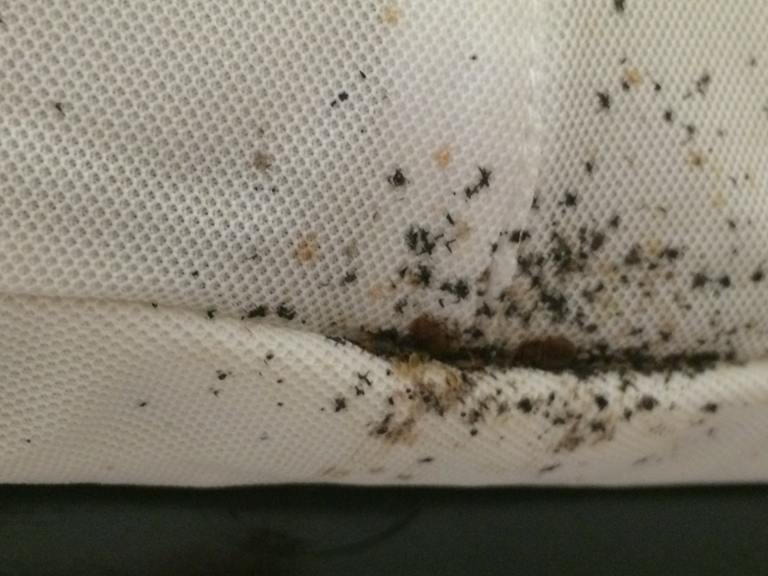
Bed bug poop is digested blood released as liquid waste. It usually dries into dark brown, black, or rusty spots rather than loose pellets. On absorbent fabric, it may soak into the fibers and resemble a dot made by a fine-tip marker. On a hard, sealed surface, it may dry as a raised or slightly smeared spot.
Finding one suspicious mark does not confirm an infestation. A cluster of characteristic stains near a sleeping or resting area, especially alongside shed skins, eggs, or a live insect, is much more meaningful. This guide explains how to read that evidence, inspect the right places, avoid common mistakes, and decide when a professional bed bug inspection and control plan makes sense.
What Does Bed Bug Poop Look Like?
Fresh bed bug waste is liquid. After drying, it generally appears dark brown to black because it contains digested blood. The marks are often very small, but size varies depending on the bug, the amount released, and the surface beneath it.
Common characteristics include:
- Dark brown, black, or rusty coloring
- Tiny round dots, short streaks, or irregular smears
- Marks concentrated along seams, joints, folds, and cracks
- Stains that soak into fabric instead of sitting on top like grit
- Multiple spots around a protected hiding place
Dark excrement spots may bleed into fabric like marker ink. That comparison is useful, but it is not a stand-alone home test. Wetting or scrubbing every unknown mark can damage evidence, spread a stain, and create false confidence.
Is bed bug waste hard or liquid?
It begins as liquid and then dries. This is an important distinction because cockroach droppings, dry debris, and flea dirt may sit loosely on a surface. Dried bed bug spotting is commonly absorbed into porous material or adhered to a hard surface, so it may not brush away easily.
You may also find pale shed skins, whitish eggs, or live insects in the same tight area. These different signs should not be lumped together as “debris.” Each one tells an inspector something different about the pest’s identity and life cycle.
Does it always look black?
No. A fresh mark can look dark red-brown, while an older dried mark may look nearly black. Fabric color, cleaning products, moisture, and lighting can change its appearance. Rust-colored stains can also come from a recently fed bug being crushed, which is different from fecal spotting.
That is why a photo of one dot rarely provides certainty. The best evidence combines appearance with location and nearby signs.

Where Are the Dark Spots Usually Found?
Bed bugs tend to stay near places where people sleep or remain still for long periods. They hide in narrow, protected spaces between meals, so bed bug poop often accumulates close to those harborages.
Start with the bed and work outward in an organized circle. Check:
- Mattress piping, seams, tufts, labels, and handles
- The underside and internal edges of the box spring
- Headboard joints, mounting points, cracks, and screw holes
- Bed-frame joints, slats, and hardware
- Nightstand joints and the undersides of nearby drawers
- Upholstered chair and sofa seams, especially where someone naps
- Baseboard gaps and carpet edges closest to the bed
Fecal spots often appear on sheets, pillowcases, mattresses, or nearby hiding areas. In a more established problem, evidence may extend behind wall hangings, along curtain folds, inside furniture joints, or near wall plates. Do not remove electrical covers unless you can do so safely and know how to avoid electrical hazards.
Why do the spots collect along seams and cracks?
A bed bug’s flat body allows it to shelter in very thin gaps. Several bugs may gather in the same protected area, creating repeated spots as they return after feeding. A tight cluster along a mattress label or wood joint is therefore more informative than a random dark speck in the middle of a room.
The distribution can also help estimate how far the activity has spread. Evidence limited to one headboard joint may point to a concentrated harborage. Similar spotting on a recliner across the room or in an adjoining bedroom suggests the inspection should expand.

Can the Spots Confirm an Infestation?
Bed bug poop is meaningful evidence, but an unidentified stain alone is not absolute proof. The strongest confirmation is a correctly identified live or dead bed bug. Eggs, shed skins, characteristic spotting, and the placement of those signs can support the diagnosis.
Skin reactions are less reliable. People respond differently to bites, and marks can resemble reactions caused by mosquitoes, fleas, chiggers, contact irritation, or other conditions. If itchy spots are the main concern, our comparison of chiggers and bed bugs explains why exposure history and physical pest evidence matter more than bite pattern alone.
Look for combinations such as:
- Dark spotting plus a live, flat, reddish-brown insect
- Staining plus translucent shed skins in a seam
- Multiple dark marks beside tiny pale eggs cemented in a crack
- Recurring evidence around more than one sleeping or resting location
- New spots appearing after clean bedding was installed
Do not assume that cleanliness rules bed bugs out. They are attracted to accessible hosts, not dirt. Clutter can make detection and treatment harder because it adds hiding places, but a tidy home can still develop an infestation.
Bed Bug Poop vs. Common Lookalikes
Many household materials resemble bed bug evidence at first glance. Before moving furniture or applying a product, compare the suspected marks with the most likely alternatives.
Flea dirt
Flea dirt is also digested blood, but it usually appears as loose, pepper-like grains. It is often found in pet bedding, animal resting areas, carpet, or a pet’s coat rather than fixed in mattress seams and furniture joints. If the material can be collected as separate specks, the signs of flea activity and flea control process offer a more relevant next step.
Cockroach droppings
Small cockroach droppings may resemble pepper or coffee grounds. Larger species can leave ridged, cylindrical droppings. Roach evidence is more often concentrated around kitchens, bathrooms, utility spaces, appliances, cabinets, and moisture sources. It may be accompanied by egg cases, shed skins, or a musty odor.
Mold and mildew
Mold can form irregular patches and may spread across a damp surface rather than cluster in protected insect hiding places. It may look fuzzy, diffuse, or embedded across a broader moisture-damaged area. A stain near condensation or a leak calls for a moisture assessment as well as pest identification.
Ink, wood finish, and fabric dye
Manufacturing marks, dark wood stain, pen ink, and transferred fabric dye can all create permanent spots. Compare both sides of removable fabric, look for a repeated printed pattern, and consider whether the mark was present when the item was new.
Crushed insect blood
A reddish smear on a sheet may result from crushing a recently fed bed bug. It can support an inspection, but it is not the same as the dark fecal spotting produced after digestion. Other minor skin bleeding can also stain bedding, so one red mark is not diagnostic.
How Should You Inspect Suspected Stains Safely?
A careful inspection of suspected bed bug poop should preserve evidence and limit unnecessary disturbance. You do not need to dismantle the entire room immediately.
Gather a bright flashlight, a magnifying glass, clear tape, small sealable bags, disposable gloves, and a phone or camera. Then follow this sequence:
- Photograph the marks before cleaning or moving the item.
- Note the room, exact surface, date, and distance from the nearest bed or chair.
- Inspect the nearest seam, joint, or crack for insects, eggs, and shed skins.
- Capture a suspected insect on clear tape or in a sealed container without crushing it.
- Check the bed first, then expand to nearby furniture and perimeter gaps.
- Stop if moving an item could scatter bugs or transfer them into another room.
Avoid carrying bedding, cushions, or furniture through the home while investigating. Do not place a suspected item in another bedroom. If linens must be moved, contain them first so insects cannot drop off along the route.
For travelers, the inspection starts before unpacking. Our hotel and short-term rental bed bug checklist covers luggage placement, bed checks, and steps to take if evidence appears during a stay.
Should you clean the spots immediately?
Photograph and document them first. If professional identification may be needed, leave a representative area undisturbed when practical. Cleaning every mark before an inspection can remove clues about where the bugs are harboring and how broad the activity may be.
Once evidence has been recorded and a plan is in place, washable items can be handled according to professional instructions and fabric-care labels. Avoid improvised heat treatments. Room-level heat control requires specialized equipment and temperature monitoring to reach hidden insects without creating fire or property hazards.

What Should You Do After Finding Suspicious Spots?
After finding possible bed bug poop, the first goal is confirmation, not immediate spraying. Bed bugs hide deeply, their eggs can be difficult to reach, and moving treated or untreated belongings can spread the problem.
Take these measured steps:
- Keep sleeping in the same room unless a pest professional advises otherwise. Moving to another room can encourage bugs to follow and broaden the infestation.
- Do not discard the mattress or furniture before inspection. Disposal can be costly and may spread bugs through hallways or shared areas.
- Do not use total-release foggers or apply pesticides to bedding, skin, or unlabeled surfaces.
- Reduce unnecessary movement of clothing, linens, bags, and electronics.
- Tell the inspector about recent travel, overnight guests, used furniture, and activity in adjoining units.
- Preserve any insect specimen and clear photographs.
Proper identification matters because bed bugs have close relatives and common lookalikes. Research guidance emphasizes that black or brown fecal spotting is digested blood and should be evaluated with the other signs present. A professional can inspect the full sleeping area, confirm the pest, estimate the extent, and explain preparation requirements before treatment begins.
How Do Professionals Evaluate Fecal Spotting?
Experienced inspectors do not diagnose a room from one stain. They read the evidence as a pattern. They consider where the marks appear, whether they are absorbed or loose, which life stages are present, and how activity is distributed across beds, seating, and adjoining spaces.
An inspection may include:
- Examining mattress and box-spring construction in detail
- Checking headboard, frame, and furniture joints
- Identifying collected specimens
- Looking for eggs, shed skins, and live bugs
- Assessing nearby rooms or shared walls when appropriate
- Recommending monitors to clarify low-level activity
- Creating a preparation, treatment, and follow-up plan
Treatment is rarely a matter of spraying the visible marks. Those spots show where activity has occurred, but the insects may be deeper inside furniture or structural gaps. All U Need’s customized pest control process begins with inspection so the response can match the pest and property rather than rely on guesswork.
When is professional help especially important?
Arrange an inspection promptly when you find a live specimen, repeated spotting, evidence in multiple rooms, or activity in an apartment, condo, dormitory, or other shared building. Professional help is also valuable when a resident has mobility limitations, the suspected hiding place is difficult to access safely, or previous do-it-yourself efforts may have dispersed the insects.
If you are still sorting through general service questions, All U Need’s homeowner pest control FAQs explain what to expect from an initial visit and ongoing care.
How Can You Watch for New Evidence?
After an inspection or treatment, monitoring helps show whether activity continues. Follow the pest professional’s instructions and avoid changing the setup without asking, since moving beds or monitors can make results harder to interpret.
Useful monitoring habits include:
- Keeping light-colored encasements intact and checking them regularly
- Inspecting known seams and joints on a set schedule
- Recording the date and location of any new spot or specimen
- Keeping beds slightly separated from walls when directed
- Using approved interceptor devices under furniture legs when appropriate
- Reporting new evidence rather than repeatedly treating it yourself
Old stains do not prove that live bugs remain. New marks, captured insects, fresh eggs, or additional shed skins are more useful indicators. A dated photo log can help distinguish an unchanged old stain from continuing activity.
A Small Spot Deserves a Careful Answer
Bed bug poop is usually a dark, absorbed spot or smear of digested blood found near the places bed bugs hide. Its appearance can raise suspicion, but context provides the real value. Location, clustering, nearby shed skins, eggs, and a correctly identified insect make the evidence much stronger.
Respond calmly. Photograph the area, inspect methodically, contain movable items, avoid unplanned pesticide use, and preserve a specimen if possible. Early, accurate identification protects the rest of the home from unnecessary disruption and gives any treatment plan a clearer starting point.