Western Pine Boring Beetle: What Florida Homeowners Should Know

Published: November 11, 2026
Introduction
Small holes in a pine tree, sticky resin on the trunk, and needles turning brown can send homeowners searching for answers. One name that might appear is the western pine boring beetle, more commonly known as the western pine beetle. While this insect can cause serious damage to certain pine trees, location is an important part of identifying the problem.
According to the U.S. Forest Service, the western pine beetle is native to western North America and primarily attacks ponderosa and Coulter pines. Florida falls outside its documented native range. Understanding this beetle is useful, but recognizing how it differs from local pests is essential before making treatment decisions.

What Is the Western Pine Boring Beetle?
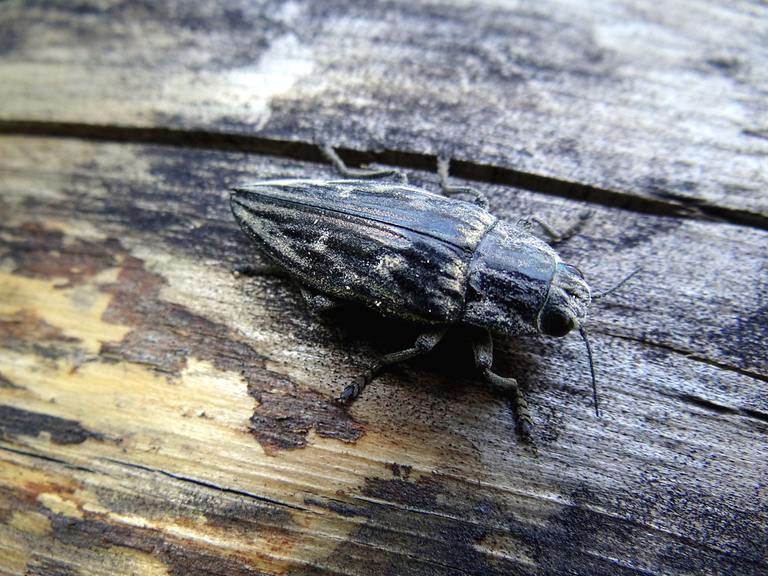
The western pine beetle, Dendroctonus brevicomis, is a small, dark brown bark beetle measuring only a few millimeters long. Despite its size, it can cause extensive damage when enough beetles attack a suitable host tree. The term “boring beetle” describes how the insect enters through the bark, but “bark beetle” more accurately describes where much of its activity occurs.
Unlike insects that develop in finished lumber or furniture, western pine beetles live and reproduce beneath and within the bark of their host trees. They are strongly associated with ponderosa and Coulter pines, particularly larger trees. Drought, overcrowding, and other stresses can make these trees more vulnerable, although large beetle populations can overwhelm apparently healthy hosts during an outbreak.
How Does the Western Pine Beetle Damage Trees?
An infestation begins when adult beetles enter the bark and establish galleries, or tunnels, where eggs are laid. After hatching, the larvae feed and develop beneath and within the bark before eventually becoming adults that can move to other trees. This activity damages the inner bark, including the phloem, which transports sugars throughout the tree. The beetles also introduce associated fungi that can interfere with water movement.
Pines defend themselves by producing resin that can push attacking beetles out, but drought stress and large numbers of attackers can overwhelm that response. Once extensive colonization occurs, the tree may be unable to recover. Several generations can develop within a year, depending on climate and location, making population growth an important factor in the beetle’s impact throughout its western range.
What Does Western Pine Beetle Damage Look Like?
Western pine beetle activity can produce small resin deposits called pitch tubes, reddish-brown boring dust, fading needles, and patches of bark disturbed by woodpeckers. Pitch tubes form around entry points as the tree releases resin, while boring dust may collect in bark crevices, spider webs, or around the trunk’s base. As damage progresses, needles can change from green to yellow and eventually reddish brown.
Beneath the bark, western pine beetles create winding galleries that cross and recross in a pattern often compared with spaghetti. These tunnels can help a specialist distinguish the species from other bark beetles. However, visible symptoms alone do not confirm an infestation. Brown needles can result from drought, root damage, disease, or other insects, and a Florida pine with pitch tubes should not automatically be diagnosed with western pine beetles.
Why Similar Symptoms Mean Something Different in Florida
Florida has its own native pine bark beetles, several of which leave evidence resembling western pine beetle damage. The Florida Forest Service identifies five important pine bark beetles in the state: three species of Ips engraver beetles, the black turpentine beetle, and the southern pine beetle. Ips beetles commonly colonize severely stressed, damaged, or dying trees. Black turpentine beetles often attack the lower trunk and large roots, particularly after injury or stress.
Southern pine beetle activity has historically been concentrated in northern and central Florida, while Ips and black turpentine beetles are more relevant comparisons farther south. For homeowners in Fort Myers, Naples, and other Southwest Florida communities, this distinction helps prevent an online search from becoming the wrong diagnosis. The western pine beetle provides a useful comparison, but a beetle causing similar damage on a Florida property is likely to be a different species.

Can Western Pine Beetles Damage Your Home?
The word “boring” can make any beetle sound like a threat to wood framing, but western pine beetles are not typical structural wood pests. Their association with living or recently declining host trees differs from the habits of insects that reproduce in finished wood. Bark beetles may occasionally emerge indoors from infested firewood, but that does not mean they are establishing an infestation in furniture or framing.
Repeated holes or fresh powder appearing in cabinets, flooring, trim, or beams require a separate investigation. Powderpost beetles and other wood-infesting insects can produce evidence that homeowners might group under the same broad “wood-boring beetle” label. A declining pine outside and unexplained wood damage inside should not be assumed to have the same cause. Identifying the insect and its source comes before choosing a treatment.
What Should Florida Homeowners Do About Suspected Beetle Damage?
Start by documenting the evidence rather than immediately applying a treatment. Photograph the entire tree, the needle discoloration, and close-up details of resin, dust, or holes. Note when symptoms appeared and whether the tree recently experienced storm damage, nearby construction, flooding, or changes in irrigation. A local UF/IFAS Extension office, Florida Forest Service forester, or qualified arborist can help evaluate suspected bark beetle activity and possible underlying tree-health problems.
An arborist is especially important when a declining tree could threaten a home, driveway, or occupied area. Avoid assuming that a general-purpose insecticide will reverse the damage. As explained in the University of California’s bark beetle management guidance, heavily infested trees generally cannot be rescued with insecticides. Preventive protection of an uninfested tree and treatment of an already colonized tree are very different situations.
Protecting Pine Trees Around Your Florida Home
Reducing bark beetle risk begins with protecting tree health rather than following a treatment plan intended for western pine beetles. Avoid damaging trunks with lawn equipment, disturbing roots during construction, or making major drainage changes without considering nearby trees. During extended dry periods, seek guidance on appropriate supplemental watering rather than assuming a lawn irrigation schedule meets a mature pine’s needs.
Watch for changes in nearby trees, especially after drought, storms, or construction activity. Using locally sourced firewood and avoiding the long-distance movement of untreated wood also helps reduce the spread of tree pests. These precautions cannot guarantee that a tree will avoid infestation, but they address conditions that can make pines more vulnerable.

Start With the Right Identification
The western pine boring beetle’s host trees and geographic range are central to its identification. For Florida homeowners, similar-looking symptoms are a reason to investigate, not proof that a western species is responsible. At All “U” Need Pest Control, we encourage homeowners to start with identification rather than assumptions. Contact our team about pest concerns in and around your home, and involve a qualified tree professional when a declining pine needs evaluation.