Do Fleas Fly? How Fleas Move, Spread, and Take Over a Home

Published: November 11, 2026
Introduction
A tiny dark bug disappears from the carpet before you can get a close look. It seemed to launch into the air, so the first question is natural: do fleas fly?
No. Fleas are wingless insects and cannot fly. What looks like flight is usually a fast, powerful jump. Adult fleas use enlarged hind legs to spring from floors, furniture, yards, or animal bedding onto a passing host. They also spread by riding on pets and wildlife. Once indoors, their eggs fall into protected areas, allowing a flea problem to develop well beyond the animal carrying the adults.
That short answer matters because movement is a useful identification clue. A jumping insect near a pet bed deserves a different response than a gnat flying near a window or a springtail hopping beside a damp sink. Correctly identifying how the pest moves helps homeowners inspect the right places and avoid treating the wrong problem.
Do Fleas Fly or Jump?
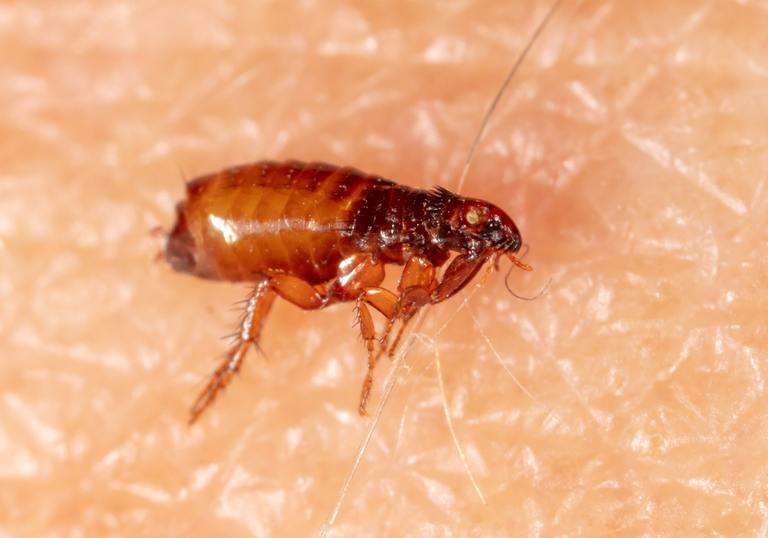
Adult fleas do not have wings. Their narrow bodies are flattened from side to side, which helps them move through fur, while their long rear legs are built for jumping. The University of Minnesota Extension describes adult fleas as wingless insects with large hind legs for jumping.
A jump can happen so quickly that the flea appears to vanish or fly. In reality, it pushes off a surface, travels through the air without controlling its path like a flying insect, and lands on a nearby animal, person, or object.
Fleas use three main ways to move:
- Jumping: Newly emerged adults jump toward a nearby host in response to movement, heat, breath, or vibration.
- Crawling: Adults crawl through fur and across surfaces. Larvae also crawl, but they stay hidden in protected areas and do not jump onto hosts.
- Hitchhiking: Adult fleas travel on cats, dogs, rodents, wildlife, and other warm-blooded animals. Pets often carry them from an infested yard or animal contact into the home.
The answer to do fleas fly is therefore simple, but the way fleas spread is not. A flea may jump only a short distance while the host carries it across a yard, through a doorway, and from room to room.
Why Flea Jumps Can Look Like Flight
Most homeowners notice a flea for only a fraction of a second. It is small, dark, and difficult to track against carpet fibers or pet fur. When homeowners ask do fleas fly, that split-second disappearance is often what created the confusion. When disturbed, the adult can leave the surface in one sudden motion. Your eye sees the starting point and perhaps the landing point, but not the full jump.
Fleas do not hover, circle a lamp, or travel steadily across a room. If a tiny pest remains airborne, changes direction in flight, or repeatedly gathers at a window, it is probably not a flea.

If Fleas Cannot Fly, How Do They Get Upstairs or Into Other Rooms?
Fleas do not need to fly across a house to spread through it. A pet can carry adults from the living room to a bedroom in minutes. Eggs laid on the animal are not firmly attached, so they can fall wherever that pet walks, rests, sleeps, or jumps onto furniture.
People may also move infested pet bedding, blankets, rugs, carriers, or upholstered items. Rodents and other animals can introduce fleas into attics, crawl spaces, garages, and wall-adjacent areas. After an animal leaves or is removed, developing fleas may remain behind and later seek another host.
The result can feel mysterious. One room may show obvious activity while another seems quiet, then new adults appear days later. This does not mean fleas flew through the house. It usually means adults traveled on a host or immature stages were already developing in several resting areas.
What Does the Flea Life Cycle Have to Do With Movement?
A flea infestation is not just a collection of jumping adults. Fleas develop through four stages: egg, larva, pupa, and adult. Only adults live and feed on the host. Most of the developing population is in the surrounding environment.
Eggs fall where the host spends time
After feeding, adult females lay eggs that can drop from the animal into carpets, rugs, furniture, floor gaps, and bedding. These pale eggs do not jump or fly. Their distribution often creates a map of the pet's daily routine. Our guide to finding and managing flea eggs explains why the places where animals sleep and relax deserve close attention.
Larvae crawl into protected spaces
Flea larvae are pale, wormlike, and legless. They avoid light and move deeper into carpet fibers, beneath furniture, along floor edges, and into small cracks. They do not bite people or jump onto pets. Their goal is to remain protected while feeding on organic material, including the dried blood in adult flea waste.
Pupae wait inside cocoons
Mature larvae form cocoons that blend with lint and debris. The protected pupal stage helps explain why a home can appear quiet and then suddenly show new adult activity. Warmth, carbon dioxide, pressure, and vibration can help trigger ready adults to emerge.
This is why walking through a room, moving furniture, returning from a trip, or vacuuming can be followed by visible jumping. Those actions did not bring flying fleas into the room. They may have signaled that a host was nearby.

Do Fleas Fly Onto People and Bite Them?
No, but adult fleas can jump onto people and feed. Bites often occur around the ankles and lower legs because those areas pass closest to the floor, carpet, or yard surface where adults emerge. Fleas may also reach other areas when people sit on infested furniture or handle infested materials.
A skin reaction alone cannot prove that fleas are responsible. Mosquitoes, bed bugs, mites, skin irritation, and other causes can produce marks that look similar. Look for supporting evidence such as a live flea, flea dirt, a pet that is scratching, or activity in a known pet-resting area. Our homeowner guide to recognizing flea bites and tracing the source covers those clues in more detail.
Seek medical advice for a severe reaction, signs of infection, fever, or symptoms that concern you. Fleas are more than an itching problem in some regions. The CDC notes that flea-borne typhus can spread through contact with infected fleas, which makes accurate identification and prompt control important.
What Tiny Jumping Bugs Are Mistaken for Fleas?
Several small pests can be confused with fleas, especially when the sighting lasts only a second. Location, body shape, and evidence around the insect usually provide better clues than color alone.
Springtails
Springtails are tiny moisture-associated organisms that use a forked appendage to launch themselves. They often gather near sinks, tubs, windows, damp walls, potted plants, patios, or wet mulch. They do not feed on blood and do not bite people or pets.
If the activity is concentrated beside moisture and there are no pet-related signs, springtails become more likely. Drying the area and correcting the moisture source are central to controlling them.
Flea beetles
Flea beetles are plant-feeding beetles named for their jumping behavior. They are usually found on garden plants, where adults may leave small feeding holes in leaves. They are not household fleas and do not infest pets.
Fungus gnats and small flies
Gnats have wings and remain airborne. They may hover around houseplants, windows, drains, or decaying organic material. A flying insect that can be followed through the air is not a flea.
Bed bugs
Bed bugs crawl. They cannot jump or fly. Their flat, broad bodies and habit of hiding around sleeping areas differ from the narrow, springing body of an adult flea. Because bites are not a dependable identification tool, inspect for insects, shed skins, spotting, or other physical evidence.
Ticks
Ticks crawl and wait for a host to pass. They neither jump nor fly. Adults have eight legs, while adult fleas have six. An attached or engorged tick looks very different from a fast-moving flea, but small unfed ticks can still cause confusion at a glance.
How Can You Confirm That the Jumping Bug Is a Flea?
Start with evidence, not a skin mark or a single blurred photo. A simple, controlled inspection can help narrow the possibilities.
- Use a flea comb on pets, especially around the neck, belly, groin, and base of the tail. Ask a veterinarian how to examine and protect each animal safely.
- Look for dark pepper-like material in fur or bedding. Flea dirt is digested blood, but ordinary soil and debris can look similar.
- Inspect pet bedding, rug edges, upholstery seams, baseboards, and the spaces beneath furniture with a flashlight.
- Wear light-colored socks while slowly walking through a suspected carpeted area, then check for small dark insects that have jumped onto the fabric.
- Capture a specimen with clear tape or in a small sealed container if possible. Avoid crushing it before identification.
- Record where and when activity occurs. A pattern centered on pet-resting places is more useful than one insect found near an open door.
Finding one adult matters, but it does not reveal how many eggs, larvae, or pupae may be present. The broader flea inspection and treatment process should account for pets, indoor resting sites, wildlife or rodent activity, and shaded outdoor areas.

What Should You Do After Finding Fleas?
Treat the situation as a connected pet-and-property problem. Removing visible adults from one animal while ignoring the home allows developing stages to keep emerging. Treating the carpet without protecting pets leaves an available host and transportation system.
1. Contact your veterinarian
Every pet in the household needs species-appropriate advice. Never assume a product suitable for a dog is safe for a cat, and do not combine pet products without veterinary direction. The veterinarian addresses fleas on the animal and any resulting skin or health concerns.
2. Vacuum the right areas repeatedly
Focus on pet-resting zones, carpets, rugs, upholstery, floor edges, and beneath furniture. Empty the vacuum outdoors into a sealed bag according to the machine manufacturer's instructions. Vacuuming removes some developing stages and debris while encouraging some ready adults to emerge, but it is rarely a complete treatment by itself.
Homeowners with concentrated carpet activity can follow a more detailed flea control plan for carpets and rugs.
3. Wash pet bedding and washable fabrics
Launder pet bedding, blankets, and other washable items using the hottest settings the material safely allows. Continue routine cleaning throughout the control period instead of relying on one deep-cleaning day.
4. Inspect the yard and animal sources
Outdoor fleas tend to develop in shaded, protected places where pets or wildlife rest, not uniformly across an open sunny lawn. Check under decks, beneath shrubs, along fence lines, around kennels, and in sheltered soil. Guidance on reducing fleas in the yard can help homeowners focus on likely hotspots.
If rodents or wildlife are nesting in or next to the structure, that source may need coordinated attention. Removing an animal without considering its parasites can leave hungry fleas behind.
5. Use a complete, label-directed treatment plan
The CDC recommends beginning home treatment at the same time as pet treatment and continuing sanitation and follow-up because resistant life stages can remain after the first effort. A licensed pest control professional can inspect the home, identify hotspots, choose products for the specific setting, explain preparation and reentry instructions, and plan follow-up around the life cycle.
Avoid assuming that more product means better control. Do not apply outdoor products indoors, use products on pets unless the label specifically allows it, or mix pesticides. Total-release foggers may miss protected cracks and carpet depths, and our review of why flea bombs often leave the life cycle intact explains that limitation.
Why Do Fleas Seem to Return After Treatment?
Adult fleas can emerge from protected cocoons after treatment, especially when people and pets resume moving through the room. Depending on the plan, this may be expected for a period while the remaining population develops and encounters the treatment.
Persistent activity can also point to a gap:
- One pet was not protected at the same time as the others.
- A favorite chair, rug, pet bed, or room was missed.
- Wildlife or rodents continue to bring fleas near the home.
- Outdoor resting sites remain active.
- Cleaning or follow-up stopped too soon.
- The insect was misidentified and is not a flea.
Track sightings by room and date rather than judging progress from one jump. A downward trend, fewer catches, less flea dirt, and improving pet comfort are more meaningful than expecting every stage to disappear overnight.
Can Fleas Spread Through a Home Without Pets?
Yes. A home without a dog or cat can still develop flea activity. Rodents, opossums, feral cats, raccoons, or other animals may introduce fleas around crawl spaces, attics, sheds, decks, or yards. Fleas can also remain in a previously occupied home after an infested pet leaves.
When no pet is present, focus the investigation on animal access and the first room showing activity. An attic edge, crawl-space opening, chimney, garage, or shaded area beneath a deck may provide the missing link. Simply treating the room where people are bitten may not resolve a concealed animal-associated source.
The Bottom Line: Fleas Jump, but the Infestation Spreads in Several Ways
So, do fleas fly? No. Adult fleas are wingless. Their powerful jumps, fast movement through fur, and ability to ride on animals make them seem far more mobile than their size suggests.
The most important lesson is that the jumping adult is only the visible part of the problem. Eggs fall into the environment, larvae crawl into protected places, pupae wait in cocoons, and adults use hosts to travel. Effective control therefore connects accurate identification, veterinary care, focused cleaning, source correction, property treatment, and follow-up.
If small jumping insects continue to appear, do not rely on the movement alone. Preserve a specimen, map where activity is happening, and have the evidence identified. A professional inspection can separate fleas from lookalikes and build a plan around the places the full life cycle is actually developing.