Antlion Sand Pits: How Doodlebugs Build Tiny Traps in Your Yard

Published: September 2, 2026
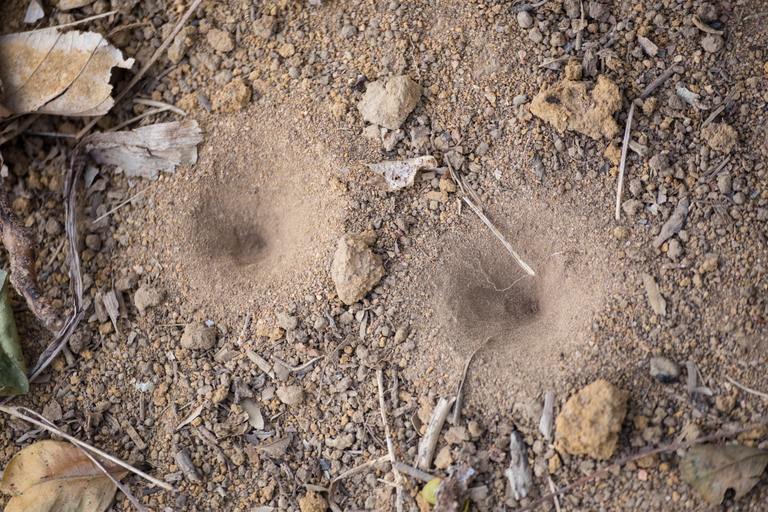
Introduction
Small funnel-shaped holes in dry soil can make a homeowner wonder what is digging around the foundation. The surprise is that the builder may be a beneficial insect larva that creates a miniature trap for ants and other small prey.
These insects are not ants, and the little craters are not nests like ant mounds. They are hunting pits. In most situations, they do not damage lawns, plants, foundations, or belongings. They also are not known for infesting homes. Finding them is usually an opportunity to observe one of the yard's most interesting natural predators, not a reason to reach for a pesticide.
Still, correct identification matters. A harmless pit can be confused with activity from ants, ground-nesting bees or wasps, and other arthropods. This guide explains what to look for, whether the insect poses a risk, and what to do when pits appear near patios, play areas, or the house.

What Is an Antlion?
An antlion is an insect in the family Myrmeleontidae and the order Neuroptera, the same broader insect order that includes lacewings. More than 100 species occur in North America north of Mexico. The insect undergoes complete metamorphosis, moving through egg, larva, pupa, and adult stages.
The larva is the stage most homeowners notice indirectly. It is sometimes called a doodlebug because it can leave winding trails as it moves backward through loose sand. Its broad, dirt-colored body stays concealed below the surface, while a pair of curved jaws waits near the bottom of a pit.
The adult looks entirely different. It has a slender abdomen and four long, finely veined wings, so it may be mistaken for a damselfly. One useful clue is the antennae: adult antlions have noticeable antennae that curve or become clubbed at the tips. They may show up near outdoor lights, especially on calm evenings.
This dramatic change in appearance explains why people may recognize the pits but never connect them with the delicate winged insect they see later.
How Does an Antlion Build a Sand Pit?
Many familiar species build traps in fine, loose soil. The larva moves backward in a circle while flipping grains away with its head. As the circles tighten, the loose material slides toward the middle and a steep-sided funnel takes shape. Some pits can reach about two inches across and deep, although size varies with the insect and soil.
The larva then buries itself at the bottom with its jaws close to the surface. When an ant or another small insect steps onto the unstable slope, the grains give way. The hunter may toss more sand toward the struggling prey, making the sides even harder to climb. It grips the prey, feeds, and eventually throws the remains outside the pit.
The trap works because the soil stays loose enough to slide. That is why pits commonly appear in places such as:
- Bare, sandy patches beneath roof eaves
- Dry soil beside foundations and porches
- Sheltered spots under overhangs or raised structures
- Unused corners of sandboxes
- Fine dust inside open sheds, carports, or garages
- Protected garden edges where rain does not compact the surface
Heavy rain, foot traffic, roots, mulch, and coarse gravel can interfere with pit construction. A cluster of funnels often means that one sheltered patch offers especially suitable soil. It does not mean the insects are living as a social colony. Each larva hunts for itself.
Not every species builds a pit. Some larvae hide under debris or beneath the soil surface and ambush prey without creating a funnel. For homeowners, however, the neat sandy trap is the easiest sign to recognize.

What Does This Insect's Life Cycle Look Like?
An adult female places eggs in suitable soil. After hatching, the larvae pass through several growth stages while preying on small insects. Depending on the species and conditions, larval development can take a long time, and some may remain in that stage through changing seasons.
When development is complete, the larva moves deeper and forms a round cocoon made with silk and coated in sand. The adult later emerges, allows its wings to harden, and flies away to mate. Adults may be drawn to porch lights, which is one reason a long-winged insect can suddenly appear near a door even though its immature stage stayed hidden in soil.
For a concise scientific overview, the documented egg-to-adult life cycle and identifying features show how different the larval and adult forms are. The broader field description of antlion habitat and feeding also explains why sheltered, sandy areas are so important to pit-building species.
Are Antlions Dangerous to People, Pets, or Property?
For ordinary household purposes, antlions are considered medically harmless and beneficial. They are predators of other small insects, not parasites of people or pets. They do not feed on wood, fabric, stored food, turf roots, or ornamental plants. Their pits are too small to cause structural or landscape damage.
The larva's curved jaws look intimidating under magnification, but they are designed to capture tiny prey. There is no practical reason to pick one up, and any unfamiliar insect should be handled cautiously, but the presence of these pits is not a bite or sting emergency.
Adult antlions also are not a household threat. A stray adult near a light may rest briefly and leave. It is not establishing a nest in the wall or reproducing in pantry goods. If winged insects repeatedly collect indoors and identification is uncertain, however, a careful home and lawn pest inspection can separate a harmless visitor from termites, flying ants, or another pest that does require attention.
Do antlions kill ants?
Yes, larvae commonly prey on ants that fall into their traps, along with other small insects they can overpower. That makes them natural predators, but they should not be viewed as a complete ant-control program. A few pits affect only prey that crosses a very small patch of loose soil. They cannot reach colonies under slabs, inside walls, beneath lawns, or in other protected nesting sites.
If ants are trailing into the kitchen, stinging people in the yard, or damaging wood, the issue needs to be identified by ant species. All U Need Pest Control's guide to common ant problems and professional ant control explains why fire ants, carpenter ants, ghost ants, and other species require different responses.
How Can You Tell an Antlion Pit From Other Yard Holes?
Look at the shape, surrounding soil, location, and insect traffic before deciding what made a hole. A typical pit is a small, clean funnel in dry, loose material. It slopes inward from every side and usually has no raised mound, web, or obvious open tunnel at the center.
Antlion pit versus an ant mound
An ant mound is excavated soil brought up from a nest. It is often raised or irregular and may have one or more openings nearby. Worker ants can usually be seen traveling to and from the area when the colony is active. A hunting funnel, by contrast, slopes downward and belongs to a solitary predator waiting beneath the center.
One important clue is movement. A line of ants crossing siding, baseboards, pavers, or a foundation is a foraging route, not evidence that the sandy funnels created it. Homeowners who see that pattern can use this ant-trail identification and entry-point guide to trace where the workers are coming from.
Pit versus a ground-bee or wasp burrow
Ground-nesting bees and wasps generally use a distinct entrance hole that leads into a burrow. Loose soil may form a fan or small pile around the entrance, and an adult may repeatedly fly to the same spot. These insects can have very different sting risks, so do not kneel over, probe, flood, or cover an active burrow when you are unsure what occupies it.
Pit versus a spider retreat
Some ground-dwelling spiders use silk around a hole or retreat. Webbing, a tube-like opening, prey remains held in silk, or a clearly defined burrow points away from this kind of hunting trap. Because spider and wasp activity can be difficult to identify from a photo alone, repeated activity near a doorway or play zone deserves a closer professional look.

Why Is an Antlion Living Near the House?
The location usually provides the right physical conditions rather than food, water, or shelter inside the home. Roof eaves keep rain off a narrow strip of soil. Slabs, porches, stairs, and carports create other dry edges. In sandy regions, the basic material needed for a trap is already abundant.
Outdoor lighting can explain adult sightings, but the larvae are choosing soil, not the building. Their presence beside a foundation does not show that they are tunneling into it. It also does not prove that the property has an ant infestation. Ants are common outdoor insects, and a pit-building predator may capture various small arthropods.
Warm climates support a wide range of year-round insect activity. Homeowners can review common regional concerns through this overview of pest control challenges in Florida, while remembering that not every insect found near a home is a pest.
Should You Get Rid of Antlions?
Usually, no. Extension guidance classifies these insects as beneficial and recommends no management. Leaving the pits undisturbed avoids unnecessary pesticide use and preserves a small natural predator. The funnels may disappear after rain, soil compaction, or the insect's transition to the pupal stage.
There are reasonable exceptions when the location, not the insect, creates inconvenience. If funnels keep appearing in a child's sandbox, beside a frequently used threshold, or in another spot that needs a smooth surface, use simple habitat changes:
- Confirm that the depressions are truly hunting pits and not stinging-insect burrows.
- Rake or level the dry sand without handling any larvae you uncover.
- Cover a sandbox securely when it is not in use.
- Reduce unused patches of powdery soil in high-traffic areas with appropriate ground cover, mulch, or surface maintenance.
- Keep outdoor lighting directed and limited if winged adults are gathering near doors at night.
Avoid applying a broad insecticide just to erase the funnels. It is unnecessary for the target insect and may affect other organisms using the area. Never apply a pesticide to a sandbox or play surface unless the product label specifically permits that exact use, and follow the label in full.
What If the Real Problem Is Ants?
Finding a predator and having an ant infestation are separate issues. If ants remain outdoors, are not stinging anyone, and are not entering the structure, treatment may not be needed. When colonies interfere with the use of the property, start with identification and observation rather than treating every patch of soil.
Check for these signs of a genuine ant problem:
- Persistent worker trails leading into doors, windows, utility penetrations, or foundation gaps
- Multiple active mounds in play areas, lawns, or beside walkways
- Painful stings or aggressive activity when the ground is disturbed
- Large ants, wood debris, or activity associated with damp structural wood
- Ants repeatedly reaching food, pet bowls, sinks, or moisture indoors
- Winged ants emerging from a wall void or another part of the structure
For outdoor colonies that are truly creating a nuisance, follow a source-focused approach. This guide to identifying and managing ants outside covers sanitation, vegetation, entry gaps, baiting, and the point at which professional help becomes appropriate. Broad treatment without species identification can waste product, miss the colony, and affect beneficial insects nearby.
When activity is extensive or the species presents a sting, contamination, or property risk, professional ant control services can focus on the actual colony while leaving unrelated yard life alone. A technician can also determine whether the tiny craters and the ant activity are connected or simply occupying the same patch of ground.

Frequently Asked Questions
Why are antlions called doodlebugs?
Larvae often move backward through loose sand and leave wandering, curved tracks. Those marks resemble doodles, which inspired the common nickname. The term can refer to other organisms in different regions, so the funnel-shaped pit and the larva's curved jaws are more reliable identification clues than the nickname alone.
Can I dig one out to identify it?
It is possible to uncover a larva in the loose material below a pit, but digging is rarely necessary. Close observation of the pit's shape, soil, and location often provides enough information. If the site is near children, pets, or an entryway and you are uncertain, take clear photos from a comfortable distance and ask a knowledgeable professional to identify the activity.
Do the pits damage a lawn?
No meaningful lawn damage is expected. The insects choose exposed loose soil where a funnel can hold its shape, not dense healthy turf. Numerous pits may draw attention to a bare, dry patch, but they are using that condition rather than causing it. Correct the landscaping issue if needed for erosion, appearance, or foot traffic, not because the larvae are eating grass.
Will they come inside?
The larval stage depends on suitable outdoor or sheltered sandy material and is not a typical indoor pest. An adult may accidentally enter through an open door or follow light toward a window. One adult indoors can usually be removed with a cup and stiff paper, then released outside. Repeated winged-insect sightings warrant identification because termites, ants, lacewings, and other insects can look similar at a glance.
A Small Pit Usually Points to a Helpful Predator
An antlion is a striking example of why identification should come before treatment. Its funnel is a prey trap, not a colony entrance, and its presence normally carries no threat to the home, lawn, family, or pets. In a quiet patch of sand, leaving it alone is the most sensible response.
The decision changes only when the identification is uncertain or a separate pest problem is affecting the property. Watch for worker trails, stings, indoor activity, wood damage, or active burrows instead of judging the situation by one tiny crater. That measured approach protects beneficial insects while making sure genuine infestations receive the focused attention they need.