Black Widow Spider: The Eight-Legged Homebody Hiding in Plain Sight

Published: July 31, 2026
Introduction
Finding a glossy black spider in a garage, shed, or patio corner can stop a homeowner in their tracks. The concern is understandable. Widow spiders have medically significant venom, and they often build webs in the same quiet, protected places where people store tools, move boxes, or reach without looking.
The good news is that these spiders are not looking for a confrontation. A black widow spider usually stays close to its web and bites primarily when trapped, pressed, or disturbed. The safest response is calm identification, sensible distance, careful cleanup, and a closer look at the conditions that made the area attractive.
This guide explains what black widows look like, where they hide, what their webs and egg sacs can reveal, what to do after a possible bite, and how to make a home less welcoming to them.
What Is a Black Widow Spider?
A black widow is a cobweb spider in the genus Latrodectus. Several widow species occur in the United States, and appearance varies by species, sex, and age. Adult females receive the most attention because they are larger, easier to recognize, and capable of delivering the medically important bites associated with the widow name.
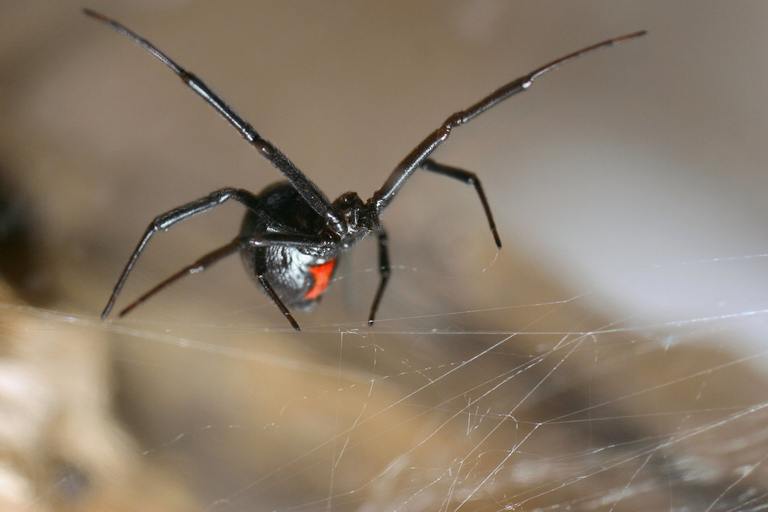
An adult female typically has a rounded, bulbous abdomen and long, slender legs. Many are shiny black with a red or orange hourglass-shaped marking on the underside of the abdomen. The hourglass may be complete, split into two shapes, or less distinct than photographs suggest. Some widows also have red markings on the upper abdomen.
Young widows and males can look quite different. They may be brown, tan, or patterned with pale stripes and spots. Males are smaller and slimmer than adult females. This variation is one reason color alone is not a reliable identification method.
For a closer species overview, All U Need Pest Control's guide to Florida's black widow spiders provides additional regional context.

How Can You Identify a Black Widow Spider Safely?
Identification should happen from a distance whenever possible. Do not pick up a spider, press it against a surface, or reach into its web to expose the underside. A clear zoomed photograph can be more useful and far safer than trying to capture a live specimen.
Look at several clues together:
- Body shape: Adult females have a large, rounded abdomen with comparatively slender legs.
- Color and markings: A mature female is often glossy black with a red or orange hourglass underneath, but the marking may be incomplete.
- Web style: The web is irregular, tangled, and usually built close to the ground or inside a protected void. It is not a neat circular orb web.
- Location: Widows favor quiet, dry, sheltered areas where insects are available and the web is unlikely to be disturbed.
- Behavior: The spider often hangs upside down in the web, which may make the underside marking visible without close contact.
Other dark spiders can be mistaken for widows. False widows, house spiders, and juvenile spiders may share part of the same color range. Large ground-hunting spiders have a different build and do not depend on a tangled capture web. Comparing a suspected widow with common wolf spider identification clues can help homeowners understand why body shape, web type, and behavior matter more than dark coloration alone.
What Does a Black Widow Web Look Like?
A widow web looks messy but is strongly constructed. It usually contains irregular strands running in several directions, with a sheltered retreat where the spider can remain concealed. The silk may feel unusually strong if it is disturbed accidentally, but homeowners should never test a web by hand.
Webs are commonly found:
- Under outdoor furniture, grills, planters, and pool equipment
- Behind stored boxes, lumber, or tools
- Inside sheds, garages, crawl spaces, and utility enclosures
- Around meter boxes, irrigation controls, and protected foundation gaps
- Beneath decks, steps, porch edges, and low landscaping structures
A messy web alone does not confirm the species. It does, however, justify caution when it is in an undisturbed, low, protected space.

What Do Widow Egg Sacs Look Like?
Egg sacs are small, silk-covered structures suspended in or near the web. Their shape and surface can differ among widow species. Some are smooth and round or pear-shaped, while brown widow egg sacs are especially recognizable for their pointed, spiky surface.
Do not squeeze, sweep, or handle an occupied sac with bare hands. A female may guard the web nearby, and disturbing boxes or stored items can bring a hidden spider into contact with skin. Multiple sacs also suggest that the web has remained undisturbed long enough to support ongoing activity.
Where Does a Black Widow Spider Hide Around a Home?
Black widows prefer shelter, web anchor points, and a steady supply of small insects. They are often associated with cluttered or rarely disturbed spaces, but a clean property can still offer favorable hiding places.
Outdoors, inspect visually around firewood racks, fence corners, hollow blocks, stacked pots, landscape timbers, exterior storage, and the undersides of patio items. Indoors, pay attention to garages, sheds, crawl spaces, storage closets, and utility areas. The spider is more likely to settle where foot traffic, vibration, light, and cleaning are limited.
Season also matters. Warm weather supports insect prey and spider activity. Heavy rain, yard work, construction, or moving stored objects may disrupt outdoor shelter and make sightings more noticeable. A spider found indoors does not automatically mean there is a large infestation, but repeated sightings, webs, or egg sacs deserve a more complete inspection.
Reducing the insects that feed spiders is an important part of long-term indoor spider prevention. Web removal alone may provide only temporary relief if prey, clutter, and entry gaps remain.
Are Black Widow Spiders Aggressive?
No. Black widows are defensive, not aggressive hunters of people. They generally remain in or near their webs and may retreat when disturbed. Bites are more likely when a spider is compressed against skin, trapped in clothing or gloves, or contacted by a hand reaching into a hidden space.
Common exposure scenarios include:
- Putting on shoes, gloves, or clothing stored in a garage or shed
- Lifting a planter, log, board, tarp, or box without checking beneath it
- Reaching into a meter box, cabinet, storage bin, or dark corner
- Sitting against outdoor furniture where an underside web has gone unnoticed
- Cleaning a web or egg sac without first locating the spider
The workplace guidance for avoiding venomous spider bites emphasizes protective clothing and caution when handling stored materials, debris, and other potential spider habitat. The same habits make sense around the home.

What Happens After a Black Widow Spider Bite?
A bite may feel like a pinprick, or it may not be noticed immediately. Local pain, redness, or swelling can occur. Widow venom affects the nervous system, so some people develop spreading pain, muscle cramping, sweating, nausea, restlessness, or abdominal and back discomfort. Symptom intensity varies, and not every suspected spider bite is actually caused by a spider.
Children, older adults, pregnant people, and anyone with significant health conditions may face greater concern from a medically significant bite. Severe pain, trouble breathing, faintness, widespread cramping, or rapidly worsening symptoms require prompt emergency attention.
What Should You Do After a Possible Bite?
Take a suspected black widow bite seriously without attempting risky home treatment.
- Move away from the spider and remain as calm as possible.
- Wash the area gently with soap and water.
- Apply a wrapped cold pack for short intervals to ease local discomfort. Do not place ice directly on skin.
- Contact Poison Control in the United States at 1-800-222-1222 or use its online help tool for case-specific guidance.
- Seek emergency care for severe or worsening symptoms, breathing difficulty, collapse, or any other life-threatening reaction.
Do not cut the skin, try to suction out venom, apply a tourniquet, or attempt to capture the spider by hand. If a photograph can be taken safely, it may help with identification. Medical care should never be delayed while searching for the spider.
The national poison-information guidance on widow spider bite symptoms and appropriate response can help homeowners understand why professional medical advice is more reliable than judging a bite by appearance alone. A medically reviewed overview of black widow bites and treatment also notes that diagnosis depends on the exposure history and clinical symptoms, not simply two puncture marks.
How Do You Make Your Home Less Attractive to Black Widows?
Effective prevention changes the habitat rather than chasing one spider at a time. The goal is to reduce protected web sites, limit insect prey, and keep hidden spiders from being carried indoors.
Start With Storage and Clutter
Move boxes off the floor and use sealed plastic containers where practical. Keep stored items organized with enough space for inspection and cleaning. Shake out gloves, shoes, tarps, sports gear, and seasonal decorations that have been left undisturbed.
Store firewood outdoors, elevated from the ground, and away from exterior walls. Wear gloves when moving wood, stone, debris, or containers, and look before placing fingers underneath an object.
Reduce Entry Points
Repair torn screens and worn door sweeps. Seal gaps around utility penetrations, garage framing, vents, and foundation joints where appropriate. Keep weather stripping in good condition. These steps also reduce the small insects that spiders follow indoors.
The broader spider pest library can help homeowners compare common species and recognize why exclusion plans should account for different spider behaviors.
Manage Outdoor Conditions
Trim dense vegetation away from walls and reduce debris along the foundation. Avoid letting empty pots, landscape materials, and outdoor equipment sit undisturbed for long periods. Check the underside of patio furniture and grills before warm-season use.
Exterior lighting can draw moths and other flying insects near doors and walls. When practical, position lights away from entrances, use fixtures that direct light downward, and keep doors closed. Fewer insects around the structure can mean fewer profitable web sites for spiders.
Remove Webs With Care
Routine web removal can discourage spiders from settling, but venomous-spider concerns change how that job should be handled. Before cleaning, illuminate the area and inspect for a spider and egg sacs. Wear closed-toe shoes, long sleeves, and sturdy gloves. Use a long-handled tool rather than placing hands into corners.
If the web is occupied, located in a cramped void, or surrounded by stored items that cannot be moved safely, stop and arrange a professional inspection. A trained technician can evaluate the web site, nearby harborages, prey activity, and access points as one connected problem.

Why Spraying One Spider May Not Solve the Problem
Killing a visible spider does not remove egg sacs, hidden web sites, or the insects supporting spider activity. It also does not explain how the spider reached the location. General surface spraying without inspection can miss protected retreats and may expose people or pets unnecessarily.
Professional spider control treatment options may include web and egg-sac removal, targeted treatment of appropriate cracks and voids, exterior harborage correction, entry-point recommendations, and control of insect prey. The exact approach should reflect the property, the species, and the location of activity.
Species identification also matters. A ground-hunting spider, a harmless orb weaver, and a widow do not use a home in the same way. Homeowners reviewing a suspected venomous spider may also find it useful to compare the animal with brown recluse habitat and identification, especially because dark rooms and an alarming spider sighting often lead to quick misidentification.

When Should You Call a Pest Control Professional?
A single outdoor widow in an isolated location may be addressed through careful habitat correction, but certain findings justify professional help:
- A widow is inside a frequently used room
- Webs are close to children's play areas, pet spaces, seating, doors, or walkways
- Egg sacs or multiple webs are present
- Sightings continue after cleanup and exclusion
- Activity is inside wall voids, crawl spaces, sheds, meter boxes, or heavy storage
- Someone in the home cannot safely inspect or move the surrounding materials
- You are unsure whether the spider is a widow or another species
An inspection should look beyond the spider itself. The most useful questions are where the web is anchored, what prey is present, how long the site has remained undisturbed, and which gaps or stored objects create shelter. That fuller picture leads to prevention that lasts longer than removing one visible animal.
A Calm, Practical Response Protects the Household
A black widow spider deserves respect, but panic often leads to risky handling or excessive pesticide use. Keep your distance, photograph the spider only if that can be done safely, protect hands and feet around stored materials, and treat a possible bite as a medical question rather than a home-remedy project.
Around the property, focus on the conditions that widows use: quiet shelter, strong web anchor points, insect prey, clutter, and small access gaps. Regular inspection and cleaning help, while repeated sightings, egg sacs, or activity near people call for a professional assessment. That measured approach reduces risk while addressing why the spider appeared in the first place.