
Introduction
Wasps are one of the most frustrating pests for homeowners, especially in warmer climates like Florida. Their aggressive behavior, painful stings, and tendency to build nests around homes make them a serious concern. Because of this, many people look for simple, affordable ways to keep them away. One popular solution is the use of a fake wasp nest.
But does a fake wasp nest actually work, or is it just another DIY myth?
In this guide, we will break down what a fake wasp nest is, how it is supposed to work, and whether it is truly effective. We will also explore better long term strategies to keep wasps away from your home.
What Is a Fake Wasp Nest?
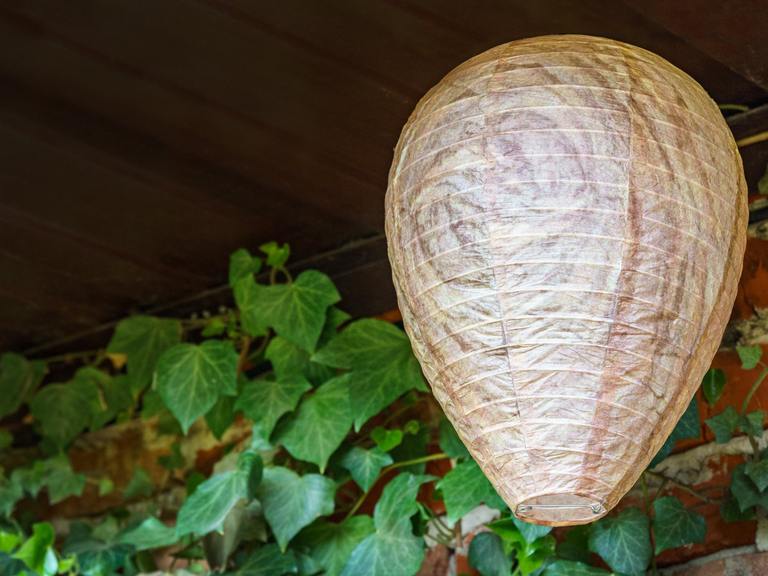
A fake wasp nest is a decoy designed to look like a real wasp nest. These are typically made from materials like paper, fabric, or plastic and are shaped to mimic the appearance, texture, and size of a natural nest that you might see hanging under an eave or tree branch.
Most fake wasp nest products are lightweight and easy to hang. Some are collapsible for storage, while others are pre formed to look more realistic. The goal is simple. Trick wasps into thinking the area is already occupied.
The idea behind using a fake wasp nest is based on natural wasp behavior. Many wasp species are territorial and prefer not to build nests too close to other colonies. This helps reduce competition for food sources like insects, nectar, and human food waste.
Because of this, the theory suggests that if a wasp sees what looks like an existing nest, it will avoid the area and move elsewhere. In theory, a fake wasp nest acts as a visual warning sign that says this territory is already claimed.
However, real nests are not just visual structures. They contain activity, scent markers, and constant movement. A fake wasp nest lacks all of these elements, which plays a major role in its effectiveness.
What Does a Fake Wasp Nest Try to Replicate?
To better understand its limitations, it helps to know what these decoys are trying to copy:
- The rounded or layered paper like structure of a nest
- The size and hanging position of active colonies
- The general color tones of gray or brown
What it cannot replicate:
- Chemical signals used by wasps
- Movement of workers entering and exiting
- Vibrations and sound inside the nest
This gap between appearance and reality is where many fake wasp nest products fall short.

Why Are Wasps Territorial?
Understanding wasp behavior is key to understanding whether a fake wasp nest will work.
Some wasp species, particularly paper wasps, can be territorial. They may avoid building a nest near another colony to reduce competition for food and space. This behavior is most noticeable early in the season when queens are searching for ideal nesting locations.
Territorial behavior is driven by survival. A colony needs enough resources to grow, feed larvae, and defend itself. Placing nests too close together increases conflict and reduces available food.
Do All Wasps Act the Same Way?
Not all wasps respond to territory in the same way, which is where confusion often happens.
- Paper wasps are more likely to show spacing behavior
- Yellowjackets are more aggressive and less predictable
- Some species will nest close together if resources are abundant
This means a fake wasp nest may influence some species while having no effect on others.
Research has shown that wasps are more intelligent than many people realize. They can recognize patterns, faces, and even social structures. Studies have found that some wasps can recognize individual faces and cooperate within their colonies. Additional research highlights the complexity of wasp behavior and their ability to process visual information.
This level of intelligence suggests that wasps are not simply reacting to shapes. They are interpreting their environment using multiple cues.
Why This Matters for a Fake Wasp Nest
Even though wasps can recognize visual patterns, they also rely heavily on:
- Chemical signals
- Environmental conditions
- Nest activity
If a fake wasp nest does not meet these criteria, wasps may quickly determine it is not a real threat. In many cases, they will ignore it completely or investigate it and continue building nearby.
However, during very early nesting periods, when queens are still exploring, a fake wasp nest may provide just enough visual deterrence to influence behavior in limited situations.
Do Fake Wasp Nest Decoys Actually Work?
This is the question most homeowners are asking.
The short answer is: sometimes, but not reliably.
While the concept of a fake wasp nest is based on real behavior, real world results are far less consistent than many people expect. The effectiveness depends on timing, species, environment, and even how convincing the decoy looks.
Why the Idea Sounds So Convincing
At first glance, the logic behind a fake wasp nest makes sense:
- Wasps can be territorial
- They want to avoid competition
- They use visual cues when choosing nesting sites
Because of this, many homeowners assume that hanging a fake wasp nest will automatically keep wasps away.
However, this idea oversimplifies how wasps actually behave in the wild.
When a Fake Wasp Nest Might Work
There are a few situations where a fake wasp nest may have some limited success:
- Early in the season before nests are established
- In areas with low wasp pressure
- When dealing with certain species like paper wasps
- When queens are still scouting for nesting locations
During early spring, queen wasps are searching for safe places to start colonies. At this stage, they are more cautious and more likely to avoid potential competition.
In these cases, a fake wasp nest might discourage a queen from starting a new colony nearby. It acts more like a temporary deterrent than a long term solution.
What Success Actually Looks Like
Even when a fake wasp nest works, the results are usually limited:
- It may delay nest building rather than prevent it entirely
- It may push wasps a short distance away instead of removing them
- It may only affect a small number of scouting queens
This means you might still see wasps nearby, just not in that exact spot.

When a Fake Wasp Nest Fails
More often than not, a fake wasp nest does not provide reliable results. According to entomology insights and field observations, many wasps either ignore the decoy or quickly realize it is not a real threat.
Here is why:
- Wasps rely on more than just visual cues
- They can detect the absence of activity or scent
- Some species are not territorial at all
- High population pressure overrides avoidance behavior
- Food availability matters more than perceived competition
In real world conditions, wasps often build nests right next to or even on fake wasp nest decoys.
Why Wasps Are Not Easily Fooled
A real nest sends multiple signals that a fake wasp nest cannot replicate:
- Continuous movement of worker wasps
- Chemical pheromones marking territory
- Vibrations and activity inside the structure
Without these signals, the decoy becomes just another object in the environment.
In many cases, a wasp may briefly inspect the decoy and then continue building nearby once it determines there is no real colony present.
What Types of Wasps Are You Dealing With?
Not all wasps behave the same way, which is a major reason why a fake wasp nest is inconsistent.
Understanding the species around your home is one of the most important steps in effective wasp control.
Common Wasps in Florida
- Paper wasps
- Yellowjackets
- Hornets
Each of these species has different nesting habits, aggression levels, and responses to deterrents.
How Behavior Impacts Results
- Paper wasps are the most likely to be influenced by spacing behavior
- Yellowjackets are aggressive and often ignore deterrents
- Hornets can be highly defensive and may not avoid nearby structures
This means a fake wasp nest may work in one situation but completely fail in another just based on species alone.
Why Identification Matters
If you misidentify the species, you may rely on a solution that is unlikely to work.
For example:
- A fake wasp nest may slightly deter paper wasps
- The same decoy may have zero impact on yellowjackets nesting underground or in wall voids
If you are unsure which type you are dealing with, it is important to understand the differences. You can learn more here: Wasps vs Hornets
Taking the time to identify the problem correctly often makes a bigger difference than the solution you choose.
Where Should You Place a Fake Wasp Nest?
If you are going to try using a fake wasp nest, placement matters more than most people realize. A poorly placed decoy is almost guaranteed to fail, while a well placed one may offer limited early season benefits.
Why Placement Is So Important
Wasps do not randomly choose nesting locations. They look for:
- Shelter from wind and rain
- Access to food sources
- Safe areas away from constant disturbance
If your fake wasp nest is not placed in an area where wasps would naturally consider building, it will not influence their behavior at all.
Ideal Placement Areas
To increase your chances of success, place a fake wasp nest in areas where wasps are most likely to scout:
- Under eaves and roof overhangs where nests are commonly built
- Near patios and outdoor seating areas where food sources are present
- In garages or sheds that offer shelter and quiet conditions
- Along entry points like doorways or corners where nests often appear
These locations mirror real nesting environments and make the decoy more believable at a glance.
Tips for Better Results
If you decide to use a fake wasp nest, these best practices can help improve its effectiveness:
- Install early in the spring before wasp activity increases
- Hang it in a visible location where scouting wasps can easily see it
- Keep it elevated to match natural nesting height
- Avoid placing near active nests since it will not deter established colonies
- Use only one per area to avoid making the setup look unnatural
Common Placement Mistakes
Many homeowners reduce effectiveness without realizing it. Avoid these mistakes:
- Placing it too low to the ground
- Hanging it in shaded areas that wasps rarely use
- Installing it after nests are already established
- Putting multiple decoys too close together
Even with proper placement, results can vary significantly depending on species and environmental pressure.

Are Fake Wasp Nest Decoys Worth It?
For many homeowners, the appeal of a fake wasp nest is simple.
- Low cost
- Easy to install
- No chemicals required
- Minimal maintenance
At face value, it seems like a risk free solution.
The Real Trade Off
The downside is reliability.
A fake wasp nest may provide a small window of prevention, but it does not address the root causes that attract wasps in the first place.
For example:
- It does not remove food sources
- It does not eliminate existing nests
- It does not prevent wasps from returning later in the season
When It Might Be Worth Trying
There are a few situations where using a fake wasp nest can make sense:
- As an early season preventative measure
- In areas with historically low wasp activity
- As part of a larger prevention strategy
When It Is Not Enough
In most real world situations, especially in areas like Florida where wasp activity is high, a fake wasp nest alone is not enough.
It should be viewed as a small piece of a bigger plan rather than a standalone solution.
Homeowners who rely only on a fake wasp nest often find themselves dealing with:
- Nests forming in nearby areas
- Increased activity later in the season
- Repeated problems year after year
A fake wasp nest should be treated as a light deterrent with limited effectiveness, not a solution for an active infestation.
What Actually Works to Get Rid of Wasps?
If you are serious about keeping wasps away, more effective strategies are needed. Unlike a fake wasp nest, real control methods focus on removing what attracts wasps and eliminating existing threats.
Proven Wasp Control Methods
The most effective approach combines prevention, monitoring, and targeted removal.
1. Eliminate Food Sources
Wasps are constantly searching for food, especially sugary substances and protein sources.
- Keep trash cans sealed tightly
- Clean up outdoor spills quickly
- Avoid leaving pet food outside
- Cover drinks and food during outdoor activities
Even small food sources can attract large numbers of wasps over time.
2. Seal Entry Points
Wasps often look for protected areas to build nests, including inside structures.
- Seal cracks around siding and soffits
- Repair damaged screens and vents
- Close gaps around doors and windows
Blocking access reduces the number of potential nesting sites around your home.
3. Perform Regular Inspections
Early detection is one of the most important steps in wasp control.
Check these areas weekly during peak season:
- Rooflines and eaves
- Porch ceilings and railings
- Garages and sheds
- Fence lines and outdoor furniture
Catching a nest early makes removal safer and easier.
4. Safe Removal of Existing Nests
Once a nest is established, it needs to be handled properly. Attempting to remove it without the right approach can lead to aggressive behavior and stings.
- Avoid disturbing active nests during the day
- Use proper protective equipment if attempting removal
- Treat nests at the right time when activity is lower
If you already have a nest, it is important to address it properly.
Why a Multi Step Approach Works Better
Unlike a fake wasp nest, these methods:
- Address the root causes of wasp activity
- Reduce long term attraction to your property
- Eliminate active threats instead of hoping to deter them
This is why homeowners who rely on a combination of strategies typically see better and longer lasting results.

Why DIY Solutions Often Fall Short
Many DIY methods, including the fake wasp nest, are appealing because they seem simple and cost effective.
But wasps are highly adaptable pests that respond to changing conditions.
They are not just reacting to one factor. They are evaluating their environment based on food, shelter, safety, and competition.
The Core Problem With DIY Deterrents
Most DIY solutions focus on a single idea, such as visual deterrence. The problem is that wasps make decisions based on multiple signals.
A fake wasp nest may address one signal, but it ignores others like:
- Food availability
- Shelter quality
- Seasonal population increases
Because of this, a single deterrent rarely addresses all of the factors driving wasp activity.
How Wasps Adapt Over Time
Over time, wasps may:
- Ignore deterrents once they recognize there is no real threat
- Relocate closer to your home where conditions are better
- Build multiple nests in different areas of the property
- Return season after season if conditions remain favorable
Why Problems Keep Coming Back
This is why many homeowners feel like they are constantly dealing with wasps despite trying multiple solutions.
The issue is not just the presence of wasps. It is the environment that supports them.
Without addressing that environment, temporary fixes like a fake wasp nest often lead to repeated frustration.
A more complete approach that combines prevention, monitoring, and removal is what ultimately leads to long term control.
When Should You Be Concerned About Wasps?
Not every wasp sighting is a problem, but there are clear warning signs that indicate a developing issue rather than normal activity.
Wasps will occasionally pass through your yard while foraging. The concern starts when they begin to settle, build, or show defensive behavior near your home.
Signs of a Growing Wasp Problem
If you notice any of the following, it is time to take the situation more seriously:
- Increased wasp activity around your home at the same time each day
- Visible nest construction under eaves, railings, or outdoor structures
- Wasps entering wall voids, attic spaces, or rooflines
- Aggressive behavior near patios, pools, or entryways
- Multiple wasps hovering in one concentrated area
What These Signs Usually Mean
These behaviors often indicate that:
- A colony is actively being established or expanding
- A food source is consistently attracting wasps to your property
- Nesting locations around your home are ideal for long term activity
Once a colony becomes established, wasps become more defensive and more difficult to control.
Why Timing Matters
Early intervention is key. A small nest in early stages may only contain a few wasps. Later in the season, that same nest can grow significantly and become much more aggressive.
Waiting too long can lead to:
- Increased risk of stings
- Larger nests that are harder to remove
- Wasps spreading to multiple areas of your property
At this point, relying on a fake wasp nest is unlikely to solve the issue. The problem has moved beyond prevention and into active infestation.

What Is the Safer Long Term Approach?
Long term wasp control requires a combination of prevention, monitoring, and targeted treatment. Instead of relying on a single deterrent like a fake wasp nest, a layered strategy produces more consistent results.
A More Reliable Strategy
A comprehensive approach typically includes:
- Routine inspections to catch activity early
- Exterior perimeter treatments to reduce nesting opportunities
- Nest monitoring and safe removal when needed
- Seasonal pest management to prevent recurring issues
Why This Approach Works
This strategy focuses on controlling the conditions that attract wasps rather than just reacting to their presence.
It helps:
- Reduce food and shelter opportunities
- Prevent colonies from establishing in the first place
- Address problems before they escalate
What Homeowners Often Miss
Many homeowners focus only on visible nests, but wasps often build in hidden areas such as:
- Inside wall voids
- Under roof shingles or soffits
- Behind outdoor fixtures or decorations
Without regular monitoring, these hidden nests can grow unnoticed until activity becomes obvious.
Building a Long Term Plan
For consistent results, wasp control should not be treated as a one time fix. It should be part of a seasonal plan that adapts to changing conditions throughout the year.
This includes:
- Spring prevention when queens are scouting
- Summer monitoring during peak activity
- Late season control to prevent future nesting cycles
Understanding how wasps behave and where they build nests is key. Taking a proactive approach helps reduce the chances of dealing with recurring infestations and minimizes the need for reactive solutions later on.
Why Professional Help Makes a Difference
When wasps become a recurring issue, professional pest control provides a more consistent and predictable solution. Unlike a fake wasp nest, which relies on a single deterrent concept, professional service focuses on identifying and eliminating the conditions that allow wasps to thrive.
What Professionals Do Differently
Professionals approach wasp control with a system rather than a single tactic. This includes inspection, identification, treatment, and prevention.
Professionals can:
- Identify species accurately and adjust treatment based on behavior
- Locate hidden nests in wall voids, rooflines, and hard to reach areas
- Apply targeted treatments safely using the right materials and timing
- Prevent future infestations by addressing attractants and entry points
Why Identification Matters So Much
Different wasps require different strategies.
- Paper wasps build exposed nests and are easier to spot early
- Yellowjackets may nest underground or inside structures
- Hornets can create larger, more defensive colonies
Using the wrong approach can lead to incomplete results or even increased aggression. This is one of the main reasons DIY methods, including a fake wasp nest, often fall short.
Safety Is a Major Factor
Wasp removal is not just about effectiveness. It is also about safety.
- Disturbing a nest can trigger defensive swarming
- Some species can sting multiple times
- Nests in enclosed spaces can be difficult to treat without proper tools
Professional treatment reduces these risks by using controlled application methods and proper protective equipment.
Long Term Prevention, Not Just Removal
One of the biggest advantages of professional service is long term prevention.
Instead of reacting to visible nests, professionals look at the bigger picture:
- Why wasps are choosing your property
- Where future nests are likely to form
- What seasonal patterns are contributing to activity
This approach addresses the root of the problem rather than relying on surface level deterrents like a fake wasp nest. If you are dealing with ongoing wasp activity, visit our pest control page to learn more about effective solutions.
Final Thoughts: Should You Use a Fake Wasp Nest?
A fake wasp nest can offer limited benefits in very specific situations, especially early in the season when queens are still searching for nesting locations.
However, it is not a reliable or long term solution.
What You Should Take Away
If you are considering using a fake wasp nest, it helps to keep expectations realistic:
- It may provide short term deterrence in low pressure environments
- It will not stop an active infestation
- It does not remove the factors that attract wasps in the first place
Why Results Are So Inconsistent
Wasps are intelligent, adaptable insects that rely on more than just visual cues. While the idea behind a fake wasp nest is based on real behavior, it often falls short in real world conditions because it lacks scent, activity, and environmental context.
A Smarter Way to Think About Wasp Control
Instead of relying on a single solution, the most effective approach is layered:
- Prevent attraction by removing food and shelter opportunities
- Monitor your property for early signs of activity
- Address nests quickly before they grow
A fake wasp nest can be one small part of that strategy, but it should never be the only step.
The Bottom Line
If your goal is to truly protect your home, outdoor spaces, and family, a more comprehensive approach will always deliver better and more reliable results than a standalone deterrent.
Taking action early and using the right combination of strategies can make the difference between a minor issue and a recurring seasonal problem.