Pill Bugs in House: Why They Show Up and How to Keep Them Out

Published: October 16, 2026
Introduction
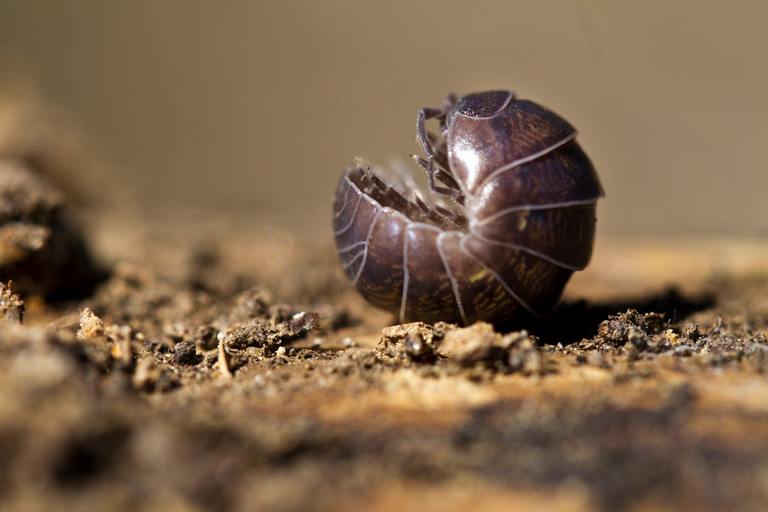
Finding a few gray, segmented creatures curled near a doorway can be confusing. They look armored, have more legs than an insect, and roll into a tight ball when disturbed. Homeowners often call them roly-polies, rollie pollies, or woodlice. Pest professionals know them as pill bugs.
The good news is that pill bugs do not bite, sting, infest food, or damage the structure of a home. They are outdoor decomposers that sometimes wander across a threshold. The more useful question is why they reached the house in the first place. Repeated sightings often point to damp mulch, heavy leaf litter, poor drainage, irrigation overspray, a worn door sweep, or another condition that can support several kinds of pests.
This guide explains how to identify pill bugs, what their location reveals, how to remove them safely, and which exterior changes provide the most dependable long-term relief.
What Is a Pill Bug?
A pill bug is a land-dwelling crustacean called an isopod. It is more closely related to crabs and shrimp than to insects. Unlike insects, which have six legs, an adult pill bug has seven pairs of walking legs. Its oval body is covered by overlapping gray or slate-colored plates that resemble a tiny suit of armor.
Most pill bugs are about one-quarter to one-half inch long. They move slowly, have two visible antennae, and are most active at night. Their best-known defense is rolling into a tight ball when touched. That behavior is why many people call them roly-polies.
Pill bugs normally live in dark, humid places outdoors. They feed mainly on dead leaves, decaying vegetation, and other organic material. According to research-based pill bug guidance for Southern homes, they may occasionally damage tender plant roots, but they primarily function as decomposers and do not cause damage when they wander indoors.
If an unfamiliar crawling pest does not match these features, use a broad household pest identification library before deciding how to respond. Accurate identification keeps a harmless visitor from being mistaken for a pest that requires a different plan.

Why Do You Find Pill Bugs in House Entry Areas?
When homeowners find pill bugs in house entry areas, the source is usually outside and close to ground level. These crustaceans lose moisture easily, so they spend the day beneath material that stays cool and damp. At night, during heavy rain, or when their shelter becomes unsuitable, they may move across patios, garage floors, and thresholds.
Saturated soil after rain
Prolonged rain can flood the spaces beneath mulch, leaves, stones, and landscape timbers. Pill bugs may leave those saturated areas and move toward a slab edge, covered porch, garage, or crawl space. A sudden wave of activity after a storm usually reflects outdoor displacement rather than indoor reproduction.
The opposite weather pattern can also create movement. If exposed soil and surface debris become too dry, pill bugs may search for a cooler, more humid location. That is why both very wet and unusually dry periods can lead to sightings.
Damp mulch and decaying vegetation
Mulch is useful in a landscape, but deep, wet mulch pressed against siding creates excellent shelter for pill bugs. Leaf piles, grass clippings, rotting wood, ground cover, compost, fallen fruit, and landscape debris can provide the same combination of shade, moisture, and food.
These materials are not a problem everywhere in the yard. They become more important when they stay wet directly beside the foundation or an exterior opening. A concentration of pill bugs under a doormat or planter beside the back door can turn a small gap into a regular indoor route.
Drainage and irrigation trouble
Clogged gutters, short downspouts, low spots, leaking hose bibs, air-conditioning condensate, and sprinkler heads aimed at the house can keep foundation soil damp. Cornell’s guidance on moisture conditions that support occasional invaders notes that mulch, runoff, gutter problems, and downspouts that fail to move water away from the building can all contribute.
When several moisture-associated pests appear in the same zone, the water pattern deserves more attention than the individual insects. All U Need’s guide to preparing a home for rainy-season pest pressure explains why weather, drainage, and access points should be evaluated together.
Small openings at ground level
Pill bugs do not need to chew their way into a home. They use openings that already exist, including:
- Gaps beneath exterior and garage doors
- Cracks along slab edges and foundation walls
- Openings around pipes, cables, and utility lines
- Damaged weatherstripping
- Loose thresholds and trim
- Unscreened or damaged crawl-space vents
- Gaps where patios, steps, or walkways meet the structure
A trail of dead pill bugs just inside one door is often a useful clue. They probably entered through that nearby opening and then dried out.
Are Pill Bugs in House Areas Dangerous?
Pill bugs in house areas are mainly a nuisance. They do not bite or sting people or pets. They do not spread through beds, pantry foods, clothing, or structural lumber. They also do not establish destructive colonies inside a normally dry home.
Most indoor pill bugs survive only briefly because conditioned living spaces do not provide the constant humidity and decaying plant material they need. University of Florida guidance describes them as occasional indoor wanderers that cause no damage, while more detailed pill bug identification information notes that indoor individuals can simply be swept up and moved outside.
The insects themselves are not a reason to panic. Their pattern may still deserve investigation. One pill bug near a patio door after rain is ordinary. Dozens appearing every morning, live activity deep inside the home, or repeated sightings around a wet wall can point to an unresolved moisture source or a heavily populated exterior harborage.
How Can You Tell a Pill Bug From Similar Pests?
Correct identification matters because several small, gray or many-legged creatures live around damp foundations. Look at body shape, movement, and behavior rather than relying only on color.
Pill bug vs. sowbug
Pill bugs and sowbugs are both land-dwelling isopods. A pill bug can roll into a compact ball. A sowbug is flatter, cannot form a complete ball, and has two small tail-like appendages projecting from the rear. Their moisture needs and prevention measures are similar, so a homeowner does not need perfect species identification to begin correcting outdoor conditions.
Pill bug vs. millipede
A millipede has a long body made of many segments and often curls into a loose coil. A pill bug is shorter, broader, and can close into a firm ball. Both may move indoors after rain and are commonly tied to damp mulch, leaf litter, and low-level gaps.
Pill bug vs. house centipede
House centipedes have a flatter body, very long legs, and much faster movement. They are predators that hunt other arthropods. Pill bugs move slowly and feed mostly on decaying plant matter. If the animal races across a wall or floor on delicate, banded legs, review the guide to identifying house centipedes and the conditions that support them.
Pill bug vs. springtail
Springtails are far smaller and often look like moving specks. Many jump when disturbed. Pill bugs are easy to see without magnification and never spring into the air. Both favor moisture, but a large number of tiny jumping insects near a sink, window, or damp wall calls for a closer look at springtails in humid homes.
Pill bug vs. small cockroach
A cockroach has six legs, a flatter body, long antennae, and faster movement. It does not roll into a ball. Roach evidence may also include droppings, egg cases, shed skins, or repeated nighttime activity around kitchens and plumbing. That pattern requires a species-specific inspection, not an occasional-invader cleanup.

How to Remove Pill Bugs Indoors Safely
For a small number of pill bugs, physical removal is usually enough. There is no need to spray a broad area of the home simply because a few harmless wanderers crossed a threshold.
- Vacuum or sweep up visible pill bugs.
- Empty the vacuum outdoors or seal the debris before placing it in an exterior trash container.
- Note the room, exact location, weather, and time of day.
- Inspect the nearest door, wall edge, pipe opening, floor drain, or stored item.
- Dry any wet surface and correct a visible leak or condensation source.
- Check just outside the suspected entry point for wet mulch, leaves, planters, boards, or drainage trouble.
Avoid crushing pill bugs into carpet or porous flooring. Physical removal is cleaner, and the location of an intact specimen makes identification easier.
Sticky monitors can help map an ongoing problem, but they should be placed where children and pets cannot reach them. A monitor is a diagnostic tool, not a substitute for moisture correction and exclusion.
How to Stop Pill Bugs in House Entry Routes
Long-term control starts at the exterior source. If pill bugs in house entry routes keep appearing, work from the foundation outward instead of repeatedly treating the room where they end up.
1. Correct water problems
Walk the property after rain or a full irrigation cycle. Look for water collecting beside the slab, overflowing gutters, leaking fixtures, and sprinkler overspray on doors or siding. Extend downspouts where appropriate, repair leaks, and adjust irrigation so the soil beside the home is not kept constantly wet.
Inside, dry damp garage corners, improve appropriate crawl-space ventilation, and use bathroom or laundry ventilation correctly. A musty odor, stained drywall, soft trim, or recurring condensation may justify evaluation by a qualified building or moisture professional.
2. Reduce shelter beside the foundation
Rake deep leaf litter and decaying vegetation away from exterior walls. Keep mulch at a reasonable depth and avoid piling it against siding, door frames, or weep systems. Raise planters off patios, move stored boards and cardboard, and keep firewood elevated and away from the structure.
The goal is not to remove every decomposer from the landscape. It is to create a drier, more open transition beside the building so large populations are less likely to gather at entry points.
3. Seal appropriate openings
Replace worn door sweeps and weatherstripping. Repair screens and seal suitable cracks around trim, pipes, cables, and foundation joints. Do not block weep holes, drains, vents, or other features the building needs to function. If you are uncertain whether an opening is intentional, ask a qualified professional before sealing it.
4. Check potted plants and stored items
Pill bugs can hide beneath pots, saucers, bags of soil, patio mats, outdoor toys, and garden supplies. Inspect and dry these items before moving them into a garage or enclosed porch. Avoid leaving wet cardboard or plant debris on the floor.
5. Monitor the result
After making corrections, record sightings for one to two weeks. Some activity may continue while the outdoor population disperses, especially after heavy rain. Improvement should show up as fewer insects, a smaller activity zone, and less live movement beyond the first-floor entry area.
For homes facing several recurring pest pressures, a customized pest control inspection and treatment plan can connect indoor evidence with drainage, landscaping, weather, and exterior access instead of treating each sighting as an unrelated event.
What Should You Avoid?
Pill bug control can become less effective when homeowners focus only on killing what they see. Avoid these common mistakes:
- Do not repeatedly fog or spray living areas for occasional wanderers.
- Do not apply pesticides to countertops, toys, pet areas, or other unapproved sites.
- Do not mix products or use a product contrary to its label.
- Do not seal drainage or ventilation openings without understanding their purpose.
- Do not overwater the foundation landscape after applying a treatment.
- Do not assume every many-legged pest needs the same response.
- Do not ignore a leak, soft wood, or persistent dampness because the pill bugs seem harmless.
Any pesticide label is a legal set of directions. Product choice, application site, weather, protective equipment, and reentry instructions all matter. When identification or the source is uncertain, inspection is usually more useful than experimenting with several products.

When Is Professional Help Worth It?
Professional help makes sense when activity continues after moisture reduction and basic exclusion, when large numbers enter from several sides of the home, or when the likely source is difficult to access. It is also worthwhile when the insects might be a different pest or when there are signs of a building moisture problem.
A thorough inspection may include:
- Confirming the pest and ruling out millipedes, sowbugs, small roaches, or other lookalikes
- Mapping sightings by room, entry point, and weather pattern
- Checking mulch lines, planters, drainage, irrigation, and decaying debris
- Inspecting door sweeps, utility penetrations, slab joints, vents, and crawl-space access
- Looking for plumbing leaks, condensation, or damp structural materials
- Recommending habitat changes, exclusion, monitoring, and targeted treatment where appropriate
Homeowners can also review frequently asked pest control questions before service so they know what information to collect and what to expect from an inspection.
A Practical Final Takeaway
Pill bugs are harmless outdoor recyclers that occasionally take a wrong turn. A few near a door after rain usually call for simple removal and a quick check of the threshold. A recurring indoor pattern calls for a closer look at moisture, organic debris, drainage, and ground-level openings.
The most dependable solution is rarely a stronger indoor spray. It is a drier foundation edge, less shelter against the house, properly maintained entry points, and targeted professional support when the source remains unclear. Treat the sighting as information, correct the condition that brought the pests close, and the home becomes much less inviting to pill bugs and other occasional invaders.