Termites With Wings: What Does It Mean When You See Them?

Published: December 10, 2025
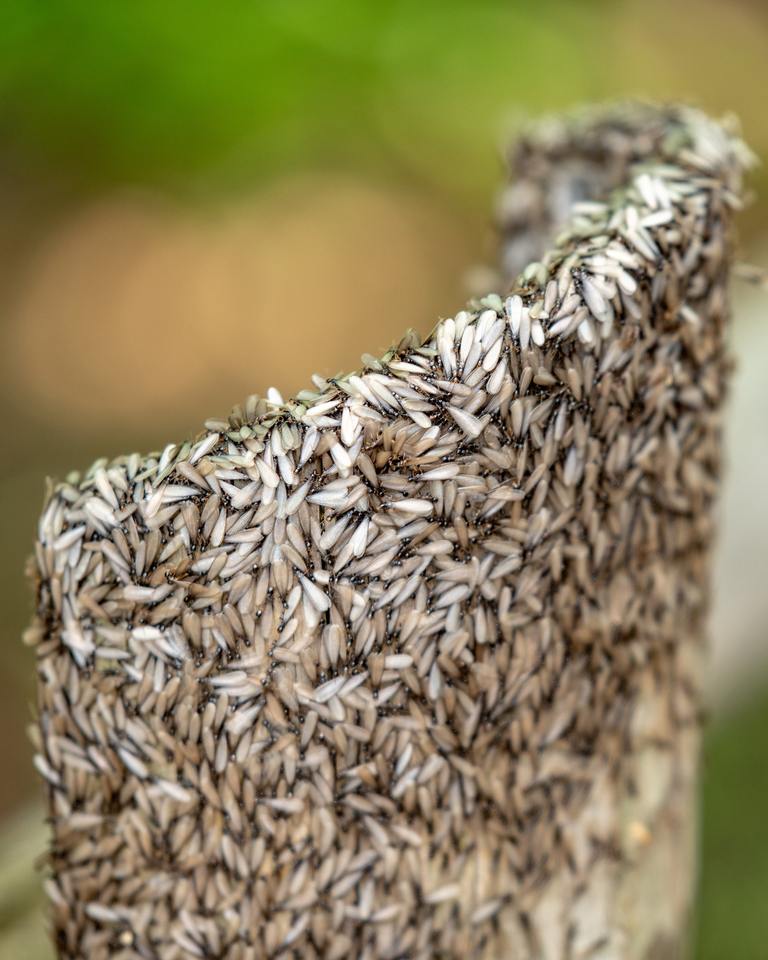
Termites With Wings and Why They Matter
Seeing termites with wings around your home is one of the earliest and most reliable indicators that a mature termite colony is operating nearby. These insects are not random visitors. They are reproductive swarmers leaving an established colony with a single purpose: to create new ones. Many homeowners overlook their appearance or mistake them for flying ants, which can delay action and allow underlying infestations to spread.
When winged termites emerge, they often do so in large numbers and in very specific environmental conditions. Their sudden appearance tells a story about colony maturity, soil conditions, and the health of the surrounding termite population. These events also reveal how close a colony already is to your home, since swarmers rarely travel far from their origin point.
This guide provides deeper insight into the biology and behavior of termites with wings, focusing on how species differences, climate factors, and environmental pressures influence swarming patterns. It also highlights lesser known risks such as secondary colony formation, hybridization trends, and the long term implications of repeated seasonal swarms around residential areas.
What Are Termites With Wings?
Termites with wings, known as alates, serve as the reproductive force behind colony expansion. Their sole purpose is to leave the original colony during a coordinated swarm, find a mate, and begin the founding stages of a new colony. Unlike workers or soldiers, alates are short lived once they shed their wings, but their role is critical to long term termite survival.
Alates usually develop only when a colony has reached a certain level of maturity. Producing reproductives takes significant colony resources, so their presence alone indicates a large and established colony hidden underground or within structural materials.
Why Do Termites Grow Wings?
Termites grow wings to enable dispersal and genetic diversity. While their flight capabilities are limited, their wings allow them to catch light breezes, increasing the chance of spreading to new areas before establishing a colony. This minimizes competition with the original colony and supports the growth of regional termite populations.
Wing development is carefully timed. Colonies hold back alate production until environmental cues signal ideal conditions for dispersal. These cues may include:
- Rising humidity that prevents desiccation
- Soil temperatures that support colony foundation
- Overcast skies that reduce heat stress during flight
- Seasonal rainfall patterns that soften soil for nesting
In regions like Florida, the combination of year round moisture and warm temperatures creates multiple windows for swarming, which is why homeowners may see termites with wings more frequently.
Where Do Termites With Wings Come From?
How Does a Colony Produce Flying Termites?
A termite colony produces winged reproductives only after years of structured growth, internal stability, and resource accumulation. Colonies begin with just one pair of reproductive termites, but over several years they expand into a complex system with workers, soldiers, and eventually alates. Only when the colony reaches a threshold size does it invest in producing these winged reproductives.
Once conditions are right, thousands of swarmers may gather near exit points within mud tubes, tree hollows, or structural voids. They wait for synchronized cues before emerging all at once. This mass release helps ensure enough survivors to form new colonies, even though many swarmers fall prey to predators like birds, lizards, and ants.

Swarming does not happen at random. It is influenced by:
- Soil moisture that signals favorable nesting conditions
- Warm temperatures that support early colony development
- Barometric pressure changes often associated with incoming rain
- Specific day or nighttime cycles depending on the species
In some subterranean species, swarms occur during the day, while drywood termites tend to swarm at night, especially around outdoor lighting. Understanding these patterns helps homeowners recognize early warning signs.
University of Florida IFAS research shows that Florida's climate triggers more intense and frequent swarms, especially among hybrid termite species now documented across the state. These hybrids grow faster, spread farther, and swarm more aggressively. Their presence in new areas, confirmed by UF IFAS researchers, reflects broader ecological changes shaping termite behavior. (Source: https://www.gainesville.com/story/news/2025/05/21/ufifas-researchers-confirm-hybrid-termites-established-in-florida/83765623007/)
When Do Termites With Wings Typically Swarm?
Swarming periods differ among species, but Florida homeowners often see these insects in late spring and early summer. However, hybrid species and invasive subterranean termites may swarm multiple times a year, creating extended periods of risk.
Seasonal timing is also influenced by microclimates. Homes near lakes, canals, or heavily irrigated lawns may experience earlier or more frequent swarms due to elevated humidity levels. Urban heat islands, created by pavement and buildings, may also accelerate swarm cycles.
Research has shown that peak seasons align closely with rainfall patterns. Heavy moisture softens soil and provides conditions needed for new colonies to establish. IFAS pest alerts have documented several large statewide swarm events triggered by warm rainy fronts, emphasizing how quickly weather changes can influence termite behavior. (Source: https://blogs.ifas.ufl.edu/pestalert/2018/06/14/termites-swarming-in-florida/)
What Weather Conditions Trigger Swarms?
Termites with wings may appear right after:
- Afternoon rainfall that increases ground saturation and loosens soil structure
- High humidity that prevents swarmers from drying out during flight
- Warm nights with still air that allows easier flight without wind interference
- Cloudy conditions that reduce heat stress and overheating, allowing swarmers to stay active longer
These conditions act as biological signals for termites. When moisture levels rise and temperatures stabilize, the colony interprets this as the ideal opportunity for new colonies to take root. Moist soil makes tunneling easier, while humid air keeps delicate termite bodies from losing moisture too quickly.
Some species are so sensitive to weather patterns that they can swarm minutes after rain stops, especially if winds are calm. This rapid response helps them avoid predators and take advantage of fresh soil moisture. Because these flight windows may last only a few minutes, many homeowners never witness the swarm itself. Instead, they notice the aftermath, including piles of discarded wings near entry points, porch lights, gutters, or windows.
Termites are strongly attracted to light sources, so exterior lighting can unintentionally draw swarmers toward doors and windows, increasing the odds that a homeowner will find wings indoors. Indoors, central air systems may pull swarmers inside if gaps exist around attic or utility spaces.
These subtle signs often reveal more about termite activity than the swarm itself, making awareness critical for early detection.
How Can You Identify Termites With Wings?
It is easy to confuse winged termites with flying ants. Correct identification matters because termites can silently damage homes for years. Knowing how to distinguish them ensures you respond appropriately and avoid misdiagnosing a serious infestation.
What Do Winged Termites Look Like?
- Straight antennae with a bead like appearance that lack the bends seen in ants
- Equal length wings that extend well past the body and appear almost translucent
- Thick waist instead of a pinched one, giving the termite a uniform body shape
- Pale, tan, or light brown body depending on species and environmental factors

These traits help clarify the difference between termites and flying ants, which have elbowed antennae, uneven wing lengths, and a narrow segmented waist. Additionally, ants typically display more erratic flying patterns, while termites swarm in coordinated waves.
Winged termites also tend to move with a slower, more deliberate flight pattern. They often gather around window panes, porch lights, or reflective surfaces. Their wings are delicate and easily shed, which is why homeowners often find piles of paper like wings long after the swarm has ended.
Why Are Shed Wings a Warning Sign?
After landing, alates shed their wings almost immediately. Finding wings near windowsills, door frames, outdoor lighting fixtures, porches, or patio furniture often means that a swarm took place very close to your home. Because swarmers intentionally look for suitable nesting areas after landing, these wings can signal the early stages of a new colony forming.
Shed wings are a stronger red flag than the bugs themselves because they remain long after the swarm passes. Even a small pile of wings may represent dozens or even hundreds of swarmers. When wings appear indoors, this is an even more serious indicator. Interior swarms usually mean termites emerged from within the structure, pointing to an active colony already feeding somewhere inside the walls, floors, or attic spaces.
In these cases, prompt inspection is crucial because interior swarming typically does not occur unless a mature colony is already established.
How Far Can Termites With Wings Travel?
Winged termites are reproductives, but despite having wings, they are not strong or graceful fliers. They rely more on environmental factors than physical ability.
Do Winged Termites Fly Long Distances?
Despite their wings, termites are poor fliers. Most travel only a short distance before dropping to the ground and attempting to pair. Many swarmers fly only a few yards. Some may travel slightly farther if caught by a light breeze, but long distance travel is rare.
This limited flight range has extremely important implications for homeowners. It means that when you see termites with wings, the swarm almost certainly originated very close by. Swarming termites do not migrate from miles away. They emerge from colonies located within your property line or from neighboring structures.
Environmental data collected by UF IFAS researchers shows that most colonies that establish near homes originate from swarms that occurred very close to the structure. (Source: https://blogs.ifas.ufl.edu/news/2025/03/19/is-your-neighborhood-a-termite-hot-spot-uf-ifas-researchers-track-the-spread-of-destructive-pests-with-online-tool/)
Because of this, seeing winged termites on your property often means:
- A nearby colony is already mature enough to reproduce
- Workers may already be feeding on wooden structures
- Multiple new colonies could potentially be developing in soil or structural crevices nearby
Winged termites also tend to drift toward moisture rich environments, meaning areas like mulch beds, leaking faucets, shaded foundations, or poorly ventilated crawl spaces become prime settlement zones. This increases the chances that swarmers landing around your home will successfully create new colonies.
Are Termites With Wings Dangerous to Your Home?
Do Swarmers Cause the Damage?
Swarmers themselves do not chew wood. Their purpose is reproduction. The danger lies in what they represent. While swarmers are not responsible for structural destruction, a visible swarm serves as a warning flare that a mature colony has been active-often for years-without detection.
A visible swarm usually means:
- A mature colony is nearby and large enough to produce reproductive alates
- Workers may already be feeding on wood behind walls, under flooring, or around the foundation
- Multiple new colonies could soon establish as mated pairs settle into soil or cracks near the structure
Because colonies grow silently, the appearance of termites with wings often means damage has already begun. Homes with high moisture levels, wood to ground contact, or shaded perimeters are especially vulnerable. Even a brief indoor swarm may indicate that termites originated from inside the structure rather than entering from outdoors.

Why Are New Colonies a Big Concern?
New reproductive pairs can settle in soil around foundations, mulch beds, or even cracks near porches. Over time, these new colonies can contribute to widespread structural damage. Termite colonies grow slowly at first, but once established, they expand exponentially. What begins as a small pair forming a nest can evolve into thousands of workers capable of consuming wood nonstop.
New colonies also introduce the possibility of satellite nests. In highly conducive environments, termites can form secondary colonies away from the main nest, making detection even more difficult. This is especially common in areas with moisture intrusion, such as crawl spaces, leaking hose bibs, irrigation overspray, or poorly sealed expansion joints.
Multiple colonies in close proximity significantly increase the rate of damage. Instead of a single feeding source, a home may be targeted by several active groups simultaneously, accelerating structural deterioration.

How Do Hybrid Termites Affect Homeowners?
Hybrid species identified across parts of Florida are spreading rapidly, making termite awareness more important than ever. These newly confirmed hybrid populations are particularly concerning because they combine traits of two highly destructive termite species.
What Makes Hybrid Termites Different?
- Faster colony growth, allowing them to reach damaging population levels sooner
- Longer swarming periods that extend the window for colony expansion
- Higher adaptability to changing climates, including warmer winters and wetter summers
Because of their aggressive behavior, hybrid species may swarm more frequently, increasing how often homeowners encounter termites with wings. They also exhibit a higher tolerance for varied environments, which means areas previously considered low risk may now face elevated termite pressure.
What Does This Mean for Home Protection?
Homeowners should be aware that hybrid species expand their territory faster than traditional subterranean termites. This increases risk even in areas without a previous history of termite issues. Homes located in coastal or humid regions may be especially vulnerable, but inland communities are not exempt.
Hybrid termite populations also demonstrate increased resilience against environmental disturbances, meaning swarms may continue even during atypical weather seasons. Their ability to form large colonies more quickly underscores the importance of consistent professional monitoring, early detection strategies, and year round protection plans.
What Should You Do If You See Termites With Wings?
Immediate Steps to Take
If you encounter these insects, do not ignore them. A single sighting can provide valuable clues about unseen termite activity. Taking the right steps early can help prevent extensive structural damage.
Consider:
- Taking photos for identification, especially close ups of the wings and body shape
- Checking for mud tubes along foundations, piers, crawl spaces, and exterior walls
- Inspecting windowsills, baseboards, and door frames for discarded wings or frass
- Monitoring for additional activity over the next few days, including new wings or live swarmers indoors
- Turning off exterior lights during peak swarming season if possible, since lights attract swarmers toward entry points
Even if activity disappears quickly, the presence of winged termites suggests that a colony exists nearby. Swarms are brief by nature, but the conditions that produce them do not vanish with the insects. A one time swarm often points to long standing, hidden activity that requires attention.
Why Professional Evaluation Matters
Termites are silent and persistent, often causing damage long before they are seen. Professional technicians use moisture meters, infrared scanners, probing tools, and specialized baiting systems capable of identifying colonies early and intercepting growth.
A professional evaluation is especially important when:
- Wings are found indoors, which may indicate a colony inside the structure
- Multiple swarm events occur in the same season
- Mud tubes reappear after removal
- You notice wood softening, bubbling paint, or unexplained drywall damage
With advancements like the Sentricon system, colony elimination is more efficient and less invasive than ever. Modern detection strategies allow experts to track termite behavior, identify active zones, and create long term protective barriers tailored to your home’s layout and risk level.
Professional involvement ensures that the root cause-not just the visible symptoms-is addressed.

How Can Long Term Prevention Protect Your Home?
Long term termite prevention is a combination of environmental management, consistent monitoring, and professionally applied protection methods. Because termites feed year round, prevention should be ongoing rather than seasonal.
What Prevention Steps Reduce Future Activity?
A combination of environmental management and professional support is recommended. These strategies make your home less attractive to termites while reducing conditions that help colonies thrive.
Helpful practices include:
- Reducing soil to wood contact around structures, especially deck posts, fences, and landscaping borders
- Fixing clogged gutters to avoid moisture buildup that attracts subterranean termites
- Removing mulch that is too close to the home or replacing it with termite resistant alternatives like rubber mulch or stone
- Repairing water leaks quickly, including under sinks, behind walls, or near exterior spigots
- Improving ventilation in crawl spaces and attics to reduce humidity, which termites rely on for survival
- Ensuring landscape grading directs water away from the foundation
These simple adjustments help create an environment where termites are less likely to survive and colonize.
Why Ongoing Monitoring Matters
Termites with wings may appear only once each year, but colonies feed year round. A single swarm represents only a moment in the lifecycle of a colony that may already be consuming structural materials.
A professional monitoring plan can:
- Detect new colonies early
- Track seasonal changes in termite activity
- Maintain a protective barrier around your home
- Reduce the likelihood of unnoticed structural damage
- Provide peace of mind knowing experts are watching for early warning signs
Continuous monitoring is especially valuable in regions with high termite pressure, including Florida, Texas, and South Carolina. In these climates, annual or biannual inspections ensure that colonies are caught before they expand or swarm again.
How Does Florida's Climate Influence Winged Termite Activity?
Florida’s warm and humid climate creates ideal year round conditions for termite survival. Unlike states with harsher seasonal shifts, Florida rarely experiences freezes strong enough to disrupt termite development cycles. This means colonies remain active longer, grow faster, and swarm more frequently.
High humidity, consistent rainfall, and extended heat waves fuel the perfect environment for subterranean and drywood termite species. Moist soil allows termites to build stable tunnels, while warm temperatures encourage rapid reproductive cycles. Even in cooler months, temperatures rarely drop low enough to slow activity, giving Florida one of the longest active termite seasons in the country.
Additionally, Florida’s geography plays a role. Coastal winds, tropical storm systems, and rapid shifts between rainy and sunny conditions create the exact atmospheric triggers that swarmers rely on for synchronized emergence. Because these conditions occur repeatedly throughout the year, Florida homeowners may experience more than one swarm season depending on the species present.
Why Is Florida a National Hot Spot for Termite Activity?
Florida has become a nationally recognized hotspot for termite activity due to a combination of environmental, biological, and ecological factors:
- Long warm seasons that allow colonies to feed and expand without interruption
- Frequent rainfall that keeps soil soft, moist, and ideal for subterranean nesting
- Mild winters that allow colonies to survive and reproduce without seasonal stress
- Rapid spread of invasive termite species that outcompete native ones and expand aggressively
Adding to these factors is the ongoing discovery of hybrid termite species across the state, which have shown remarkable resilience and adaptability. Studies from UF IFAS researchers indicate that hybrid populations are moving into new regions each year, expanding their territory beyond historically affected zones.
Florida's high termite density also means homeowners in both inland and coastal regions face elevated risk. Urban development increases moisture retention around homes, and landscaped areas create ideal conditions for colony formation. This combination of natural and man made factors fuels a consistently high number of swarms compared to the rest of the country.
Are You Seeing Termites With Wings Around Your Property?
If you notice these insects or discover piles of wings, it could mean more activity than you realize. Early detection is essential for safeguarding your home. Termites rarely give clear signs of their presence, so seeing winged termites is one of the few visible warnings available before extensive damage occurs.
Winged termites often emerge from hidden colonies located under slabs, behind walls, or in soil surrounding the home. Even a small number of swarmers can indicate a colony that has been growing for years. Because colonies mature slowly, the appearance of alates usually signals that workers have already been active and feeding.
When winged termites appear, they indicate a developing or mature colony nearby. Understanding the signs and responding quickly can prevent costly structural problems later. Homeowners who take swift action can often stop colonies before they spread, establish satellite nests, or cause significant damage.
If you ever find wings indoors or around entry points such as windows and doors, it is wise to schedule an inspection promptly. Even if the swarm is brief and disappears, the conditions that triggered it remain active, meaning the colony is likely still present and feeding.
The Role of Sentricon in Termite Protection
The Sentricon system is one of the most widely trusted and research supported termite protection solutions available today. Unlike traditional liquid treatments that require trenching or drilling into your property, Sentricon uses a discreet, environmentally responsible baiting approach designed to eliminate entire termite colonies at their source.
How Does Sentricon Work?
Sentricon stations are strategically placed around the perimeter of your home. These stations contain a scientifically engineered bait that is more attractive to termites than wood. When workers discover the bait, they carry it back to the colony, feeding it to other members including the queen.
The active ingredient disrupts termite growth and reproduction, stopping the colony from expanding. Over time, the entire colony collapses. This approach not only eliminates active infestations, but also prevents new colonies from establishing.

Why Sentricon Is Effective for Homes in Florida, Texas, and South Carolina
The warm, humid climates across the Southeast create ideal conditions for subterranean termites. Sentricon offers year round protection by:
- Continuously monitoring for new termite activity
- Eliminating colonies before they can cause damage
- Reducing the need for invasive trenching or drilling
- Providing long term defense against both native and invasive species, including hybrids
Because Sentricon is active 24/7, it provides peace of mind in regions where termite pressure is high. Whether you live near water, in a wooded area, or in a suburban neighborhood, Sentricon helps safeguard the structure of your home.
Why Homeowners Prefer Sentricon
Homeowners appreciate Sentricon for its effectiveness and convenience. The system is:
- Non intrusive, with low profile stations that blend seamlessly into landscaping
- Environmentally responsible, using targeted bait without large scale chemical applications
- Scientifically proven, backed by decades of research and university studies
- Long lasting, offering continuous protection without reapplication cycles
Sentricon is especially valuable when dealing with hybrids and other aggressive termite species known for rapid colony expansion. Because it targets the entire colony rather than individual termites, it provides a more comprehensive long term solution.
Final Thoughts
Termites with wings are more than just a seasonal nuisance. Their presence signals expansion, colony maturity, and the potential for hidden damage that often goes unnoticed until it becomes significant. Swarming is one of the few visible moments in a termite’s lifecycle, which makes it an invaluable early warning for homeowners who may otherwise have no indication that termites are active inside or around their property.
Staying proactive goes beyond observing swarm activity. It involves understanding how environmental conditions like humidity, rainfall, and soil temperature can influence termite behavior, especially in regions where these factors fluctuate throughout the year. Regular inspections, attention to moisture control, and early identification of conducive conditions play a major role in preventing colonies from gaining a foothold.
Florida, Texas, and South Carolina all experience varying degrees of termite pressure, not only because of their climates but also due to the spread of invasive and hybrid species that adapt quickly and swarm more aggressively. These states face some of the highest termite risks in the country, making awareness and preventative efforts essential for long term home protection.
With responsible monitoring and expert guidance, homeowners can stay ahead of termite populations before they become a serious issue. A well maintained prevention plan, paired with timely professional evaluation, offers the strongest defense against the structural and financial impact these insects can cause.