
Introduction
The Huntsman Spider is one of the most visually intimidating spiders homeowners encounter, especially in warm and humid regions like Florida, Texas, and South Carolina. Known for its large size, flat body, and lightning fast movements, this spider often causes immediate alarm when it appears indoors. For many homeowners, the shock comes not just from the spider itself but from how suddenly it seems to appear on walls, ceilings, or door frames.
Unlike web building spiders that remain hidden for long periods, the Huntsman Spider is an active hunter. It moves freely throughout its environment in search of food, which makes encounters feel more aggressive even though the spider is not. Understanding what this spider is, how it behaves, and why it enters homes is an important step toward long term control and prevention.
Huntsman spiders belong to the species Heteropoda venatoria and are part of the Sparassidae family. According to invasive species tracking data, this species has successfully adapted to human environments due to its hunting behavior and ability to shelter inside structures. They are sometimes referred to as giant crab spiders due to their flattened bodies and legs that extend outward in a sideways, crab like orientation. This unique structure allows them to move quickly across surfaces and squeeze into extremely narrow gaps.
Adult Huntsman spiders can reach a leg span of up to five inches, making them one of the largest spiders commonly found around residential structures. While their size alone is enough to startle most people, their speed is what often leaves a lasting impression. Even confident homeowners are often caught off guard by how fast a Huntsman Spider can move when disturbed.
Although the Huntsman Spider is not considered aggressive and typically avoids human contact, its sudden movements and large appearance make it one of the most feared spiders among homeowners. This fear is often amplified when a spider is spotted late at night or in unexpected areas such as bedrooms, bathrooms, or kitchens.

What Does a Huntsman Spider Look Like?
Proper identification is important, as many large spiders are mistakenly labeled as huntsman spiders. Misidentification can lead to unnecessary concern or ineffective control methods. Knowing the visual traits of a Huntsman Spider helps homeowners better understand what they are dealing with and why the spider behaves the way it does.
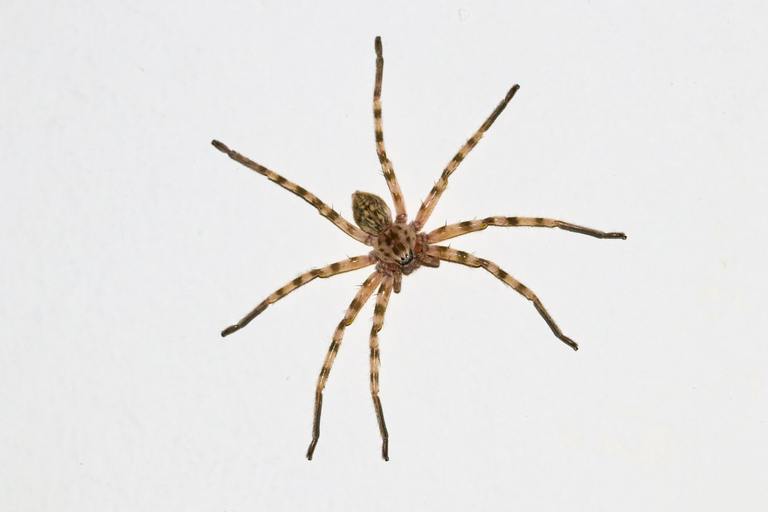
Huntsman spiders have a distinct appearance that sets them apart from other common household spiders. Their bodies are designed for speed and concealment rather than web building or ambush.
Key physical characteristics include:
- Flat brown or grayish body that hugs surfaces closely
- Long legs that extend outward in a crab like stance rather than straight forward
- Subtle banding or mottled patterns on the legs that help with camouflage
- Body length of about one inch, paired with a much larger overall leg span
- Smooth appearance with little visible hair compared to other large spiders
Unlike tarantulas or wolf spiders, the Huntsman Spider has a noticeably flatter body and a much faster, more erratic gait. This allows it to move across walls and ceilings with ease. Their body structure also enables them to slip into tight spaces such as behind picture frames, inside cabinets, beneath furniture, or along baseboards, making them difficult to locate once they retreat from view.
Are Huntsman Spiders Dangerous to Humans?
One of the most common questions homeowners ask is whether these spiders are dangerous. The Huntsman Spider does possess venom, but it is generally classified as having low medical significance for humans. Unlike venomous spiders that rely on bites as a primary defense, huntsman spiders prefer to flee rather than engage, using their speed to escape perceived threats.
Most interactions between people and a Huntsman Spider happen accidentally. These spiders do not seek out humans, nests, or sleeping areas intentionally. When bites do occur, they are almost always defensive and result from the spider being trapped against skin, handled, or startled in an enclosed space such as clothing, bedding, or shoes.
What happens if a bite occurs?
In the rare event that a Huntsman Spider bite does occur, symptoms are typically mild and short lived for most individuals.
- Mild localized pain or redness at the bite site
- Temporary swelling or irritation
- Symptoms comparable to a bee or wasp sting
- Occasional itching or warmth around the area
Severe reactions are uncommon, though individuals with sensitive skin or allergies may experience more noticeable discomfort. Resources note that huntsman spider bites are rarely medically significant but can still cause localized reactions similar to other minor arthropod bites. As with any insect or spider bite, medical attention should be sought if symptoms worsen or signs of infection develop.
While physical harm is unlikely, the emotional and psychological impact of encountering a large spider indoors is significant for many homeowners. Repeated sightings can increase stress, disrupt sleep, and create a constant sense of unease within the home. For families, pets, or anyone with a fear of spiders, this ongoing anxiety can affect overall comfort and quality of life, making proactive control an important consideration.
Why Do Huntsman Spiders Enter Homes?
Understanding why a Huntsman Spider enters a home helps explain why sightings often happen suddenly and without warning. These spiders are hunters, not web builders, meaning they do not stay in one fixed location. Instead, they actively roam in search of food, shelter, and favorable environmental conditions.
In many cases, the spider is not drawn to the home itself but to what the home provides. Residential structures unintentionally create ideal conditions for both insects and the predators that feed on them.
Common reasons include:
- Following insect populations indoors, especially cockroaches, flies, and moths
- Seeking shelter during heavy rain, storms, or sudden temperature changes
- Entering through small gaps around doors, windows, soffits, or vents
- Attraction to outdoor lighting that draws insects close to entry points
Seasonal changes often play a role as well. During periods of increased humidity or rainfall, huntsman spiders may move indoors temporarily to escape saturated outdoor environments. Cooler weather can also trigger indoor movement, even in Southwest Florida. When temperatures drop, huntsman spiders seek the stable warmth and shelter that homes provide, increasing the chances of sudden indoor sightings during colder stretches. Once inside, their speed and ability to hide allow them to remain unnoticed until they suddenly appear.
Homes with existing pest activity are far more likely to attract hunting spiders. Even minor insect issues can support spider activity. Where insects thrive, spiders are sure to follow.

Where Are Huntsman Spiders Commonly Found?
The Huntsman Spider prefers warm climates and is most commonly found in subtropical and tropical regions. In the United States, they are frequently encountered in southern states where heat and humidity support year round insect populations.
While they are often associated with outdoor environments, huntsman spiders have no trouble adapting to man made structures when conditions are favorable. Their ability to flatten their bodies allows them to remain hidden in areas that are rarely disturbed.
Typical hiding locations include:
- Behind wall décor, mirrors, and picture frames
- Inside garages, sheds, and utility rooms
- Under roof eaves and along exterior walls
- Inside closets, cabinets, or storage areas
- Around patio furniture and outdoor living spaces
Because they do not rely on webs, huntsman spiders can relocate easily once disturbed. Their flattened bodies allow them to hide in narrow cracks and crevices, making them difficult to detect until they suddenly emerge into open view, often catching homeowners off guard.
Where Are Huntsman Spiders Commonly Found?
The Huntsman Spider prefers warm climates and is commonly found in subtropical and tropical regions, where heat and humidity support abundant insect populations. In the United States, they are most often encountered in southern states, particularly in areas with long warm seasons and mild winters that allow insects to remain active for much of the year.
While huntsman spiders are naturally outdoor predators, they readily adapt to residential environments when conditions are favorable. Homes, garages, and other structures provide shelter, stable temperatures, and easy access to prey, especially when exterior lighting or landscaping attracts insects close to the structure.
Typical hiding locations include:
- Behind wall décor, mirrors, and picture frames where movement is minimal
- Inside garages, sheds, and storage rooms that are rarely disturbed
- Under roof eaves, soffits, and exterior siding gaps
- Inside closets, cabinets, or storage areas near insect activity
- Around patio furniture, outdoor structures, and entryways
Because huntsman spiders do not rely on webs, they are free to relocate frequently. Their flattened bodies allow them to slip into narrow cracks, crevices, and seams along walls or ceilings. This makes them difficult to detect during the day and explains why homeowners often encounter them suddenly at night when the spider becomes active and moves into open areas.
How Fast Can a Huntsman Spider Move?
Speed is one of the most startling traits of the Huntsman Spider and one of the main reasons homeowners find encounters so unsettling. These spiders are capable of moving extremely quickly across walls, ceilings, and floors, often covering large distances in just a few seconds when startled.
Their speed is made possible by their long, laterally positioned legs and lightweight, flattened bodies. This allows them to change direction rapidly and climb vertical surfaces with ease. For homeowners, this can make sightings feel chaotic, especially when a spider suddenly darts out of sight.
This speed helps the Huntsman Spider hunt insects efficiently, allowing it to catch fast moving prey such as cockroaches and flies. However, it also makes DIY removal difficult and often ineffective. Many homeowners attempt to capture or eliminate a spider themselves, only to lose sight of it as it disappears into another room, behind furniture, or into a hidden crevice where it can remain undetected.
Do Huntsman Spiders Indicate a Bigger Pest Problem?
Yes, repeated sightings can indicate an underlying pest issue within or around the home. Research on huntsman spider behavior shows that their indoor presence is closely linked to prey availability and environmental conditions rather than random movement. The Huntsman Spider feeds on cockroaches, moths, flies, and other common household insects. While some people view this as beneficial, it often signals that insects are already well established in the structure.
Spiders do not remain in areas without a reliable food source. If huntsman spiders are frequently appearing indoors, it is usually because insect populations are present in sufficient numbers to sustain them.
Signs that spiders may be responding to pest activity include:
- Frequent sightings of large spiders indoors over a short period
- Increased insect activity near lights, windows, or entryways
- Spiders appearing in kitchens, bathrooms, garages, or laundry rooms
- Activity increasing during warmer or more humid months
Addressing the spider alone does not resolve the root cause of the problem. Long term control focuses on reducing the insect population that attracts them in the first place. By targeting the conditions that support insects, spider activity naturally declines as their food source becomes limited.

Why DIY Spider Control Often Falls Short
Many homeowners attempt to manage spider sightings using sprays, traps, or home remedies found online or at local stores. While these methods may offer temporary relief or peace of mind, they rarely address the full scope of the issue. In most cases, they focus only on the spider that is seen, not the reasons it appeared in the home to begin with.
Huntsman spiders are highly mobile and capable of hiding in areas that are difficult to access without professional tools or training. Killing or removing one spider does little to prevent others from entering if favorable conditions remain unchanged.
Common limitations of DIY approaches:
- Sprays only affect visible spiders and do not reach hidden individuals
- Hidden entry points around the home remain untreated
- Insect food sources that attract spiders are not eliminated
- Treatments wear off quickly, allowing spiders to re enter
- Improper application can reduce effectiveness or create safety concerns
Because the Huntsman Spider is fast, adaptable, and resilient, surface treatments alone are rarely effective long term. Without addressing insect activity and entry points, spider sightings often return, leading to ongoing frustration for homeowners.
How Professional Pest Control Helps Reduce Huntsman Spider Activity
Professional pest control takes a more comprehensive and preventative approach to spider control. Instead of focusing solely on removing individual spiders, treatment plans are designed to reduce the conditions that allow Huntsman spiders to survive and reappear.
A professional approach looks at the entire structure, identifying insect activity, entry points, and environmental factors that contribute to spider presence. This broader strategy helps create long term results rather than short lived fixes.
Effective strategies often include:
- Exterior perimeter treatments to reduce insect populations around the home
- Targeted treatments in garages, eaves, attics, and crawl spaces
- Sealing or identifying entry points around doors, windows, and utility lines
- Reducing harborage areas where insects and spiders hide
- Ongoing monitoring and maintenance to prevent reinfestation
By reducing insects around the home and limiting access points, spiders naturally lose their food source and are far less likely to remain indoors. This proactive approach helps restore comfort and confidence for homeowners while minimizing repeated encounters.
Are Huntsman Spiders Beneficial or a Nuisance?
From an ecological standpoint, the Huntsman Spider does play a role in controlling insect populations outdoors. In natural environments, these spiders help reduce the number of cockroaches, flies, moths, and other pests by actively hunting them. This can be beneficial in gardens, sheds, and outdoor areas where insect populations can otherwise grow unchecked.
However, inside the home, the situation changes. While the spider itself may eat insects, its presence indoors is generally considered a nuisance rather than a benefit. Large, fast moving spiders inside living spaces often cause fear, stress, and discomfort for homeowners, especially when they appear unexpectedly.
For households with children or pets, encounters with large spiders can be particularly unsettling. Even when bites are unlikely, the anxiety created by repeated sightings can impact daily comfort. In addition, the presence of Huntsman spiders indoors often points to other pest issues that should not be ignored, as spiders typically follow established insect activity rather than arriving on their own.

How Can Homeowners Reduce the Risk of Huntsman Spiders?
Preventative measures are key when it comes to reducing spider encounters and limiting the conditions that allow Huntsman spiders to enter and remain inside the home. Because these spiders are attracted to insects and shelter, prevention focuses on reducing both.
Helpful steps include:
- Reducing outdoor lighting near entryways to limit insect attraction
- Keeping doors, windows, and screens properly sealed and maintained
- Sealing small gaps around utility lines, vents, and siding
- Removing clutter from garages, closets, and storage areas where spiders may hide
- Keeping outdoor areas such as patios and entryways clear of debris
- Scheduling routine pest inspections to address insect activity early
Consistency is important. Even small lapses in maintenance can create opportunities for insects and spiders to return. A proactive approach helps reduce the likelihood of repeated encounters and supports long term pest prevention.
When Should You Be Concerned About Repeated Sightings?
An occasional Huntsman Spider sighting may occur in warm climates, especially after heavy rain or seasonal changes. However, repeated encounters inside the home are a strong indicator that a larger issue may be developing. Seeing multiple spiders over a short period often suggests that insects are present in numbers high enough to consistently support predators.
Homeowners should be especially concerned if sightings happen in living spaces such as bedrooms, kitchens, or bathrooms, or if spiders continue to appear despite attempts to remove them. This pattern usually points to hidden insect activity, untreated entry points, or favorable indoor conditions that allow spiders to remain undetected between sightings.
Professional evaluation can help identify where spiders are entering, what insect populations may be attracting them, and which areas of the home are most vulnerable. Addressing these factors early helps prevent continued activity and reduces the likelihood of repeated, unsettling encounters.

Final Thoughts on Huntsman Spider Control
Scientific studies and extension resources consistently show that huntsman spider activity indoors is strongly connected to insect populations, shelter availability, and structural access points. Understanding this relationship helps homeowners focus on prevention rather than reaction, using proven pest management principles supported by university and research based sources.
The Huntsman Spider is impressive in size and speed, but it does not need to be a permanent part of your home environment. While not considered highly dangerous, its presence indoors is unsettling for many homeowners and often points to underlying pest activity.
A proactive approach that focuses on prevention, exclusion, and insect reduction provides the most effective long term solution. Addressing the conditions that attract spiders creates a home environment that is far less appealing to them.