
Introduction
A large brown beetle on the porch, in the garage, or near a sliding door can get your attention fast. Brown prionid beetles are not tiny pantry pests or ordinary outdoor beetles. They are big, sturdy, long-antennaed insects that often appear at night, especially around exterior lights. Because they are associated with wood, roots, and decaying plant material, homeowners often wonder whether one beetle means hidden structural damage.
The short answer is: not usually. A brown prionid beetle is a type of longhorn beetle, and many adult longhorn beetles are outdoor insects that wander toward lights or emerge from nearby wood. Still, the sighting is worth understanding. If you are seeing several beetles, finding exit holes in wood, noticing soft or rotting landscape timbers, or trying to tell beetle activity from termite or carpenter ant evidence, the details matter.
This guide explains how to identify brown prionid beetles, why they show up near homes, what kind of wood they are usually connected to, and when a professional inspection makes sense.
What Is a Brown Prionid Beetle?
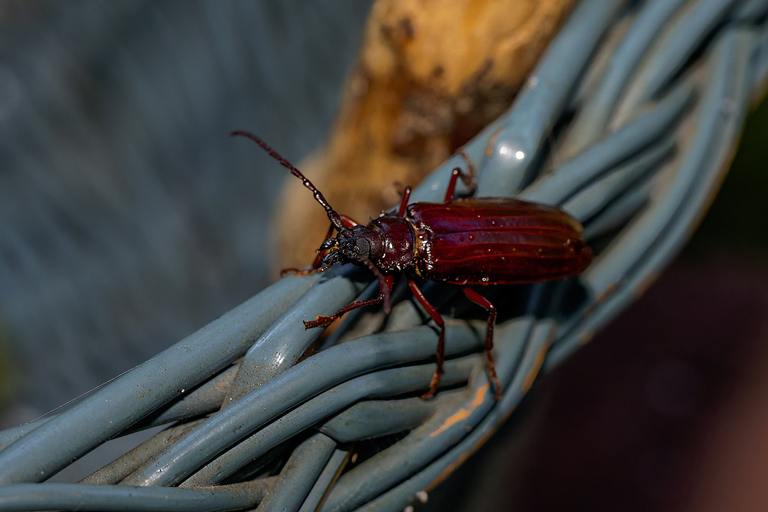
The brown prionid beetle, commonly associated with the species Orthosoma brunneum, is a large, brown member of the longhorn beetle family. Adults are usually dark brown to reddish brown, somewhat flattened, and equipped with noticeable antennae. The antennae are not just decorative. They are one of the major clues that you are looking at a longhorned beetle rather than a cockroach, ground beetle, or other occasional invader.
Brown prionids are native insects, not a sign that your home is dirty or neglected. They spend most of their life cycle outside, connected to wood or woody plant material. Adults are often seen during warm months and are known to be attracted to lights, which is why one may end up on a porch, lanai, garage wall, or even inside after a door has been opened at night. Ohio State University Extension notes that brown prionid adults are active from May to November and can end up indoors because they are attracted to light.
For homeowners, the important point is context. One adult beetle near a porch light is usually a different situation than repeated beetles emerging from the same piece of wood or a crawl space.

Why This Longhorn Beetle Shows Up Around Homes
A brown prionid is not looking for crumbs in the kitchen or fabric in the closet. It is usually connected to outdoor habitat. The adult may be drawn toward the house by light, but the conditions that support these beetles are often found in wooded lots, old stumps, decaying logs, stressed trees, landscape timbers, or damp wood debris.
Homeowners are most likely to notice them when:
- Outdoor lights stay on overnight near doors, patios, garages, or pool cages.
- Logs, stumps, or old wood debris are stored close to the house.
- Wooded areas, tree lines, or natural lots border the property.
- Mulch and organic debris stay damp around the foundation.
- A beetle wanders indoors through a door gap, garage opening, or torn screen.
If you are unsure whether the insect is a beetle or a roach, a side-by-side homeowner guide to beetles vs. roaches can help you compare body shape, antennae, movement, and where the insect was found.
Do Brown Prionid Beetles Damage Homes?
Most brown prionid concerns start with one question: does this beetle damage my house? In many residential situations, a single adult does not mean your home is being eaten from the inside. Brown prionid larvae are commonly associated with decaying wood rather than sound, finished structural lumber. An expert response through Extension explains that Orthosoma brunneum larvae feed on decaying wood and are not considered a major threat to healthy trees.
That said, the larger group matters. Longhorned beetles, also called roundheaded wood borers, include many species. Some larvae chew through inner bark, trunks, limbs, or roots, and many species favor trees that are already stressed, injured, recently cut, or declining. University of California Integrated Pest Management explains that longhorned beetle larvae may chew inner bark and wood in limbs, trunks, and main roots, and that many species primarily attack injured or stressed trees.
For a homeowner, that means the beetle itself is less important than the source. If the source is a rotting stump in the yard, the problem is usually more about cleanup and reducing harborage. If beetles are emerging from wood inside the home, built-in lumber, furniture, the situation deserves closer inspection.

Is a Longhorn Beetle the Same as a Termite?
No. A longhorn beetle is not a termite. They can both be connected to wood, but they are very different insects with different signs, risks, and treatment needs.
Termites live in colonies and can cause serious structural damage, especially when they are actively feeding in or around a home. Beetles develop individually as larvae in wood or plant material, then emerge as adults. Some wood-boring beetles can damage wood, but the pattern, source, and urgency are different from termite activity.
Here are some practical differences homeowners can look for:
- Termites may leave mud tubes, discarded wings, damaged galleries, or frass depending on species.
- Beetles may leave round or oval exit holes, sawdust-like debris, or visible adult beetles emerging from wood.
- Brown prionid beetles are large adults seen wandering, flying, or resting near lights.
- Termites are often hidden, and the visible sign may be damage rather than the insect itself.
If the concern is wood damage and you are not sure whether you are seeing beetle holes, termite evidence, or ant debris, it is reasonable to compare the signs with a professional resource on termite control and inspection or a guide to carpenter ant frass. Wood clues can look similar when you only see debris, holes, or soft spots.
What if I Find One Brown Prionid Beetle Inside?
If you find one adult beetle inside, stay calm. It may have flown in through an open door or been drawn toward indoor light. You can capture it with a container, release it outside away from the house, and then check the nearest entry points.
Look around the room where it appeared. Was it near a patio door, garage entrance, fireplace, attic hatch, or window? Are there decorative logs, unfinished wood pieces, or old lumber stored in the garage? A single indoor sighting often points to access, not infestation.
However, repeated sightings from the same area deserve more attention. If several beetles appear indoors over several days, or if you can trace them to stored wood, a wall void, or a damp crawl space, a beetle control inspection can help identify the source before anyone guesses at treatment.
Brown Prionid Beetle Identification Tips
Identification is important because large brown insects often get lumped together. Homeowners may call almost anything a roach, June bug, water bug, or wood beetle. Brown prionids have a few traits that separate them from common household pests.
Look for:
- Size and body shape: Adults are usually large, broad, and somewhat flattened compared with many household beetles.
- Color: They are typically brown to reddish brown, sometimes dark enough to look almost black in poor lighting.
- Antennae: The antennae are obvious and may look saw-toothed or segmented, especially in males.
- Night activity: Adults are commonly noticed at night or early morning after being attracted to lights.
- Wood association: Sightings often happen near logs, stumps, trees, or damp outdoor wood.
Do not rely on color alone. Many beetles are brown. The combination of large size, long antennae, nighttime appearance, and outdoor wood connection is more useful than color by itself.

Could It Be a Cockroach Instead?
It can happen. Large roaches and brown beetles are often confused at a glance, especially when an insect is moving quickly across a garage floor or patio. Roaches usually have a more oval body, flatter shield-like area behind the head, and faster running behavior. Beetles often have hardened wing covers that meet in a straight line down the back.
The difference matters because the next steps are not the same. A roach sighting may point to moisture, food sources, sewer access, or a developing indoor population. A brown prionid sighting may point to outdoor lights, wooded surroundings, or decaying wood nearby. If you are seeing multiple types of crawling insects indoors, a broader home general pest control inspection can help sort out whether the issue is one occasional invader or several pest pressures at once.
Where Should Homeowners Check After a Sighting?
After seeing a brown prionid beetle, the best response is a calm inspection of the surrounding conditions. You are not trying to treat everything in sight. You are trying to find the most likely source.
Start with these areas:
- Porch lights, patio lights, garage lights, and pool cage lights.
- Door thresholds, weatherstripping, garage seals, and screen gaps.
- Wood stacks, especially those touching the house or stored indoors.
- Old stumps, logs, landscape timbers, and decaying wood borders.
- Damp mulch piled against siding, porch posts, or foundation edges.
- Crawl space entries, attic vents, and utility penetrations.
- Trees with dead limbs, soft spots, or visible borer holes.
You can also check for moisture. Wood-boring insects are often tied to wood condition, and damp or decaying material is more attractive to many outdoor beetles than clean, dry, well-maintained areas.

How to Reduce Brown Prionid Beetle Activity Around the House
Prevention is mostly about light management, wood management, and exclusion. These steps will not remove every beetle from a wooded property, but they can reduce the chance that adults end up inside.
Helpful steps include:
- Switch bright white exterior bulbs to warmer, less attractive lighting where practical.
- Turn off unnecessary outdoor lights during peak nighttime activity.
- Store wood or mulch at least several feet from the home and keep it off the ground.
- Remove old stumps, rotting logs, and unused lumber from near the foundation.
- Keep mulch thin near siding and avoid piling it against wood elements.
- Seal gaps around doors, garage frames, vents, and utility lines.
- Repair torn screens and check weatherstripping before warm-season activity increases.
If pantry beetles or stored-product pests are also present, that is a separate issue. Brown prionids are not the same as flour beetles, grain beetles, or weevils. For kitchen activity, a resource on pantry pest control is more relevant than outdoor wood-borer prevention.
When Does a Longhorn Beetle Sighting Need Professional Attention?
One outdoor adult near a light usually does not require treatment. But there are times when a professional inspection is the smarter move, especially if the evidence points to a source you cannot see clearly.
Consider getting help if:
- Beetles appear repeatedly indoors.
- Adults seem to be emerging from the same wood surface.
- You find fresh holes in furniture, beams, flooring, trim, or stored lumber.
- Sawdust-like debris keeps returning after cleanup.
- Wood is soft, damp, hollow-sounding, or visibly decayed.
- You are also seeing termite wings, mud tubes, or carpenter ant debris.
- The sightings are happening in a crawl space, attic, garage, or wall-adjacent area.
The goal is not to panic over every beetle. The goal is to identify whether the beetle is an occasional visitor, a sign of decaying wood nearby, or evidence of an active wood-boring issue that needs a more targeted plan.
What Will a Professional Look For?
A professional inspection usually starts with identification. If the insect is available, keep it in a sealed container or take clear photos from above and the side. The technician may then check where it was found, nearby wood sources, moisture conditions, entry points, and signs of other wood-damaging pests.
Depending on the findings, the next step may be simple exclusion and habitat reduction, removal of infested wood, moisture correction, or a treatment plan for a confirmed beetle problem. The right answer depends on the source. Treating the wrong area because the beetle looked scary can waste time and leave the real condition untouched.
Are Brown Prionid Beetles Dangerous to People or Pets?
Brown prionid beetles are not blood-feeding pests, and they are not known for spreading disease inside homes. They may look intimidating because of their size and jaws, and they can pinch if handled carelessly. The simplest rule is not to pick them up barehanded. Use a cup, container, or piece of cardboard if you need to move one.
Pets may paw at or mouth a large beetle out of curiosity. It is better to remove the insect than let a pet chew on it. If a pet shows unusual symptoms after interacting with any insect, contact a veterinarian for medical guidance.
Final Thoughts: Big Beetle, Better Context
A brown prionid beetle can be startling, but it is not automatically a household infestation. In many cases, the adult wandered in from outside or was drawn to light from nearby habitat. The more important question is what the sighting is connected to: a porch light, decaying landscape wood, stressed trees, or wood inside the structure.
Homeowners do not need to overreact to one beetle, but they should pay attention to patterns. Repeated sightings, recurring holes, sawdust-like debris, damp wood, or other wood-damage clues deserve a closer look. With the right identification and a source-first inspection, you can separate a harmless visitor from a condition that needs professional attention.