
Introduction
Dark rover ants are easy to overlook until they are suddenly crossing a countertop, gathering near a bathroom sink, or trailing along a window frame. They are tiny, dark, fast-moving ants that often show up around moisture and sweet foods. For many homeowners, the first question is simple: are these just a few random ants in house, or is there a larger colony nearby?
The answer depends on where you are seeing them, how often they return, and what conditions around the home are supporting them. Dark rover ants do not usually create the same alarm as fire ants, carpenter ants, or termites, but they can become a persistent indoor nuisance when colonies are close to the structure. They are small enough to slip through very narrow gaps, and once they find a reliable moisture or food source, they may keep coming back even after the visible trail is wiped away.
This guide explains what dark rover ants look like, why they move indoors, how to reduce the conditions that attract them, and when professional ant service makes sense. If you are trying to solve recurring ant activity in and around the home, proper identification is the first step.
What Are Dark Rover Ants?
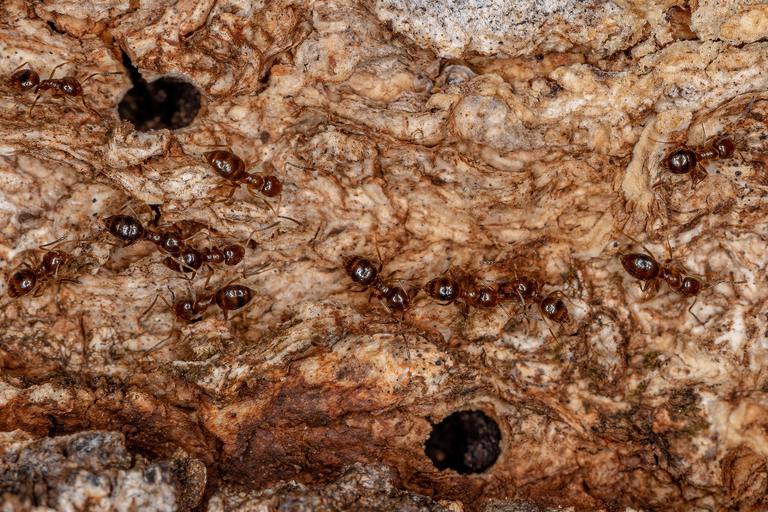
Dark rover ants are small nuisance ants that are commonly associated with warm, humid areas. They are usually dark brown to nearly black, and workers are very small compared with many other household ants. Published extension information describes dark rover ant workers as about 1 to 2 millimeters long, which is one reason homeowners may describe them as "tiny black ants," especially when they appear in kitchens, bathrooms, laundry rooms, or near windows.
Like other ants, dark rover ants live in colonies and send workers out to locate food and water. According to general ant biology guidance, ants communicate and organize foraging through chemical trails, which is why a few scouts can turn into a steady line of activity once they find something useful. You may notice them around:
- Bathroom sinks, tubs, and damp baseboards
- Kitchen counters, pantry shelves, and pet feeding areas
- Window sills, sliding doors, and exterior wall gaps
- Potted plants, mulch beds, and damp landscaping
- Utility penetrations, plumbing lines, and foundation edges
Dark rover ants are not considered a wood-destroying pest. They do not chew structural lumber like termites, and they are not known for excavating galleries in damp wood the way carpenter ants can. Their main problem is persistence. When the colony is close, indoor trails can return again and again.
For homeowners comparing possible species, a broader ant identification and prevention resource can help separate dark rover ants from larger black ants, carpenter ants, and other common household species.

Why Do Dark Rover Ants Become Ants in House?
Dark rover ants usually become ants in house when outdoor conditions push them toward reliable shelter, food, or moisture. In many cases, they are already nesting outside in soil, mulch, leaf litter, potted plants, or near the foundation. From there, workers can enter through small cracks, gaps around doors, torn screens, plumbing openings, or spaces where utilities pass through exterior walls.
What attracts dark rover ants indoors?
The most common attractants are moisture and carbohydrates. These ants may be drawn to sugary spills, syrup residue, fruit, sweet drinks, honeydew from plant-feeding insects, or food crumbs. They may also be seen around damp areas because water is a basic colony need.
Conditions that can increase indoor activity include:
- Leaky plumbing under sinks or behind walls
- Condensation around windows, tubs, toilets, or AC lines
- Mulch packed tightly against the foundation
- Overwatered potted plants near doors or windows
- Food residue on counters, under appliances, or near trash cans
- Pet food and water bowls left out overnight
- Open gaps around doors, thresholds, screens, and utility lines
Even a clean home can have ants. Sanitation helps, but ants do not require a messy house to survive. A tiny drip behind a cabinet, a gap near a window, or a shaded mulch bed can be enough to keep colonies close to the structure.
Are dark rover ants seasonal?
Activity often increases during warm, humid weather, especially when rain changes soil moisture or dry spells push ants toward water indoors. In urban pest guidance, dark rover ants are described as a nuisance species that can invade structures as both workers and winged reproductive ants. Winged ants do not automatically mean termites, but they do deserve a careful look because confusing ants and termite swarmers can delay the right response.
If you see winged insects indoors, compare their body shape, antennae, and wings carefully. Ants generally have elbowed antennae, a pinched waist, and uneven wing pairs, while termites have straighter antennae, a thicker waist, and wings that are more equal in length. When the insects are very small, a professional inspection is often the simplest way to avoid guessing.

How To Identify Dark Rover Ants Without Overthinking It
Dark rover ants can be difficult to identify with certainty because several small ant species look similar at first glance. Still, a few clues can help you decide whether you may be dealing with this ant or another household pest.
What do dark rover ants look like?
Dark rover ant workers are tiny, usually dark brown to black, and often appear as quick-moving specks on light-colored surfaces. Their small size makes them easy to miss until several are moving together. They are often noticed where moisture and food sources overlap, such as around sinks, counters, dishwashers, tubs, or potted plants.
Homeowners can look for these practical clues:
- Very small ant workers, often smaller than many common household ants
- Dark brown to black coloring
- Trails near moist areas or sweet food residues
- Activity around windows, door frames, plumbing, and exterior walls
- Recurring trails after cleaning, especially from the same entry area
Identification is not just about naming the ant. It helps determine where the colony may be nesting, what conditions are supporting it, and which treatment approach is most likely to work. A treatment plan for a moisture-associated nuisance ant can look different from one for fire ants in the yard or carpenter ants near damaged wood.
For broader comparisons, homeowners can review different household ant problems and note whether activity is centered on kitchens, bathrooms, outdoor mounds, wood damage, or general perimeter entry.
Do dark rover ants bite or sting?
Dark rover ants are mainly nuisance pests. They are not known for aggressive stinging behavior like fire ants. Any tiny ant can be unpleasant when it crawls over food-prep surfaces, bathroom counters, or personal items, but the bigger issue is usually sanitation, irritation, and repeated indoor activity.
That said, avoid crushing ants directly on counters or spreading over-the-counter sprays across food-prep areas. Sprays may scatter ants, leave residues where you do not want them, or make the trail harder to trace. If ants are in a kitchen, clean the area first, protect food, and focus on finding where they are entering.
Why Spraying Visible Ants Often Fails
When homeowners see ants in house, the instinct is to spray the line they can see. That may kill some workers, but it rarely solves the reason they are there. The colony can remain outside or hidden in a wall-adjacent area, and new workers may continue foraging once the product dries or the food and moisture source remains.
There are three common reasons DIY spraying falls short:
- It treats workers, not the colony.
- It may scatter the trail and make activity appear in new areas.
- It does not correct moisture, food, or entry conditions.
Ant colonies are highly organized. Extension guidance on household ants explains that bait placement is most effective when it is near active ant trails, rather than scattered randomly or used only after spraying visible workers. For dark rover ants, that often means locating trails, inspecting the exterior, reducing attractants, and using products in a way that fits the species and setting.
If ants keep returning after store-bought sprays, it is usually a sign that the source has not been addressed. A targeted professional ant control plan can evaluate both the indoor trail and the outdoor pressure around the foundation.
How To Reduce Dark Rover Ants Around Your Home
The best homeowner steps are practical, low-risk, and focused on removing the reasons ants are comfortable near the structure. These steps can reduce pressure and support a professional treatment plan if service is needed.
How can you make the kitchen less attractive?
Start with food residue. Dark rover ants may be especially noticeable around sweet materials, so wipe up sticky spills and check hidden areas where crumbs and residues collect.
Helpful kitchen steps include:
- Store sugar, syrup, honey, cereal, and snacks in sealed containers.
- Wipe counters, backsplashes, and cabinet edges after food prep.
- Rinse recyclables before placing them in bins.
- Clean under small appliances where crumbs can collect.
- Empty indoor trash regularly, especially during warm weather.
- Pick up pet food bowls after feeding when possible.
These steps may not eliminate an established colony, but they reduce the reward that keeps workers returning to the same path.
How can moisture control help?
Moisture is a major part of many ant problems. Dark rover ants may trail near sinks, tubs, plumbing lines, or condensation-prone areas because water helps sustain colony activity.
Inspect and correct:
- Slow leaks under sinks
- Damp cabinet bottoms
- Wet bath mats or water around tubs
- AC condensation line issues
- Overwatered indoor plants
- Poor ventilation in bathrooms and laundry rooms
- Exterior irrigation that keeps soil or mulch wet against the house
In warm climates, moisture and shade around the foundation can keep pest pressure high. Adjusting irrigation, trimming dense vegetation, and improving airflow near exterior walls can make the home less inviting.
Where should you seal entry points?
Because dark rover ants are so small, sealing every possible gap is unrealistic. Still, targeted exclusion helps. Focus on the most likely access points and areas where trails appear.
Check:
- Door sweeps and thresholds
- Window frames and screens
- Cracks around exterior trim
- Gaps around plumbing and utility penetrations
- Openings around cables, AC lines, and hose bibs
- Foundation cracks near recurring trails
Sealing works best after the ant activity is under control. If ants are actively trailing through a gap, sealing it too early may push them to another opening or trap activity in a wall void. When in doubt, document where you see trails, then bring that information into a pest inspection.

When Are Ants in House a Sign of a Bigger Problem?
A few foraging ants after a door is left open may not be serious. Repeated ants in house, especially in the same room or from the same wall, usually points to a stronger source. Dark rover ants can be persistent when colonies are nesting close to the home or when indoor moisture makes conditions favorable.
What signs suggest the colony is close?
Look for patterns. The pattern matters more than the number of ants you see in one moment.
Signs that the source may be nearby include:
- Trails returning within a day or two after cleaning
- Ants appearing from the same crack, outlet area, window, or plumbing opening
- Activity in more than one nearby room
- Ants near damp wood, wet cabinets, or chronic condensation
- Outdoor trails along the foundation, mulch, or potted plants
- Winged ants appearing indoors
If activity is paired with damp wood, hollow trim, sawdust-like debris, or larger black ants, do not assume it is dark rover ants. Those signs may call for a different inspection focus, including carpenter ants or termites. Homeowners concerned about wood-related pest clues can review carpenter ant damage warning signs before deciding what to do next.
Could dark rover ants be mistaken for other pests?
Yes. Small dark ants are commonly confused with other ant species, and winged ants may be confused with termites. The safest approach is to capture a sample if you can do so without using pesticides or crushing the insect beyond recognition. A small piece of clear tape, a sealed bag, or a photo with a coin for scale can help during an inspection.
Accurate identification matters because ant species differ in nesting habits, colony behavior, food preferences, and response to bait. A product that works well for one ant may be ignored by another. A surface spray that seems effective for a day can also make a colony harder to track.
For possible termite concerns, especially winged insects or discarded wings near windows, professional evaluation is worth taking seriously. A termite issue and an ant issue can look similar from across the room, but the treatment strategy is entirely different. Homeowners can compare the warning signs of winged termites and swarm activity if they are unsure what they are seeing.

What Professional Dark Rover Ant Control Usually Involves
Professional ant service is not just about applying product where ants are visible. The inspection is the backbone of the work. A technician will usually look for trails, moisture, entry points, nesting conditions, landscape factors, and nearby food sources. With dark rover ants, the exterior often matters as much as the room where the ants were first seen.
A service plan may include:
- Identifying the ant species or narrowing the likely species group
- Inspecting kitchens, bathrooms, laundry rooms, garages, and entry areas
- Checking exterior walls, mulch, irrigation, potted plants, and foundation edges
- Using targeted bait or other ant-specific materials when appropriate
- Treating exterior pressure points to reduce new indoor movement
- Recommending moisture correction, sanitation steps, or exclusion repairs
- Scheduling follow-up if the activity pattern suggests a larger colony source
The exact plan depends on what is found. Dark rover ant activity in a bathroom may point to a moisture source. Activity at a patio door may point to exterior nesting near landscaping. Ants around a kitchen window may be entering from a nearby plant, mulch bed, or wall gap.
For homeowners dealing with multiple pest pressures at the same time, an exterior pest control approach can help reduce the conditions that bring ants, roaches, spiders, and occasional invaders toward the structure.
Are Dark Rover Ants Dangerous to Your Home?
Dark rover ants are not typically dangerous to the structure of a home. They are not termites, and they are not a primary wood-damaging pest. Their risk is mostly nuisance activity, food-area contamination concerns, and the frustration of repeated indoor trails.
Still, recurring ants in house should not be ignored for months. Ant trails can signal moisture problems, exterior gaps, or conditions that may also support other pests. A damp cabinet, leaky pipe, or overwatered landscape bed can attract more than ants. It may also support roaches, flies, termites, or other moisture-loving pests depending on the setting.
That is why we think of ant control as part identification, part source reduction, and part prevention. Killing the ants you see is only one piece of the puzzle. The better question is: why did this trail form here, and what keeps bringing it back?
Homeowner Takeaways for Dark Rover Ants
If you are seeing dark rover ants, keep the response simple and careful:
- Clean up sweet residue, crumbs, and pet food access.
- Check sinks, tubs, cabinets, plants, and AC lines for moisture.
- Watch where trails begin instead of only wiping away the middle of the trail.
- Look outside near the matching wall for mulch, plant debris, wet soil, or entry gaps.
- Avoid heavy indoor spraying in food-prep areas.
- Save a sample or clear photo if the ants have wings or if identification is uncertain.
- Consider professional help if the same trail returns repeatedly.
These steps help whether the ants are dark rover ants or another small household species. They also give a pest professional better information if service becomes the next step.
When Should You Call for Help With Ants in House?
It is time to get help when the activity keeps returning, spreads to multiple rooms, appears near electrical or plumbing openings, includes winged insects, or shows up around moisture-damaged materials. You should also ask for an inspection if you are not sure whether the insects are ants or termites.
Professional service is especially useful when:
- You have cleaned and sealed obvious food sources, but trails keep returning.
- Ants are coming from wall voids, outlets, windows, or plumbing gaps.
- Activity is strongest around bathrooms, kitchens, laundry rooms, or damp cabinets.
- You see outdoor trails leading toward the house.
- Store-bought sprays seem to move the problem instead of solving it.
- You are seeing multiple ant species around the property.
All U Need Pest Control can evaluate the source of the activity and recommend a plan that fits the ant species, the home, and the surrounding property. The goal is not just fewer ants today. The goal is to reduce the conditions that keep bringing ants indoors in the first place.
Conclusion
Dark rover ants are small, but they can be stubborn when they find a comfortable path into the home. They are usually a nuisance rather than a structural threat, but repeated activity can point to moisture, food residue, entry gaps, or nearby outdoor nesting conditions that need attention.
If you are dealing with ants in house, start by removing food and moisture access, watching where trails begin, and checking the outside wall that matches the indoor activity. When the same ants return again and again, a professional inspection can save time by identifying the species, locating contributing conditions, and applying ant control where it will do the most good.