
Introduction
A healthy lawn can change quickly when the damage starts below the surface. One week the grass looks green, and the next week there are yellow patches, soft spots, or sections that peel back from the soil like loose carpet. When watering does not help and the problem keeps spreading, many homeowners eventually discover the cause: grub worms.
Grub worms are beetle larvae that live in the soil and feed around the root zone of turfgrass. Because they work underground, homeowners often notice the damage before they ever see the pest. That makes timing important. The earlier you recognize the pattern, the easier it is to protect the lawn before root loss becomes severe.
This guide explains what grub activity looks like, how it differs from other lawn problems, what you can safely check on your own, and when professional lawn pest control is the smarter next step.
What Are Grub Worms?
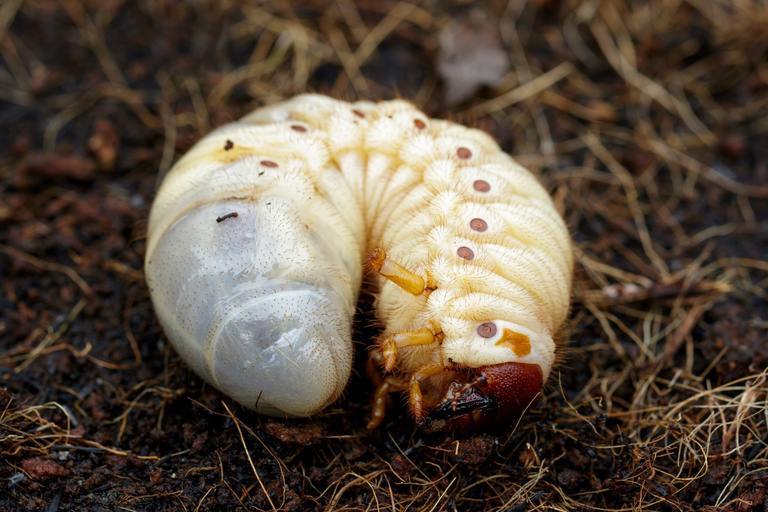
Grub worms are the immature stage of several beetles, including May beetles, June beetles, chafers, and related scarab beetles. They are usually white or cream colored, C-shaped, soft bodied, and found in the soil near grass roots. Extension resources describe true white grubs as larvae of May beetles, also called June beetles, though homeowners often use the term more broadly for similar turf-damaging beetle larvae.
The adult beetles lay eggs in the soil. After hatching, the larvae begin feeding on roots and organic matter around the thatch and soil line. Light activity may go unnoticed. Heavy feeding can weaken the turf, reduce its ability to take up water, and cause brown or yellow areas that do not recover with normal irrigation.
Grub problems are especially frustrating because the grass may look drought-stressed even when the real issue is root injury. If roots have been chewed down, the grass cannot anchor itself well or pull moisture from the soil efficiently.

Why Grub Worms Damage Lawns From Below
Unlike surface-feeding lawn pests, grubs attack the foundation of the turf. Grass depends on healthy roots for moisture uptake, nutrient access, and anchoring. When larvae feed heavily, the lawn may thin, wilt, or die in irregular patches.
University turf specialists note that white grubs can damage turfgrass by feeding on plant roots in the soil. That root feeding explains why damaged sections may feel spongy underfoot or lift away from the soil with very little resistance.
Homeowners often mistake early grub damage for:
- Drought stress
- Fertilizer burn
- Fungal disease
- Mower scalping
- Pet urine spots
- Chinch bug or sod webworm damage
- Normal summer heat stress
Those problems can look similar from a distance. The difference is usually found at the root zone. A drought-stressed lawn may be dry, but the roots are still attached. A grub-damaged lawn may pull up because the roots have been eaten.
Signs of Grub Worms in Lawn Areas
The most useful signs are not always obvious at first. Early grub damage can look like dull color, thinning turf, or small yellowing patches. As feeding continues, the damage becomes easier to spot.
Watch for these common warning signs:
- Yellow or brown patches that expand despite watering
- Turf that feels soft, loose, or spongy underfoot
- Grass that lifts like a mat when gently pulled
- Birds pecking repeatedly in the same lawn area
- Animals digging or tearing up turf to reach larvae
- Adult beetles around porch lights, shrubs, or turf during warm months
- Patchy areas near the edge of healthy and unhealthy grass
White grub damage is often most noticeable in late summer and early fall in many regions, and extension guidance notes that symptoms can include thinning, yellowing, weakening, and irregular dead patches. In warmer climates, pest pressure and turf stress can overlap for longer periods, which is why local inspection matters.
Do grub worms always mean the lawn needs treatment?
Not always. Finding one or two larvae in the soil does not automatically mean your yard needs treatment. Lawns can tolerate a low level of soil insects, especially when turf is healthy and well maintained.
The concern rises when there are multiple larvae in damaged areas, the grass is lifting easily, or the damage is spreading. The key is not just whether grubs are present. It is whether the population is high enough, active enough, and located in a vulnerable part of the lawn.
That is where a professional inspection can help. A technician can look at the turf, soil, irrigation pattern, pest activity, and nearby landscape conditions instead of treating every brown patch the same way.

How To Check for Grub Worms Without Tearing Up the Yard
Homeowners can do a simple inspection before deciding what to do next. Choose a spot at the edge of a damaged patch where brown grass meets healthier turf. That transition zone is often more useful than the center of a dead area because active larvae may still be feeding near living roots.
Use a small shovel or garden knife to lift a small section of turf. You do not need to tear up a large area. Check the top few inches of soil and thatch for white, C-shaped larvae. Then press the turf back into place and water lightly if needed.
When checking, pay attention to:
- How easily the grass lifts from the soil.
- Whether the roots look shortened, missing, or weak.
- How many larvae are present in the sample area.
- Whether the damaged area is spreading outward.
- Whether birds or other animals are repeatedly digging nearby.
If you find larvae but the lawn is otherwise healthy, keep monitoring. If the turf is loose, the roots are heavily damaged, or the problem is moving across the yard, it is time to consider a more complete customized pest control program.
Grub Worms vs. Other Lawn Problems
A good lawn inspection should not stop at “brown patch equals grubs.” Several lawn issues can overlap, especially during hot, wet, or humid weather.
How are grubs different from sod webworms?
Sod webworms feed closer to the thatch and grass blade level. Their damage often appears as chewed, ragged grass blades or expanding brown patches. You may also see small moths flying low over the lawn in the evening. If the damage seems closer to the surface, the All U Need guide to sod webworm lawn damage can help homeowners compare signs.
Grubs, by contrast, feed below the surface. Their damage shows up when roots are weakened or missing. If the grass lifts easily and you find C-shaped larvae in the soil, grubs become a stronger suspect.
How are grubs different from chinch bugs?
Chinch bugs tend to damage grass by feeding on plant juices, often creating yellowing or dead areas that expand in sunny, stressed turf. They are small and active near the thatch. Grub damage is tied more directly to root loss, spongy turf, and grass that can be peeled away.
How are grubs different from drought stress?
Drought stress usually affects exposed or poorly watered areas and may improve with corrected irrigation. Grub-damaged turf may still decline after watering because the roots are no longer functioning properly. If a patch remains brown while nearby turf with similar water exposure stays healthy, inspect the soil.

Why Animal Digging Can Be a Grub Clue
One overlooked sign of grub activity is animal damage. Birds, armadillos, moles, skunks, and other wildlife may dig into turf while searching for larvae. Sometimes the digging is more visible than the grub damage itself.
That does not mean every digging problem is caused by grubs. Animals may search for worms, insects, or other food sources. But if digging appears along with loose turf and brown patches, it is worth inspecting the soil.
This is also a reason to avoid guessing with over-the-counter products. Treating the wrong target can waste time while the lawn continues to decline. A home and lawn pest inspection helps separate grub activity from other lawn pests, soil issues, moisture problems, and wildlife pressure.
What Attracts Grub Problems to a Lawn?
Grub issues are tied to adult beetle activity, egg laying, soil conditions, turf health, and moisture. Homeowners cannot control every factor, but they can reduce conditions that make damage worse.
Common contributors include:
- Thick thatch that gives pests a protected zone
- Overwatering that encourages shallow roots and soft turf
- Weak or stressed grass that cannot tolerate root feeding
- Heavy beetle activity near lights, shrubs, or landscape beds
- Poor drainage or compacted soil
- A history of recurring lawn pest problems
Healthy turf is not immune, but it often tolerates pest pressure better. Proper mowing height, smart irrigation, and balanced lawn care help grass recover from mild stress. The goal is not to make the yard pest-free. The goal is to keep pest pressure from reaching damaging levels.
Can Homeowners Prevent Grub Damage?
Prevention starts with monitoring and lawn health. Once turf is badly damaged, recovery takes longer because the roots have already been compromised. A homeowner who checks early can often make better decisions.
Helpful prevention steps include:
- Walk the lawn regularly and note new yellow or brown patches.
- Check the edge of damaged turf before assuming it is drought.
- Avoid watering so frequently that roots stay shallow.
- Keep grass at the recommended height for the turf type.
- Reduce excess thatch when appropriate.
- Watch for adult beetle activity during warm months.
- Keep records of where damage appeared from season to season.
If you live in a region with year-round pest pressure, prevention may need to be more consistent. All U Need’s Florida pest control service areas are a useful reference for homeowners dealing with warm-weather lawn and household pest patterns.
Why DIY Grub Treatment Can Miss the Problem
DIY products can be tempting when brown patches are spreading. The challenge is that grub treatment depends on timing, pest stage, turf condition, and correct identification. Applying a product too early, too late, or to the wrong area may not solve the issue.
There are also safety considerations. Lawn products should always be used according to the label, kept away from children and pets as directed, and applied with care around water, edible plants, and pollinator-friendly areas. More product does not mean better control.
Professional lawn pest control is not just about applying treatment. It is about confirming the pest, determining whether treatment is justified, choosing the right approach, and protecting the rest of the yard from recurring damage.

What Professional Lawn Pest Control Looks For
A professional inspection should connect the symptoms above ground with evidence below ground. That means looking at the entire lawn system, not just the dead spots.
A technician may evaluate:
- The shape and spread of damaged patches
- Whether turf lifts easily from the soil
- The number and size of larvae found in sample areas
- The condition of roots and thatch
- Irrigation patterns and drainage
- Nearby beetle, ant, flea, tick, or mosquito activity
- Whether other lawn pests are contributing to the damage
- Whether recurring service would help reduce seasonal pressure
This broad view matters because lawns rarely have only one issue. The same yard that supports grubs may also support ants, fleas, ticks, mosquitoes, or other outdoor pests. All U Need’s pest library for common household and yard pests can help homeowners understand how different pests behave before assuming every lawn issue has the same cause.
When Should You Call for Help?
You do not need to call a professional every time you see one beetle larva. But you should get help when the signs point to active or spreading damage.
Consider scheduling an inspection when:
- Brown patches keep expanding.
- Watering does not improve the grass.
- Turf pulls up easily from the soil.
- You find multiple C-shaped larvae in damaged areas.
- Animals are repeatedly digging up the lawn.
- The same sections of yard decline each year.
- You are unsure whether the issue is grubs, disease, drought, or another pest.
It is also smart to ask for help when the lawn is part of a larger outdoor pest concern. For example, yards with recurring fire ants, mosquitoes, fleas, ticks, and lawn-feeding insects may benefit from a more complete plan. Homeowners dealing with mound-building ants can compare those risks with All U Need’s information on fire ant yard problems.
What Happens After Grub Damage Is Found?
Once grub activity is confirmed, the next step depends on severity. A few larvae in healthy turf may call for monitoring. Widespread root loss may require treatment and lawn recovery steps.
Homeowners should expect a plan that may include:
- Confirming the pest and damage pattern
- Treating active areas when appropriate
- Adjusting watering and mowing practices
- Monitoring for recurring activity
- Addressing related pests in the lawn or perimeter
- Giving damaged turf time to recover or regrow
Recovery is not instant. If roots have been heavily damaged, the lawn needs time to re-anchor and rebuild. In severe cases, some areas may need reseeding, resodding, or additional lawn care after pest pressure is reduced.
The Bottom Line on Grub Worms
Grub worms are easy to overlook because the real activity happens underground. By the time a homeowner sees brown patches, the roots may already be under stress. The clearest clues are loose turf, spongy patches, grass that pulls up easily, and white C-shaped larvae in the soil near damaged areas.
The best response is careful inspection, not panic. Some grubs are normal. Heavy feeding is different. When damage is spreading or the cause is unclear, professional lawn pest control can identify what is happening and help protect the yard before the problem becomes more expensive to repair.
A lawn is part of the home’s living space. Keeping it healthy means watching both what happens above the grass and what is working below the surface.