
Introduction
Sod webworms can make a healthy lawn look drought-stressed almost overnight. One week the grass seems fine, and the next you notice yellowing patches, ragged blades, low-flying moths, or birds pecking at the same area every morning. For homeowners, the frustrating part is that this damage can look like ordinary summer stress, lawn disease, irrigation trouble, or another turf pest.
The difference matters. If the real issue is a turf-feeding caterpillar, adding more water or fertilizer will not solve the problem by itself. In some cases, it can even make the lawn more attractive to pests by encouraging excess thatch or tender new growth. A good response starts with knowing what to look for, where to inspect, and when a small patch of turf damage has become a bigger lawn pest problem.
Why Sod Webworms Damage Lawns So Quickly
Sod webworms are the larval stage of small lawn moths. The adult moths are usually noticed first because they flutter low over the grass when disturbed by mowing, walking, pets, or outdoor activity. The moths themselves are not the turf-damaging stage. The real damage comes from the larvae, which feed on grass blades, often at night or near dusk.
These caterpillars chew the upper parts of grass blades and can leave the turf looking thin, ragged, yellow, or brown. According to turfgrass pest guidance on foliage-feeding caterpillars, early feeding injury is easy to overlook because small larvae may only scrape the leaf surface before larger larvae begin chewing more aggressively.
That is why the damage can feel sudden. The pest population may have been building quietly while the lawn still looked mostly normal. Once larger larvae are feeding heavily, brown patches can expand quickly, especially during hot, dry weather when the grass is already under stress.
For homeowners in warm, humid regions, a lawn that stays active most of the year can also support repeated pest pressure. A professional lawn pest control program is often built around this reality: the lawn is not a separate world from the home. It is part of the property’s pest environment.

What Do Sod Webworms Look Like?
Adult moths are small, tan, gray, or light brown insects that fly close to the lawn. They often move in short, fluttering bursts rather than flying high like butterflies or larger moths. Homeowners may notice them in the evening, around landscape lights, or when mowing sends them up from the grass.
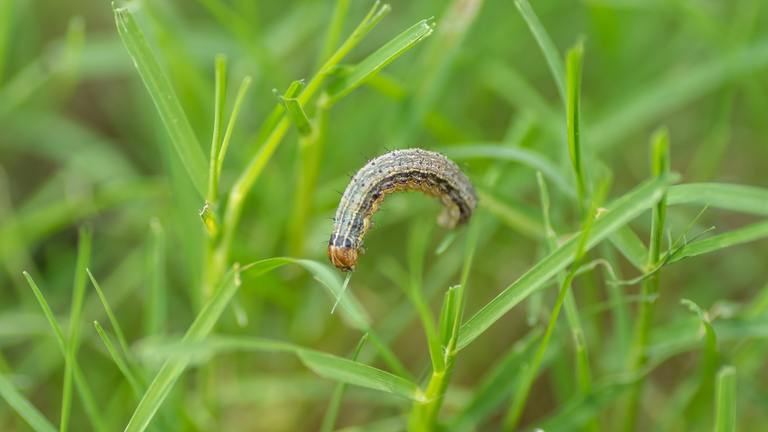
The larvae are small caterpillars. Depending on the species and stage, they may be greenish, tan, brownish, or spotted. They hide low in the thatch, near the soil surface, and among grass blades during the day. This makes them harder to see than moths.
Common signs include:
- Small moths flying low over turf when the lawn is disturbed
- Irregular yellow, tan, or brown patches
- Grass blades that look chewed, clipped, or ragged
- Thinning turf that does not respond normally to watering
- Birds feeding repeatedly in the same lawn areas
- Fine silk or webbing near the base of grass in some cases
- Damage that spreads outward from small patches
Not every brown patch means turf caterpillars are active. Drought, fungus, mower stress, chinch bugs, grubs, pet urine, and irrigation gaps can all create similar symptoms. That is why identification matters before treatment.
Why Does the Damage Look Like Drought?
One reason homeowners miss the problem is that the lawn often looks thirsty. Brown patches can appear in sunny, dry, or sloped areas, which are also the spots where ordinary heat stress shows up. The grass may look dull, thin, or straw-colored.
The difference is in the feeding pattern. Drought stress usually affects areas tied to water coverage, soil compaction, or heat exposure. Caterpillar feeding often leaves ragged blades and uneven patches that expand as larvae continue feeding. The edge between healthy and damaged turf can be the best place to inspect because active larvae are often feeding where the damage is still spreading.
The University of Georgia’s sod webworm guidance notes that yellow-brown patches can merge into larger dry-looking areas, especially when weather is dry. That overlap is exactly why a homeowner may keep adjusting sprinklers while the real pest problem keeps growing.
How to Inspect for Sod Webworms
You do not need to tear up the lawn to do a first check. Start with a slow visual inspection in the evening or early morning. Look at the transition zone where healthy grass meets thinning or brown turf. That is usually more useful than checking the dead center of a dry patch.
Where should homeowners check first?
Focus on these areas:
- Edges of yellow or brown patches
- Sunny, hot sections of turf
- Slopes or areas that dry faster
- Thatch-heavy sections of lawn
- Places where moths fly up during mowing
- Areas where birds repeatedly peck or forage
- Grass near landscape beds, sidewalks, or driveway edges
Part the grass and look close to the soil surface. You may see small caterpillars, clipped grass fragments, webbing, or greenish pellets of frass. If you see low-flying moths but no larvae, it does not automatically mean there is damaging activity. Moths are a clue, not a diagnosis.

Can a homeowner use a simple flush test?
Some extension resources describe a soapy water flush as a monitoring method for certain turf caterpillars. The idea is to irritate larvae so they move upward where they can be seen. If you try any inspection method, keep it limited, avoid harsh mixtures, and do not use random pesticide blends or household chemicals on the lawn.
If sod webworms are suspected across multiple areas, or if the lawn is already showing broad damage, a professional inspection is the better next step. A trained technician can separate caterpillar feeding from disease, drought, chinch bugs, grubs, mole crickets, or irrigation-related stress.
What Lawn Conditions Make Damage More Likely?
Turf pests usually take advantage of a lawn that is already under pressure. Healthy grass can often tolerate minor feeding better than stressed turf. When heat, drought, poor mowing, thatch buildup, or uneven irrigation weaken the lawn, feeding damage becomes more visible.
Conditions that can raise risk include:
- Excess thatch where larvae can hide
- Overgrown or stressed turf
- Repeated drought stress
- Over-fertilization with nitrogen
- Poor mowing height for the grass type
- Inconsistent irrigation
- Weak patches near sidewalks or driveways
- Lawn areas recovering from other pest or disease problems
The goal is not to make a lawn pest-proof. No outdoor space can be made completely pest-free. The goal is to make the turf less inviting, catch problems earlier, and use treatment only where it is justified.
A customized pest control program can be helpful because lawn pests rarely exist in isolation. The same yard may also support ants, fleas, ticks, mosquitoes, roaches, spiders, or other seasonal pests depending on moisture, shade, landscaping, and pet activity.
How to Prevent Sod Webworms From Spreading
Preventing sod webworms is really about reducing lawn stress and improving monitoring. You want to catch feeding while it is still patchy and manageable, not after large sections of turf have thinned out.
What lawn care steps help reduce risk?
Start with the basics:
- Mow at the proper height for your grass type.
- Avoid scalping the lawn.
- Keep mower blades sharp so grass is cut cleanly.
- Water deeply and appropriately rather than lightly every day.
- Avoid over-fertilizing, especially during stressful weather.
- Manage thatch when it becomes excessive.
- Watch for moth activity after mowing.
- Inspect patch edges before assuming drought.
- Keep records of where damage appears each season.
Well-maintained turf is not immune, but it is more resilient. The turfgrass pest overview from Cooperative Extension groups sod webworm larvae with other foliage-chewing lawn pests, which is useful because the inspection mindset is similar: look for feeding injury, not just the adult insect.
Should homeowners treat the whole yard?
Not automatically. Treating without confirming the pest can waste money, miss the real issue, and put unnecessary products into the landscape. A brown lawn does not always need insect treatment. It may need irrigation repair, disease management, mowing adjustments, or soil improvement.
When treatment is needed, the best approach depends on the pest stage, severity, turf type, weather, and product choice. Some turf caterpillar treatments work best when larvae are small and actively feeding. Large, established damage is harder to correct because the lawn may need time to regrow even after pest pressure is reduced.
Professional help is especially useful when damage is spreading, the pest is not obvious, or the property has recurring lawn pest issues. A technician can decide whether the problem calls for spot treatment, broader lawn treatment, follow-up monitoring, or a different diagnosis entirely.
How Are These Lawn Pests Different From Other Yard Problems?
A lawn can host many pests at the same time, and not all of them damage turf in the same way. Chinch bugs suck juices from grass blades. Grubs feed below the surface on roots. Fire ants build mounds and create sting risks. Fleas and ticks may live in shaded lawn areas but are usually a pet and bite concern rather than a grass-feeding problem.
That is why a lawn inspection should look at both turf health and homeowner use. A family with pets, children, and frequent outdoor activity may care just as much about bite and sting risks as grass damage.
For example, recurring fire ant mounds in play areas call for fire ant control that focuses on colony behavior and yard safety. Pet scratching or flea activity near shaded resting spots may point toward flea control rather than a turf-feeding caterpillar. Heavy evening mosquito pressure around damp lawn edges may require mosquito control and source reduction.
Ant activity can also be part of the broader yard picture. Some ants are nuisance pests, while others may show up around food, moisture, landscape edges, or disturbed soil. When ant trails or mounds are part of the problem, ant pest control may be a more relevant next step than treating the lawn for caterpillars.

When Should You Call a Professional?
A homeowner can do a lot by observing the lawn, improving cultural care, and watching for early signs. But there are situations where professional inspection is the smart move.
Call for help when:
- Brown patches spread quickly.
- Moths keep appearing over the same areas.
- Grass blades look chewed or clipped.
- Watering does not improve the turf.
- Birds are repeatedly feeding in the damaged zone.
- The lawn has a history of summer pest damage.
- You are unsure whether the issue is pests, disease, or drought.
- Damage is appearing in multiple sections of the yard.
- Pets or children use the affected lawn regularly.
Professional pest control is not just about applying a product. The real value is diagnosis. A good inspection looks at the insect, the turf, the weather pattern, irrigation, thatch, mowing conditions, and other pest activity around the property. That helps prevent the common mistake of treating the symptom while the actual cause continues.
Mississippi State Extension notes that tropical turf caterpillar outbreaks can require careful scouting because damage can appear quickly and overlap with other lawn issues. Their discussion of tropical sod webworm damage in warm-season turf is a good reminder that monitoring matters before severe injury is visible.
What Happens After Treatment?
Even when the pest is controlled, the lawn may not look better immediately. Damaged grass needs time to recover, and severely thinned patches may need additional lawn care attention. Recovery depends on the grass type, season, irrigation, soil condition, and how much living turf remains.
After treatment or inspection, homeowners should keep watching the patch edges. If the brown areas stop expanding and new growth appears, the lawn is moving in the right direction. If damage continues spreading, the problem may not be fully controlled, or another cause may be involved.
A follow-up plan may include:
- Rechecking damaged areas after several days
- Adjusting irrigation if the lawn is stressed
- Correcting mowing height
- Reducing thatch if needed
- Monitoring for new moth activity
- Watching for other lawn pests
- Repairing bare or weakened areas once pest pressure is controlled
The key is patience with the turf but not with the diagnosis. If the damage pattern keeps changing, get it checked before more of the lawn is lost.
The Bottom Line for Homeowners
Sod webworms are easy to miss because the adult moths seem harmless and the larvae hide low in the turf. By the time brown patches become obvious, feeding may already be active along the edge of the damaged area. That is why homeowners should look for a combination of clues: low-flying moths, ragged blades, spreading yellow-brown patches, bird activity, and turf that does not respond normally to water.
The best response is not panic and not guesswork. Start with inspection, improve lawn conditions, avoid unnecessary chemical use, and bring in professional help when the damage is spreading or the cause is unclear. A healthy lawn is part of a healthier property, and catching turf pests early can protect both the appearance of the yard and the way your family uses it.