Found Carpenter Ant Frass? What Homeowners Should Do Next

Published: April 28, 2026
Introduction
If you spot a small pile of coarse, sawdust-like debris under a windowsill, near a door frame, or along baseboards, it is easy to assume you are looking at leftover construction dust or ordinary wood shavings. In many homes, though, that material can be carpenter ant frass, which is one of the clearest clues that ants may be tunneling nearby.
This matters because carpenter ants are not just random visitors from outside. When they start pushing debris out of nesting galleries, they are telling you something about the condition of the wood in or around your home. In many cases, they are also pointing to another issue, such as excess moisture, aging trim, a hidden leak, or decaying wood behind the surface.
For homeowners, the big challenge is that carpenter ant activity is often discovered late. You may not see the ants during the day, and you may not notice damage until the debris starts collecting in places that are hard to ignore. The good news is that once you know what to look for, you can respond more quickly and avoid confusing carpenter ants with termites or harmless dust.
What Is Carpenter Ant Frass?
Carpenter ant frass is the material carpenter ants remove from the galleries they carve inside wood. Unlike termites, carpenter ants do not eat wood for nutrition. They excavate it to create nesting space. As they clean out those tunnels, they push waste material out through small openings.
That debris can include:
- shredded wood fibers
- bits of insulation or soil
- dead ants or insect body parts
- fine debris from inside the wall or trim cavity
This is one reason frass matters so much. It is not just random mess. It is evidence that ants have been active long enough to excavate wood and clear out a living space.
Carpenter ants commonly nest in damp or water-damaged wood, although they may expand into drier sound wood once a colony is established. That is why frass is often both a pest clue and a moisture clue at the same time.

Why Do Carpenter Ants Leave Debris Behind?
Carpenter ants are tidy nesters. As they enlarge their galleries, they remove material that would otherwise block their movement. They do not leave it packed inside the wood. Instead, they create small kick-out holes and dump the debris outside the nest.
Homeowners often first notice this after:
- sweeping up the same mysterious pile more than once
- seeing debris reappear beneath trim or window frames
- finding coarse particles near an exterior door, porch beam, or sill
- spotting larger black or reddish ants at night in the same area
Turner Pest Control and other regional pest companies are currently emphasizing carpenter ant activity in damp wood around eaves, porches, windows, and rooflines, which lines up with what pest professionals often see in humid markets. That makes this a timely topic for homeowners in Florida, South Carolina, and nearby service regions where moisture, storms, and shaded landscaping can all create inviting nesting conditions.
What Does Carpenter Ant Frass Look Like?
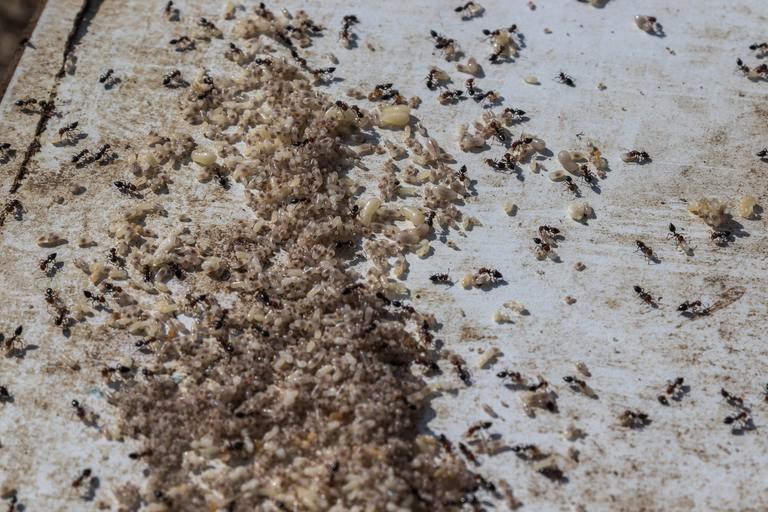
Carpenter ant frass usually looks rougher and more irregular than plain sawdust. The texture is often one of the easiest ways to tell that you are not looking at simple wood dust from a repair project.
Here is what homeowners commonly notice:
- a small pile of coarse, fibrous shavings
- a mix of light and dark particles rather than one uniform color
- tiny insect parts mixed into the debris
- material collecting under a crack, seam, sill, or hole in woodwork
The debris may look almost like pencil shavings that have been broken into smaller pieces. In some homes it appears tan, while in others it looks darker because it is mixed with insulation, dirt, or body parts from insects the ants have cleaned out of the nest.
Carpenter ants deposit sawdust-like material from gallery openings, which helps separate their activity from other wood-destroying pests. That distinction is important because one pile of debris can send a homeowner down the wrong path if they assume every wood-related sign means termites.

Carpenter Ant Frass vs. Termite Evidence
One of the most common homeowner questions is whether ant debris means termites. That confusion makes sense. Both pests involve wood, both can stay hidden, and both may be discovered only after visible clues appear.
Here is the simplest way to think about it:
Carpenter ants push out debris
Carpenter ants hollow out wood to create nesting galleries. The material they remove gets kicked out, which is why frass piles form outside the nest.
Termites leave different signs
Termites actually consume cellulose in wood. Depending on the species, homeowners may see mud tubes, blistered wood, hollow-sounding trim, discarded wings, or pellet-like droppings rather than coarse debris.
If the material you are seeing looks like uniform pellets, termite activity becomes more likely. If it looks like irregular sawdust mixed with insect parts, carpenter ants become more likely. Carpenter ants prefer to excavate wood rather than eat it, which is a useful distinction when comparing signs.
This is also where relevant internal education can help homeowners sort through the confusion. If you are trying to compare wood-damaging pests, All U Need Pest Control’s termite information page and termite control service page explain several other signs that deserve attention.
Where Do You Usually Find Carpenter Ant Frass?
Carpenter ant frass is most often found below the area where the ants are nesting or close to a kick-out hole they are using to clean the gallery.
Common locations include:
- beneath windowsills
- near door frames
- under roof eaves
- along baseboards
- around crawl space framing
- on porch posts and deck components
- near chimneys, skylights, or wall voids with past moisture problems
- below bathroom or kitchen walls where plumbing leaks have occurred
Outside, frass may also show up around tree stumps, landscape timbers, fence posts, or wooden structures that stay damp after rain. Inside, it often appears in quiet areas where people do not look every day, such as utility rooms, garages, attics, or under seldom-used windows.
If you keep cleaning up a pile and it comes back, that is a strong sign that the source is active rather than leftover debris from an old issue.

Why Moisture Problems and Carpenter Ants Go Together
Carpenter ants have a strong preference for wood that has already been softened by moisture. That does not mean every colony begins in rotten wood, but moisture damage often makes it easier for the ants to start excavating.
Common conditions that attract them include:
- roof leaks
- poor flashing around windows
- plumbing drips inside walls
- clogged gutters that keep trim wet
- sprinkler overspray against siding
- wood-to-soil contact near the foundation
- heavy shade that slows drying after rain
This is why a carpenter ant problem is rarely just an ant problem. In many homes, the insects are taking advantage of a condition that also needs correction. If treatment removes the ants but the moisture source remains, the home may stay attractive to future colonies.
That is part of the reason professional inspection matters. A good inspection does more than identify the insect. It also helps map the conditions that allowed the activity to start.
Can Carpenter Ant Frass Mean Structural Damage?
Carpenter ant frass does not always mean severe structural damage, but it should never be brushed off as harmless. The seriousness depends on where the nest is, how long it has been active, and whether there are one or multiple nesting sites.
A few important points help put this in perspective:
Carpenter ants are not termites, but they can still damage wood
They do not eat the structure the way termites do, but repeated excavation weakens wood over time, especially when the wood was already damp or decayed.
Satellite nests are common
A colony may have a parent nest outdoors and a satellite nest inside your home. That means indoor frass does not always tell the whole story. The visible debris may be coming from one section of a larger infestation.
Hidden damage can spread farther than the pile suggests
The frass pile you see is only the discarded material. The actual gallery may extend behind trim, inside wall voids, or into adjacent framing.
If you are already seeing visible debris, it is smart to assume the ants have been there for a while. That does not mean panic is warranted. It does mean delay is rarely helpful.
What Should You Do If You Find It?
If you think you have found carpenter ant evidence, focus first on observation and documentation rather than aggressive DIY spraying.
A practical first response looks like this:
- Take a close photo of the debris and the surrounding area.
- Look above the pile for a crack, seam, pinhole, or damaged section of wood.
- Check at night for ant activity with a flashlight.
- Note any leaks, staining, soft wood, or musty odors nearby.
- Avoid scattering the entire pile before you inspect the area.
- Schedule a professional inspection if the debris returns or live ants are present.
Many homeowners make the problem harder to diagnose by vacuuming everything up and then spraying a general insect product into the opening. That may kill a few visible ants, but it often does not reach the nest and can make activity more scattered.
For broader ant issues, All U Need Pest Control’s ant control service page and ant pest library give homeowners a useful overview of common signs, species, and treatment expectations.

Can You Handle Carpenter Ants Yourself?
DIY efforts can help reduce conditions that support carpenter ants, but they usually do not solve a hidden nesting problem by themselves.
Homeowners can help by:
- fixing leaks quickly
- replacing damaged wood
- trimming branches away from the house
- improving ventilation in damp spaces
- moving firewood away from the structure
- reducing mulch buildup against siding or foundation walls
Those steps matter. Still, once frass is showing up indoors, treatment usually works best when paired with a professional inspection that can identify nest location, colony extent, and whether the problem is limited to one area or tied to a larger exterior source.
That is where a company with a strong local process can make a difference. All U Need Pest Control explains its inspection-first approach, which is helpful for homeowners who want to understand what a service visit should actually accomplish.
What Questions Should Homeowners Ask During an Inspection?
If you schedule an inspection, ask direct questions that help you understand both the pest issue and the home conditions behind it.
Useful questions include:
- Does this debris look consistent with carpenter ants, termites, or something else?
- Where is the most likely nest location?
- Is there evidence of moisture damage near the activity?
- Could there be an outdoor parent nest feeding an indoor satellite nest?
- What wood or trim should be repaired after treatment?
- What prevention steps matter most for this specific area of the home?
These questions move the conversation beyond “Do I have ants?” and toward “Why did this happen here, and how do I keep it from happening again?”

When Is It Time to Call a Professional?
You do not need to wait for major damage, a large swarm, or dozens of visible ants. Calling a professional makes sense when:
- the debris keeps returning
- you see large ants indoors, especially at night
- the pile is near a known moisture issue
- wood feels soft, hollow, or stained
- you are unsure whether the evidence points to ants or termites
- activity is occurring in structural trim, framing, or exterior wood features
This is especially true in warm, humid climates where wood-damaging pests can stay active for long stretches of the year.
Final Thoughts
Finding a mysterious pile of debris in your home can feel minor at first, but carpenter ant frass is one of those clues that deserves a closer look. It often tells a bigger story about hidden nesting, damp wood, and conditions that should be corrected before they turn into a larger repair problem.
For homeowners, the goal is not to panic. It is to identify the sign correctly, avoid confusing it with termite evidence or ordinary dust, and respond early enough that treatment and repairs stay manageable. When frass appears more than once, or shows up alongside moisture problems or live ants, it is usually time for a trained inspection and a more complete plan.