
Introduction
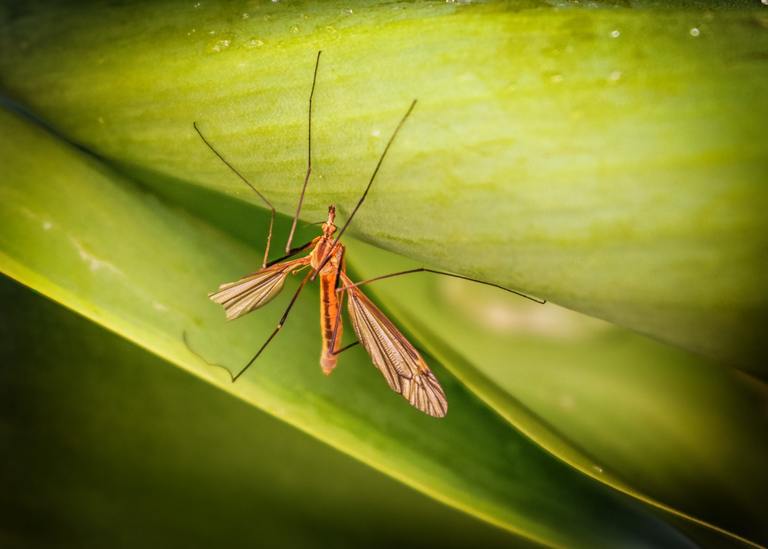
You turn on your porch light and step outside. Suddenly, a long-legged bug bumps into the door. It looks like a giant mosquito. Right away, you wonder, is this thing going to bite me?
The quick answer, no. Crane flies do not bite. They do not sting, and they do not suck blood. They are not dangerous to people. They just look alarming because they resemble oversized mosquitoes. Sometimes when we go out to homes, this is one of the first questions we get: “Do these things bite?”
Most crane fly sightings are harmless. But when they show up repeatedly, it usually means something in the environment is attracting them. If you’re dealing with more than one type of insect around your home, it may help to look at a broader pest control service approach instead of focusing on just one bug.

Why Crane Flies Look Scary
Crane flies are often called “mosquito hawks” or “skeeter eaters.” Those names make them sound aggressive, but they’re not.
What stands out right away is their appearance:
- Very long, thin legs
- Narrow, stretched-out bodies
- Slow, unsteady flight
They tend to drift toward lights and bounce off walls, windows, and ceilings. That movement feels unpredictable, which is why people assume they’re more dangerous than they are.
In reality, they’re just poor fliers. We’ve had homeowners try to swat one, only to watch it float back toward the same light again and again. If you want a deeper breakdown of their structure and behavior, this crane fly identification guide provides a clear overview.

Crane Fly vs Mosquito: Quick Difference
At a glance, crane flies and mosquitoes can look similar. But their behavior quickly gives them away.
- Crane flies are larger with long legs that hang down in flight
- Mosquitoes are smaller and more controlled in how they move
- Crane flies do not bite
- Mosquitoes actively seek people or pets to feed on
A simple way to tell: mosquitoes land and stay still to bite. Crane flies don’t behave that way. They rarely land on people, and if they do, they move on quickly. If you’re getting bites, you’re dealing with a different pest. In many cases, that points to mosquitoes, which may require targeted mosquito control around your home.
Why You See Crane Flies in Your House
Crane flies belong outdoors. When you find them inside, they came in by accident.
This usually happens because:
- Porch or entry lights draw them in
- Doors or windows are open, even briefly
- They developed nearby in damp soil
Once inside, they don’t survive long. They’re not built for indoor conditions and don’t reproduce inside homes.
A common situation is finding one resting near a light fixture or window in the morning. It likely entered the night before and couldn’t find its way back out. If insects are getting inside often, it may be worth scheduling a home pest inspection to identify entry points.
What Crane Flies Are Doing
Adult crane flies are in a short final stage of their life cycle. Their main focus is reproduction. Many don’t feed much at all during this stage. Instead, they use stored energy from when they were larvae.
They look for moist soil where they can lay eggs. Lawns, garden beds, and damp areas are common spots. Because they develop at the same time, you may see several adults appear within a few days. This often happens after rainy weather or periods of heavy watering.
The activity can feel sudden, but it doesn’t last long. Adult crane flies only live for a few days to about a week. Research on crane fly behavior shows that adults are short-lived and mainly focused on reproduction, not feeding on people, which you can read more about in this crane fly lifecycle resource.
When Crane Flies Can Be a Problem
The adults themselves are harmless. The concern, when there is one, is below the surface. Crane fly larvae live in the soil and feed on grass roots and organic material. When their numbers are high, they can weaken turf.
Signs to watch for include:
- Grass that looks thin or struggles to grow back
- Brown or uneven patches
- Birds repeatedly pecking at the same areas
- Soil that feels soft or stays wet
Bird activity is often one of the first noticeable clues. They are feeding on what’s in the soil. Not every crane fly sighting means there is damage. But if lawn issues appear at the same time, it’s worth checking more closely.
In these cases, a targeted lawn pest control service can help confirm what’s happening below the surface. For more detail on how larvae affect turf, this crane fly larvae lawn damage guide explains what to look for.

Why Crane Flies Show Up in Some Yards
Crane flies are strongly tied to moisture levels in the soil. They are more likely to show up in yards where conditions support their larvae, such as:
- Overwatered lawns
- Poor drainage that keeps soil wet
- Low spots that collect water
- Thick thatch layers that trap moisture
These conditions create a stable environment for larvae to grow. If the moisture problem continues, the cycle repeats. Addressing both moisture and pest activity together is key, which is why many homeowners pair this with ongoing general pest control. That’s why some homes see crane flies every year while others rarely do.
How to Reduce Crane Fly Activity
You don’t need aggressive treatment in most cases. The focus should be on changing the conditions that allow them to develop.
Start with:
- Keeping doors and windows properly screened
- Repairing any damaged screens
- Reducing how often and how long you water your lawn
- Adjusting irrigation to avoid soggy areas
- Improving drainage where water collects
These steps make your yard less attractive for egg-laying and larval growth. Treating the flying adults usually has little impact. By the time you notice them, their life cycle is almost complete.
When to Call a Professional
It’s a good idea to call a professional if:
- You’re unsure what insect you’re seeing
- Crane flies keep appearing indoors
- Your lawn is not improving or getting worse
- You’re experiencing bites and don’t know the source
An inspection helps confirm whether crane flies are the issue or if another pest is involved. It can also reveal moisture or lawn conditions that may be contributing to the problem, which is where a full pest inspection becomes valuable.

Final Answer: Do Crane Flies Bite?
No, crane flies do not bite. They are harmless to people and are usually just a temporary nuisance when they show up around lights or inside your home. If you’re seeing them often or noticing lawn changes at the same time, it may be a sign of underlying moisture or turf issues.
At All U Need Pest Control, we help homeowners identify the cause and fix it at the source. Whether it’s crane flies, mosquitoes, or lawn pests, we provide solutions designed to address the root of the problem, not just what you see. If crane flies or other pests are becoming a concern, contact us today to schedule a professional inspection and get a plan that protects your home long-term.