
Introduction
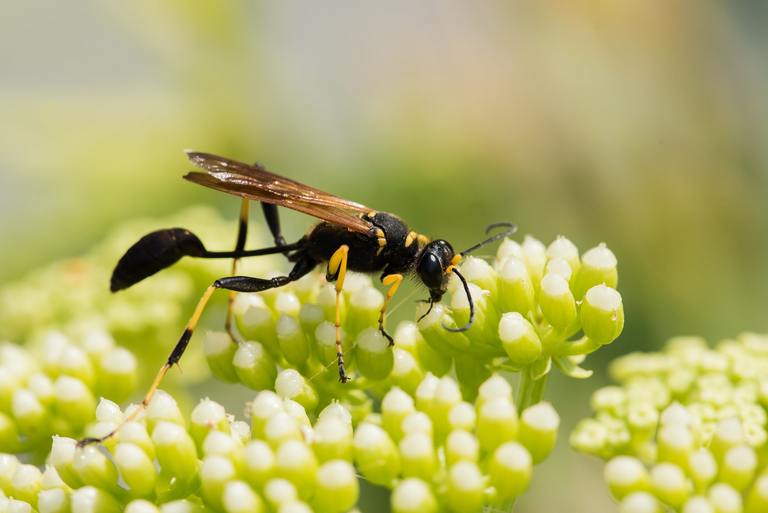
A long, skinny wasp around your porch can make any homeowner nervous. But not every wasp behaves the same. Mud daubers fall under the broader category of wasps, but they act very differently than the aggressive species most homeowners worry about. But a mud dauber is not the same problem as a yellowjacket nest in the yard or a paper wasp colony over the entryway. Mud daubers belong to the broader group of wasps, but their behavior is much less defensive than other insects covered in our stinging pests resources.
If you searched for “mud dauber sting,” the short answer is this: a mud dauber sting is usually a low-risk, localized sting, not the kind of aggressive nest-defense event homeowners expect from social wasps. Most reactions stay limited to pain, redness, and swelling at the sting site.
Mud Dauber Sting: The Main Thing Homeowners Need to Know
Yes, mud daubers can sting. No, they usually do not go looking for a reason to do it.
That difference matters. Homeowners often assume every wasp around the house poses the same threat. In reality, mud daubers are solitary. They are focused on building mud nests and hunting spiders-not defending a colony. A technician can stand a few feet away from an active mud dauber nest and never get challenged. That’s very different from social wasps, where simply walking too close can trigger a defensive response.

How to Tell a Mud Dauber From a More Aggressive Wasp
Mud daubers have a thin, thread-like waist and a long body. If you’re unsure what you’re looking at, our full pest library can help compare common species found around homes. Their nests look like small tubes or clumps of dried mud attached to walls, ceilings, or eaves.
Other wasps behave differently, and this is where misidentification happens:
- Paper wasps build open, umbrella-shaped nests that hang downward. You can usually see the individual cells.
- Yellowjackets hide their nests in the ground or inside wall voids, which is why people often disturb them by accident.
If you see mud tubes, you are likely dealing with mud daubers-not a highly aggressive species. Getting this right matters, because treating a mud dauber like a yellowjacket problem often leads to unnecessary worry or over-treatment.
What Does a Mud Dauber Sting Feel Like?
Most people describe it as a sharp sting followed by a quick burning sensation. After that initial sting, symptoms usually stay localized.
Common reactions include:
- Redness – typically limited to the immediate area around the sting
- Swelling – may increase for a few hours before gradually going down
- Mild pain or burning – strongest right after the sting, then fades
- Itching afterward – often shows up later as the skin starts to heal
These symptoms usually improve within a day or two. In many cases, the discomfort is more noticeable than dangerous.
When a Sting Is More Serious
Most mud dauber stings are minor, but it’s important to recognize when something is not normal.
Watch for signs of an allergic reaction:
- Trouble breathing – tightness in the chest or wheezing is a red flag
- Swelling of the face or throat – especially lips, tongue, or airway
- Widespread hives – not just at the sting site, but across the body
- Dizziness or fainting – can signal a drop in blood pressure
If any of these occur, seek emergency care immediately. These symptoms point to a systemic reaction, not a simple local sting.

Why Mud Daubers Show Up Around Homes
Mud daubers are not random. If you’re seeing them repeatedly, your property is providing exactly what they need.
They are drawn to three main things:
- Mud – used to build their nests, often collected from damp soil or puddles
- Spiders – their primary food source, which they paralyze and store in nests. You can learn more about this connection on our spider pest page and how it impacts your home.
- Sheltered surfaces – areas protected from rain and direct sun
That’s why they often appear around:
- Porch ceilings – quiet, protected, and rarely disturbed
- Garages – especially if doors stay open and spiders are present
- Sheds – low-traffic structures that give them time to build undisturbed
- Eaves and overhangs – ideal for keeping mud nests dry
When a technician sees multiple mud nests, they usually don’t just remove them. They also evaluate whether broader home pest control is needed to address the conditions causing repeat activity. They also look for spider activity and moisture sources, because those are what keep the cycle going.
Where Mud Daubers Commonly Nest on Homes
Certain parts of a home get used over and over again, and it’s not by accident. Mud daubers look for spots that stay dry, undisturbed, and slightly hidden.
The most common nesting areas include:
- Under eaves and soffits – protected from rain and rarely cleaned
- Garage interiors – especially corners, rafters, and above door tracks
- Porch ceilings and beams – ideal height and shelter
- Behind shutters or outdoor décor – hidden and undisturbed
- Sheds and storage buildings – low traffic makes these prime locations
If nests keep showing up in the same place, it usually means that area consistently provides the right conditions. Simply knocking down the nest won’t solve the problem unless the surrounding conditions change.
Are Mud Daubers Beneficial or Just a Nuisance?
Mud daubers do have one benefit: they help control spider populations. However, if spider activity is high enough to attract them, it may be worth looking into professional spider control services. Each nest cell is stocked with paralyzed spiders, which means fewer spiders around your home over time.
But that doesn’t automatically make them welcome.
In real-world homes, the downside usually outweighs the benefit. Mud nests build up on surfaces, leave stains, and show up in visible areas like entryways and patios. More importantly, their presence often signals that spider activity is already high.
So while they’re not harmful in the same way as aggressive wasps, they’re still a sign that your exterior environment is supporting pest activity.

Are Mud Daubers Dangerous?
In most cases, no. They are not aggressive and rarely sting unless handled or trapped. Compared to other wasp control situations, they are considered low risk.
However, they can still become a concern in certain situations:
- Nests near doors or high-traffic areas – increases the chance of accidental contact
- Children may disturb them – curiosity often leads to poking or touching nests
- Sting allergies in the home – even a mild species becomes a serious risk
So while the insect itself is low-risk, the location and circumstances around it can change how urgent the problem is.
What to Do After a Mud Dauber Sting
If you do get stung, simple first aid is usually enough.
Start with these steps:
- Clean the area with soap and water – helps prevent irritation or infection
- Apply a cold pack – reduces swelling and numbs the area
- Take an antihistamine if needed – helps control itching and mild swelling
- Monitor for unusual symptoms – especially anything beyond the immediate area
Most stings improve quickly with basic care. The key is watching for anything that suggests a stronger reaction.
Common Misidentification Mistakes Homeowners Make
One of the biggest issues we see is homeowners assuming every wasp is aggressive. Mud daubers are often mistaken for paper wasps or even yellowjackets, which leads to unnecessary concern.
The most common mistakes include:
- Assuming all wasps will attack – mud daubers rarely defend their nests
- Confusing mud nests with active colonies – many mud nests are already abandoned
- Treating a minor issue like a major infestation – especially when only one or two wasps are present
Correct identification changes how the problem should be handled. In many cases, the real issue isn’t the wasp-it’s the conditions attracting it.
How to Prevent Mud Daubers Around Your Home
Prevention is less about spraying and more about removing what attracts them.
- Remove old mud nests – once abandoned, these can attract new nesting in the same spot
- Reduce spider activity – fewer spiders means less food, which makes the area less appealing
- Fix water leaks or damp areas – dripping hoses and wet soil create easy mud sources
- Keep exterior areas clean and maintained – especially corners, ceilings, and storage spaces
Homeowners often knock down nests but leave the conditions untouched. That’s why the problem keeps coming back in the same locations.

When to Call a Professional
Not every mud dauber sighting requires professional treatment, but some situations do.
Call a pest control professional if:
- Nests keep coming back – indicates an ongoing attractant or pattern
- You’re unsure what type of wasp you’re dealing with – misidentification can lead to risk
- Nests are in hard-to-reach or risky locations – such as high eaves or near entryways
A professional inspection focuses on the full picture-not just removing a nest, but identifying why it’s there and how to stop repeat activity. This is especially important in regions like Florida, Texas, and South Carolina where year-round pest pressure is common.
Conclusion
A mud dauber sting is usually mild, but repeated activity around your home shouldn’t be ignored. Identifying the insect correctly and addressing the conditions that attract them is the key to long-term control.
If you’re seeing mud dauber nests or frequent wasp activity, All U Need Pest Control can help. Our team provides detailed inspections and targeted treatments to remove current activity and prevent it from coming back. Contact us today to schedule your service through our contact page.