
Introduction
You open a trash can, move a bag of onions, or pull something out from under the sink and suddenly there they are: small white larvae wriggling around in a cluster. It feels like they appeared out of nowhere. They did not. Maggots are a sign that flies found a wet food source before you did.
The short answer is simple: maggots come from fly eggs. Adult flies lay those eggs on moist, decaying organic material. That can be garbage, spoiled produce, meat drippings, pet waste, drain sludge, or even a dead animal hidden in a wall or attic.
That matters because maggots are not the root problem. They are the symptom. If you are seeing them, something nearby is feeding them.
So, where do maggots come from?
Maggots are the larval stage of flies. In warm conditions, house fly eggs can hatch in as little as 8 to 20 hours, and common indoor flies can go from egg to adult in about a week when conditions are favorable. That is why homeowners often say the problem “showed up overnight.” In many cases, the flies were there first, the eggs were too small to notice, and the larvae only became obvious once they started feeding.
A true maggot is usually smooth, cream-colored, legless, and slightly tapered at one end. After feeding for a few days, it often crawls away from the wet source to find a drier place to pupate. That is why you may spot them along a baseboard, near the edge of a cabinet, or just outside a trash area and assume they came from the floor itself. Usually, they crawled there from the real source.

What homeowners misidentify all the time
Not every little white larva in a home is a maggot. That is one of the most common mistakes we see.
If you find larvae in rice, cereal, flour, dry pet food, or other stored pantry items, you may be dealing with pantry pests instead of fly larvae. Pantry pest infestations are more likely to involve damaged packaging, webbing, contamination inside dry goods, and larvae that stay in the food itself. If you are not sure what you are looking at, our Pest Library can help you compare common household pests before you treat the wrong issue.
That difference matters. Maggots usually point to moisture and decay. Pantry pests usually point to infested dry goods. If the issue keeps returning in cabinets or food storage areas, it often needs a different cleanup plan or targeted pantry pest control treatment rather than fly control.
The places maggots usually come from indoors
The most common source is simple: a fly got access to something wet before it was sealed, removed, or cleaned up.
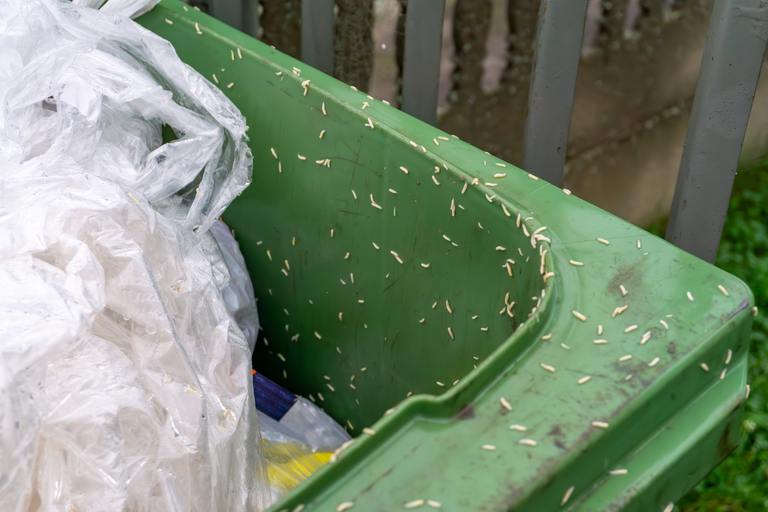
Trash cans are a major one. A loose bag, a rip in the liner, meat packaging juices, old takeout, or a layer of residue stuck under the lid can be enough. House flies and other nuisance flies develop in garbage, kitchen waste, fermenting vegetables, animal waste, and other moist organic material. That is why a trash can may look “mostly fine” at a glance but still produce maggots around the rim, under the bag, or on the floor below it.
Another common source is overlooked food. We are talking about the bag of potatoes in the pantry that got soft in the back corner, onions leaking into the bottom of a basket, produce forgotten in a garage fridge drawer, or food residue that worked its way under the refrigerator. Flies do not need a huge mess. They need moisture, odor, and something organic to feed their larvae.
If the problem is centered around a sink, shower, floor drain, or garbage disposal, some homeowners are not dealing with classic trash-bin maggots at all. They may be seeing drain fly larvae or another flying pests issue developing in the slimy organic film inside wet drains. That is why a quick rinse or a one-time treatment often fails. The breeding material is stuck to the drain walls, not floating loosely in the pipe.
Pet waste is another major attractant. NPIC notes that fly larvae usually develop in animal waste, garbage, decaying plant matter, compost, grass clippings, and other moist environments. That means dirty litter areas, puppy pads, outdoor trash bins, and dog waste left too long in the yard can all support fly breeding.
Then there is the source homeowners often miss completely: a dead animal in a hidden space. When maggots show up away from the kitchen, especially near one vent, one baseboard, one attic hatch, or one garage wall, a hidden carcass moves way up the suspect list. Blow flies and related nuisance flies commonly breed in carrion or pet waste. If you are also seeing signs of rodent activity or suspect something died in a wall void, attic, or crawl space, the problem may require professional rodent removal as much as fly control.

Why maggots matter more than most people realize
Maggots do not mean your home is filthy, and they are not chewing through your structure. But they do mean something organic is actively supporting fly breeding.
That matters because house flies and other filth flies can move from garbage or feces to food-prep areas, and house flies can mechanically transmit disease organisms. In plain English, the larvae are not the only issue. The bigger issue is the adult fly activity and the source the flies are using. If you only kill what you can see and never remove the breeding material, you get the same cycle again a few days later.
What to do as soon as you find maggots
Start with the source, not the larvae.
- Remove the infested material completely. That could be spoiled food, trash, a dirty liner, animal waste, or anything wet and organic nearby.
- Seal it in a bag and get it out of the home right away.
- Scrub the container, nearby floor, and surrounding surfaces with hot soapy water and a disinfectant.
- Check under the trash bag, inside the lid lip, under nearby appliances, and around pet feeding or litter areas.
- If activity is near a drain, clean the organic buildup from the drain walls and disposal splash guard.
- If droppings or a dead rodent are involved, wear gloves, use disinfectant, and do not vacuum or sweep dry droppings.
What usually trips homeowners up is incomplete cleanup. They wipe the obvious mess, kill the visible larvae, and assume the problem is solved. But flies lay eggs in batches, and the development cycle is fast. Miss one wet pocket of residue, and the issue starts over.
What our technicians inspect first
When we inspect a maggot complaint, we do not start with the wriggling larvae. We start with the odor source and the moisture source.
That usually means checking the trash can rim, the floor under the can, the bottom of produce baskets, under appliances, around drains and garbage disposals, and any room where adult flies are clustering. If the pattern is tied to one wall, one ceiling vent, or one corner of a garage, hidden animal remains become much more likely. That inspection-first approach is the reason repeat problems usually get solved faster than one more round of surface cleanup.

How to keep maggots from coming back
Prevention is not complicated, but it does need to be consistent.
Take trash out before it starts to ferment. Wash bins instead of only changing liners. Refrigerate produce and meat promptly. Pick up pet waste. Fix slow drains and leaks before wet organic buildup starts. If you keep seeing flies indoors, deal with that early instead of waiting until larvae appear. A recurring problem is often a sign that broader home pest control makes more sense than chasing one symptom at a time. If you want more general maintenance guidance, our FAQs are a good place to start.
When to call a professional
You should stop trying to handle it as a simple cleanup issue when maggots keep coming back, adult flies keep appearing every day, the odor is strong but the source is hidden, or the activity seems to be coming from a wall, attic, crawl space, or drain line you cannot access well.
At that point, the value is not in spraying more product. The value is in finding the real source, confirming what species you are dealing with, and making sure the breeding material is actually removed. That is especially true when the problem may involve drain buildup, hidden animal remains, or a wider pest issue elsewhere in the home.

Conclusion
So, where do maggots come from? They come from fly eggs laid on a moist organic source. The reason they seem to appear from nowhere is that the eggs are easy to miss and the life cycle moves fast in warm conditions. The real fix is not just killing larvae. It is finding what is feeding them and removing it completely.
If you are seeing repeat maggots, unexplained fly activity, or signs of a hidden source somewhere in the house, professional help can stop the issue at the source. All U Need Pest Control provides inspections and targeted solutions designed to identify breeding areas, remove contributing conditions, and help prevent the problem from coming back. You can view our service areas or contact our team to schedule an inspection.