
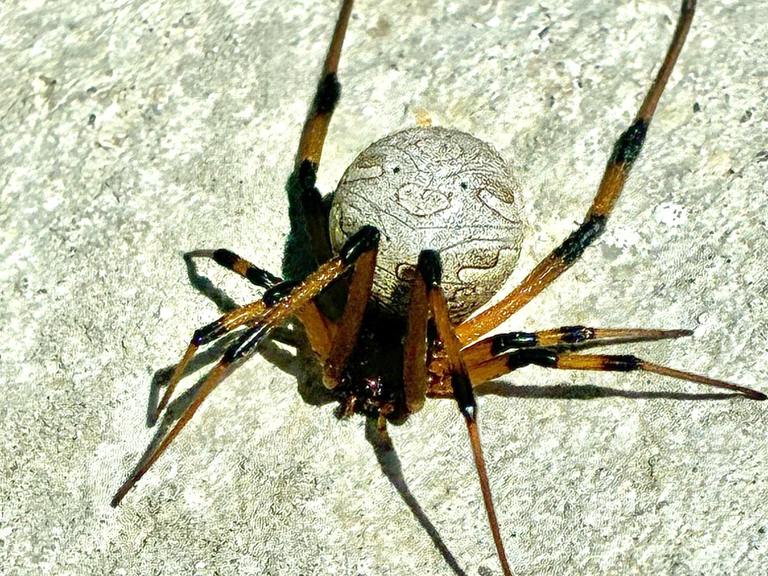
What Is a Brown Widow?
The brown widow is a spider that has become increasingly common in many warm regions of the United States, particularly in the Southeast. While many people are familiar with the black widow, fewer recognize its lighter colored relative. Because of this confusion, homeowners often misidentify these spiders or overlook them entirely.
The brown widow belongs to the Latrodectus genus, the same group that includes black widows. Although they share some physical traits, the brown widow is typically lighter in color and displays more varied markings. This species was originally believed to be native to parts of Africa but has gradually spread around the world through trade, shipping routes, and transportation of outdoor goods.
Today the brown widow can be found across many warm regions including Florida, Texas, and coastal areas throughout the southern United States. Their ability to adapt to human environments has helped them establish populations around homes, garages, outdoor furniture, and storage structures.
Unlike some spiders that wander while hunting, the brown widow builds a web and waits for prey to become trapped. These webs are often irregular and tangled, forming in protected locations where insects frequently pass through. Once prey becomes stuck, the spider quickly immobilizes it using silk before delivering a venomous bite.
Many homeowners encounter a brown widow without realizing it. The spider may remain hidden during the day and only become active at night when insect activity increases. Because of this behavior, populations can grow around a property before anyone notices their presence.
Understanding how to identify this spider, where it hides, and what risks it may pose can help homeowners respond appropriately if one appears around the home. Early recognition can also help prevent larger spider populations from developing in outdoor living areas.

How Can You Identify a Brown Widow Spider?
A brown widow is generally smaller and lighter in color than its black widow cousin. The body ranges from tan to dark brown and often has mottled patterns across the abdomen. These patterns can vary between individuals, which sometimes makes identification difficult for homeowners who are not familiar with the species.
One of the most noticeable features of a brown widow is the hourglass marking located on the underside of the abdomen. While black widows typically have a bright red hourglass, the brown widow often shows an orange or yellow version of this marking. This difference can help distinguish between the two species when the spider is viewed from below.
The legs of a brown widow are usually long and slender with visible dark bands along the joints. This banding pattern is another detail that separates them from black widows, which tend to have more uniformly colored legs.
Some identifying characteristics include:
- A mottled or patterned abdomen
- Long slender legs with dark banding
- An orange or yellow hourglass marking on the underside
- Spiky egg sacs rather than smooth ones
Among these traits, the egg sacs are often the easiest way to confirm the presence of a brown widow. Instead of the smooth, round egg sacs associated with black widows, the brown widow produces egg sacs covered in small spikes. These sacs resemble tiny sand burrs and are usually suspended within the web.
Brown widow webs are usually messy and irregular rather than symmetrical. They are commonly found in sheltered outdoor spaces such as patio furniture frames, mailboxes, fence lines, and garage corners. According to research on invasive widow species, these spiders have expanded their range in parts of the United States and are now found in many coastal and warm climates.
Where Do Brown Widow Spiders Live?
Brown widow spiders prefer quiet areas where they can build irregular webs that remain undisturbed. These webs are often found close to the ground or in protected corners around structures. Unlike wandering spiders, the brown widow relies on its web to capture prey, so it selects locations that provide shelter and steady insect activity.
Outdoor residential environments are especially attractive to these spiders because they offer many hidden spaces where webs can remain untouched for long periods of time. Structures around the home create ideal conditions for the brown widow to anchor its web and wait for insects to become trapped.
Common locations include:
- Patio furniture
- Mailboxes
- Fence posts
- Garage corners
- Outdoor storage bins
- Eaves and soffits
You may also find brown widow webs under outdoor tables, inside children's play equipment, beneath grill covers, or tucked into the corners of sheds. These locations often provide shade, protection from rain, and minimal disturbance from people.
Another reason these spiders thrive around homes is the presence of insects. Outdoor lighting, landscaping, and nearby vegetation can attract flying insects at night. This creates a steady food source that allows spider populations to grow over time.
Because the brown widow prefers sheltered locations, homeowners often discover them while moving patio furniture, opening storage bins, or cleaning garage corners.
For this reason, brown widow spiders are most commonly discovered in residential environments where structures provide both protection and access to insect prey.

Are Brown Widow Spiders Dangerous?
One of the most common questions homeowners ask is whether a brown widow spider is dangerous. Like other widow spiders, the species does possess venom that it uses to immobilize prey caught in its web. This venom allows the spider to quickly subdue insects and other small organisms that become trapped in its tangled web.
However, studies indicate that bites from this species are often less severe than those from black widows. In many cases, the brown widow injects a smaller amount of venom, and the spider itself tends to be less defensive when disturbed. Because of this, confirmed bites are relatively uncommon compared to how frequently these spiders are found around homes.
That said, the spider should still be treated with caution. Any venomous spider bite has the potential to cause discomfort and should be monitored carefully. Even mild reactions can be unpleasant, and it is always better to avoid contact whenever possible.
Symptoms of a bite may include:
- Localized pain
- Muscle stiffness
- Mild swelling
- Redness around the bite area
Some individuals may also experience muscle cramps, headache, nausea, or general discomfort depending on their sensitivity to the venom. Children, older adults, and individuals with certain medical conditions may be more susceptible to stronger reactions.
Fortunately, brown widow spiders are not aggressive. They typically retreat or remain motionless when approached. Bites usually occur only when the spider is accidentally pressed against the skin, such as when someone reaches into a web, moves outdoor furniture, or places a hand into a hidden area where the spider is resting.
Encounters often happen around outdoor structures like patio furniture, storage bins, or mailboxes where the spiders build webs in hidden spaces.
While severe reactions are uncommon, medical attention should always be sought if symptoms worsen or if unusual reactions occur after a suspected bite. Identifying and addressing spider activity around the home can also help reduce the likelihood of future encounters.
Why Are Brown Widow Spiders Becoming More Common?
In recent decades, the brown widow has spread throughout parts of Florida, Texas, and other warm states. Researchers believe several factors contribute to this expansion, including environmental conditions and the spider's ability to thrive around human structures.
One major factor is global trade. Brown widow spiders are known to travel easily in shipping containers, outdoor furniture, landscaping materials, and other transported goods. As items move between regions, spiders and their egg sacs can be carried along unnoticed.
Another reason the species continues to expand is its adaptability. The brown widow is particularly well suited for urban and suburban environments where structures provide sheltered locations for web building. Areas around homes often offer protection from predators and steady access to insect prey.
Possible reasons for their growing presence include:
- Global trade and transportation
- Favorable warm climates
- Adaptability to urban environments
Warm climates also play an important role. Regions like Florida, Texas, and other southern states provide temperatures that allow these spiders to reproduce and survive year round. Because winters are mild, populations can persist without the seasonal die off seen in colder regions.
Interestingly, researchers have also observed that brown widow spiders may compete with black widow populations in some areas. In certain environments, the brown widow has begun appearing more frequently while black widow sightings decline.
This shift does not necessarily mean that black widows are disappearing, but it does highlight how adaptable the brown widow has become in residential environments.

What Do Brown Widow Egg Sacs Look Like?
One of the easiest ways to identify this spider species is by looking at its egg sacs. Unlike the smooth egg sacs of black widows, brown widow egg sacs have small spikes that make them look almost like tiny sand burrs. These spiky egg sacs are one of the most reliable visual clues that a brown widow may be present around a property.
Characteristics of these egg sacs include:
- Light tan coloration
- Rough or spiky surface
- Often suspended in the web
The spikes on the egg sac give it a textured appearance that resembles a small burr or seed pod. These sacs are usually suspended within the web and may be attached to outdoor structures such as patio furniture frames, mailbox brackets, fence rails, or storage bins.
A single female brown widow can produce multiple egg sacs over time. Each sac may contain dozens of spiderlings, which is one reason populations can increase quickly when conditions are favorable. When the spiderlings hatch, they disperse and begin building their own webs nearby.
Because egg sacs are often easier to spot than the spiders themselves, homeowners frequently notice them first. Discovering several spiky egg sacs in the same area can indicate that brown widow spiders have been active there for some time.
Inspecting hidden areas around outdoor furniture, garage corners, storage containers, and fences can sometimes reveal these egg sacs before a larger spider population develops.
How Do Brown Widow Spiders Get Inside Homes?
Although they prefer outdoor environments, brown widow spiders may occasionally move indoors. This usually happens accidentally when they hitch a ride on objects or when outdoor populations grow near entry points.
These spiders commonly live around exterior structures such as patio furniture, storage bins, sheds, and garages. When items from these areas are moved inside, a spider may unknowingly travel with them.
Common entry pathways include:
- Gaps around doors
- Cracks in foundations
- Open garage doors
- Utility line openings
Brown widow spiders may also enter homes when they follow insect activity indoors. Lights near entryways can attract flying insects, which in turn attract spiders looking for food.
Garages are one of the most common places where indoor sightings occur. Boxes, stored equipment, and unused items can create quiet areas where spiders may build webs without being disturbed.
Reducing clutter, sealing entry points, and managing insect activity around the home can help limit indoor sightings and make the environment less attractive for spiders.
What Attracts Brown Widow Spiders to Your Property?
Like many spiders, brown widows are attracted to areas where food is available. Their diet mainly consists of insects that become trapped in their webs. When insect activity increases around a home, spider activity often follows.
Several environmental factors can make a property more attractive to a brown widow population. These spiders prefer quiet areas with shelter and steady access to prey, which many residential properties unintentionally provide.
Factors that may attract them include:
- Outdoor lighting that draws insects
- Cluttered storage areas
- Overgrown landscaping
- Untreated pest activity
Outdoor lights are one of the most common reasons spiders appear around patios and entryways. Lights attract moths, flies, and other insects at night. These insects become easy prey for spiders that build webs nearby.
Clutter also plays a major role. Piles of outdoor equipment, stacked storage containers, unused furniture, and decorative items can create hidden spaces where spiders can build webs without being disturbed.
Overgrown landscaping can also provide ideal shelter. Dense shrubs, thick vegetation, and untreated yard areas allow insects to thrive, which indirectly supports spider populations.
Addressing underlying insect populations often reduces spider activity around the home. When the food source disappears, spiders are less likely to remain in the area.

How Are Brown Widow Spiders Different From Black Widows?
Because the two species share similar shapes and markings, they are frequently confused. However, there are several important differences that can help homeowners distinguish between the two.
Key distinctions include:
- Coloration: brown widows are lighter and patterned
- Egg sacs: brown widows have spiky sacs
- Temperament: brown widows are often more reclusive
The most obvious difference is coloration. Black widows have a shiny black body with a bright red hourglass marking, while the brown widow typically appears tan, brown, or gray with mottled patterns across the abdomen.
Egg sacs provide another clear clue. Brown widow egg sacs have small spikes that give them a rough, textured appearance. Black widow egg sacs are smooth and round.
Behavior also differs slightly. While both species prefer undisturbed areas, brown widow spiders tend to be more reclusive and are less likely to bite unless they are accidentally pressed or trapped.
Homeowners who want to learn more about widow spider identification can review resources like this guide to Florida widow species.
What Should You Do If You See a Brown Widow?
Finding a widow spider around the home can be unsettling. While the spiders themselves are not aggressive, their presence often indicates favorable conditions that allow them to thrive.
If one is discovered, consider these steps:
- Avoid handling the spider
- Remove visible webs when safe
- Check surrounding areas for egg sacs
- Reduce clutter and insect activity
It is also helpful to inspect nearby objects where spiders commonly hide. Patio furniture, storage bins, fence lines, and garage corners are all common locations where a brown widow may build a web.
If egg sacs are discovered, they should be removed carefully to prevent additional spiderlings from emerging. Wearing gloves and using a tool to remove webs can help reduce the risk of direct contact.
For persistent spider activity, many homeowners look for guidance from pest professionals who understand local spider behavior. A comprehensive approach often focuses on both removing existing spiders and addressing the insect populations that attract them in the first place.
How Can You Prevent Brown Widow Spiders Around Your Home?
Prevention often focuses on making the environment less attractive for spiders. Simple property maintenance can go a long way in reducing spider activity.
Helpful prevention tips include:
- Keep outdoor areas clean and organized
- Seal cracks and small openings in exterior walls
- Reduce excess lighting near entryways
- Store items in sealed containers rather than loose piles
Because spiders often follow insect populations, maintaining overall pest control around the home plays an important role in long term prevention. Homeowners can explore additional resources on common spiders and prevention strategies in the spider pest library.

When Should You Consider Professional Spider Control?
While occasional spider sightings are normal, recurring widow spiders around patios, garages, or outdoor structures may indicate a growing population. When spiders repeatedly appear in the same areas, it can signal that conditions around the property are allowing them to thrive.
Situations where professional evaluation may help include:
- Frequent sightings around the home
- Discovery of multiple egg sacs
- Spider activity in garages or storage areas
- Concerns about venomous species
Multiple egg sacs are often one of the strongest indicators that a brown widow population may be developing. Because each egg sac can produce dozens of spiderlings, a single unnoticed web can eventually lead to a much larger spider presence around outdoor structures.
Spider activity inside garages, sheds, and storage areas may also suggest that spiders have found stable hiding locations where they can build webs without disturbance. These areas often contain clutter, stored boxes, and quiet corners that provide ideal shelter.
Professional pest control programs typically take a broader approach than simply removing visible spiders. Effective spider management often includes reducing the insect populations that spiders depend on for food, identifying hidden web locations, and treating areas where spiders are most likely to build webs.
For homeowners who regularly see widow spiders around outdoor living spaces, patios, or garages, a professional evaluation can help identify the conditions allowing spiders to remain on the property.
Comprehensive pest management programs often address the insects that spiders rely on for food while also targeting the spiders themselves. More information about integrated pest solutions can be found here.
Why Is Accurate Spider Identification Important?
Not all spiders pose the same risks, and misidentification can lead to unnecessary concern or overlooked infestations. Some harmless spiders are often mistaken for widow species, while actual widow spiders may sometimes go unnoticed because homeowners are unfamiliar with their appearance.
Correct identification is important for several reasons. First, it helps determine whether a spider presents any potential health concerns. Second, it allows homeowners to respond appropriately without unnecessary worry or unsafe handling.
Understanding the differences between spider species can also help determine whether spider activity is isolated or part of a larger pest issue around the property. For example, repeated sightings of widow spiders may suggest that insect populations are supporting their presence.
Educational resources from universities and research institutions continue to examine widow spider behavior and distribution patterns. Local extension programs also provide guidance on identifying widow spiders and managing them safely around homes.
These resources help homeowners better understand how widow spiders behave, where they are most likely to be found, and what steps can help reduce their presence around residential properties.
Final Thoughts
The brown widow spider has become an increasingly common sight in many warm regions of the United States. While it is not as notorious as the black widow, it is still a spider that homeowners should be able to recognize and manage properly.
As this species continues to expand across warm climates, homeowners may encounter the brown widow more frequently around patios, garages, and outdoor structures. Recognizing the spider, its egg sacs, and the locations where it prefers to build webs can make it easier to notice early signs of activity and address the conditions that allow it to thrive.
For those interested in learning more about widow spiders and related species, additional resources are available in the black widow section of the spider library.