Clothes Moths: Why They Damage Closets, Rugs, and Stored Fabrics

Published: June 29, 2026
Introduction
Clothes moths are easy to overlook until a favorite sweater, wool rug, jacket lining, or stored blanket comes out with thin patches or ragged holes. Many homeowners first notice the damage before they ever see the insect responsible, which makes the problem frustrating and a little mysterious.
The important thing to know is this: adult moths are not the stage chewing through your fabrics. The larvae do the damage. They hide in quiet, dark, undisturbed places where they can feed on animal-based materials, lint, hair, pet fur, and soiled fabrics. That is why a closet can look clean at a glance while still giving larvae enough shelter and food to keep feeding.
A good response starts with knowing what to inspect, what to clean, what to store differently, and when the problem has moved beyond a simple laundry-and-vacuum project. Here is how homeowners can recognize fabric pest activity and stop small damage from turning into a closet-wide infestation.

Why Clothes Moths Damage Fabrics
Clothes moths are fabric pests because their larvae can digest keratin, a protein found in animal-based fibers. That means they are most interested in materials such as wool, fur, feathers, felt, silk, leather trim, and blends that contain animal fibers. University extension guidance notes that these pests are especially associated with animal-based fibers such as wool, fur, silk, feathers, felt, and leather.
Synthetic fabrics are usually less attractive on their own, but they can still become part of the problem when they are blended with wool or soiled with food, sweat, body oils, pet hair, or other organic material. Larvae are not politely reading clothing labels. They are looking for nutrition, shelter, and an undisturbed place to develop.
When clothes moths settle into a home, they often favor:
- Wool sweaters, suits, scarves, coats, and blankets
- Wool rugs, especially under furniture or along low-traffic edges
- Fur, feathers, taxidermy, felt, and decorative animal-fiber items
- Stored clothing in guest rooms, attics, closets, or bins
- Upholstered furniture with natural-fiber stuffing or hidden lint buildup
- Pet bedding, pet hair, and lint-heavy areas near baseboards
This is also why damage often appears in items that have been stored for months. A clean shirt that is worn weekly is less inviting than a wool coat hanging untouched in a dark closet through a long warm season.

What Do Clothes Moth Larvae Look Like?
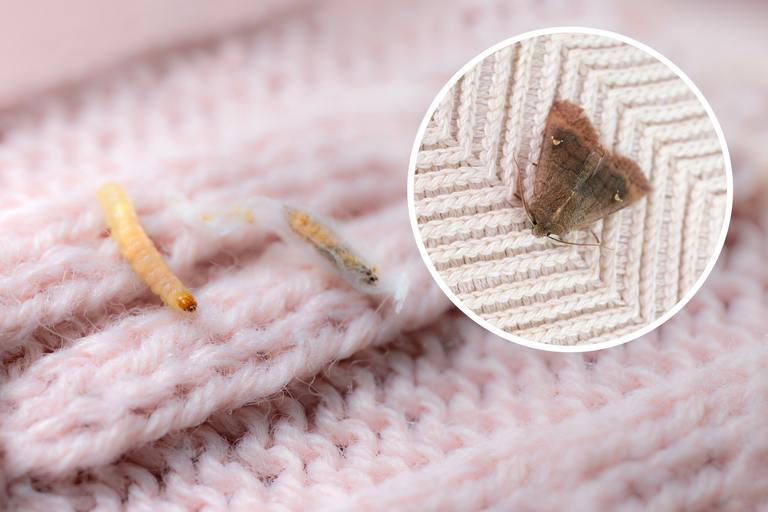
Homeowners often expect to see dramatic swarms, but fabric moth activity is usually quieter. Adult moths are small, tan to yellowish, and not strong fliers compared with many pantry moths. They tend to stay near the infested material instead of circling lights in the kitchen.
The larvae are the bigger clue. They are small, pale, caterpillar-like insects, often with a darker head. Depending on the species, you may also notice silky webbing, tubes, or portable cases attached to the material they are feeding on. The University of Maryland Extension explains that webbing and casemaking types can leave different signs, including silk tubes over the feeding surface.
Look for these warning signs:
- Irregular holes in wool, silk, fur, or felt items.
- Thin, grazed-looking fabric patches instead of clean cuts.
- Silky webbing, cocoons, or small cases on fabric.
- Shed skins or grain-like debris in drawers or closet corners.
- Small tan moths resting in closets, not just flying near kitchen lights.
- Damage under rugs, under furniture, or in storage areas.
If the activity is in dry goods, cereal, flour, pet food, or pantry shelves, you may be dealing with a different moth problem. In that case, information about pantry pest control is more relevant than a fabric-focused response.
How to Tell Clothes Moths From Pantry Moths and Carpet Beetles
A correct identification matters because different pests require different cleanup priorities. Clothes moth larvae, pantry moth larvae, and carpet beetle larvae can all show up indoors, but they are not managed in exactly the same way.
Pantry moths are usually tied to stored foods. You may see adult moths in kitchens, pantries, cabinets, or near pet food. Their larvae feed in food packages and may leave webbing in grains, cereal, nuts, birdseed, or dry pet food. If you see moths near food storage, inspect the pantry first.
Carpet beetles also damage fabrics, and they can be confused with moth problems. Their larvae are often fuzzy or bristly, and they may feed on wool, fur, feathers, dead insects, pet hair, and lint. Since carpet beetles and moths overlap in the materials they damage, a professional inspection may need to consider both. Homeowners who are seeing beetle-like larvae or mixed fabric pest signs may benefit from learning how carpet beetle control differs from moth control.
Bed bugs are another common source of confusion, but they do not chew holes in clothing. They feed on blood and hide near sleeping or resting areas. If the main issue is bites, blood spots, or insects near mattresses and bed frames, bed bug control is the more fitting concern.

Are Clothes Moths Attracted to Dirty Laundry?
Yes, soiled fabrics can be more attractive than clean ones. Sweat, skin oils, food stains, urine, and other organic residues can make animal-fiber items more appealing to larvae. The National Pesticide Information Center notes that these pests are especially drawn to fabrics with sweat, food, or urine stains.
This does not mean a home is dirty. It means vulnerable fabrics need the right storage routine. A wool sweater that was worn once, placed back in a closet, and left undisturbed can become a better food source than a freshly cleaned item sealed in a storage container.
For homeowners with pets, the issue can be stronger. Pet hair and dander collect along baseboards, under furniture, in closets, and around bedding. These areas can support fabric pests and other indoor pest activity. If pets are also scratching or jumping insects are present, flea control may need to be considered separately.
Where Should Homeowners Inspect First?
Start where vulnerable items sit undisturbed. Clothes moth activity is not always centered in the closet you use every day. It may begin in the back of a storage closet, beneath a rug, inside an old trunk, in a guest room dresser, or around a wool blanket that has not been unfolded in months.
Check these areas carefully:
- Back corners of closets and drawers
- Stored woolens, suits, coats, blankets, and scarves
- Under wool rugs and along rug edges
- Beneath heavy furniture that rarely gets moved
- Lint buildup near baseboards, floor vents, and closet trim
- Attics, storage rooms, guest rooms, and rarely opened bins
- Pet resting areas and spots where hair collects
Use a flashlight and inspect slowly. Damage often hides along seams, folds, collars, cuffs, rug edges, and areas pressed against another surface. If you only check the front of hanging garments, you may miss the source.
Why Do They Keep Showing Up After You Clean?
A quick closet cleanup may reduce some activity, but it may not reach eggs, larvae, or hidden food sources. If larvae are under a rug, inside a folded blanket, behind baseboards, or in lint beneath shelving, adult moth sightings may continue.
Repeat activity usually means one of four things:
- An infested item was missed.
- Vulnerable fabrics were cleaned but not sealed.
- Lint, pet hair, or hidden debris remains nearby.
- The pest was misidentified and another fabric pest is involved.
This is where a broader general pest control inspection can help. A technician can look beyond the obvious closet and identify the conditions that are keeping the problem active.

How to Prevent Clothes Moths in Closets and Storage Areas
Good prevention is built around three ideas: clean vulnerable fabrics before storage, remove hidden food sources, and make it harder for larvae to settle in undisturbed spaces.
1. Clean Before You Store
Do not store worn animal-fiber items without cleaning them first. Dry cleaning or laundering, when safe for the fabric, helps remove oils, sweat, food residues, and early-stage pests. Always follow the garment care label, especially for wool, silk, fur, and delicate blends.
For items that cannot be washed normally, consider professional cleaning, careful brushing, or other fabric-safe methods recommended by the manufacturer. The goal is to remove the residues that make the item attractive.
2. Use Better Storage
Thin garment bags and loose plastic sacks are not always enough. For long-term storage, use tightly sealed bins, garment storage made for textiles, or containers that pests cannot easily enter. Make sure items are completely dry before sealing them, since trapped moisture can create other problems.
Keep high-value wool, cashmere, fur, heirloom textiles, and seasonal blankets in sealed storage when they are not being used. A closet full of loosely hanging, rarely worn animal-fiber garments creates more opportunity for larvae to hide.
3. Vacuum the Quiet Places
Regular vacuuming matters most in the places homeowners tend to skip. Focus on closet floors, baseboards, under furniture, rug edges, floor vents, and areas where pet hair or lint collects. After vacuuming suspected activity, dispose of the vacuum contents promptly in a sealed bag.
For rugs, do not only vacuum the exposed surface. If possible, inspect and clean beneath the rug and around the pad. Larvae can feed in protected areas where they are not disturbed by normal foot traffic.
4. Rotate and Inspect Stored Items
A closet that is opened, moved, cleaned, and inspected regularly is less inviting than one that sits untouched. Every few months, pull out stored woolens and inspect folds, seams, and dark corners. Shake out blankets, check garment bags, and look for new damage before it spreads.
5. Be Careful With Mothballs
Many homeowners reach for mothballs because they sound like a simple fix, but they are pesticides and must be used only according to the product label. They are not meant to be scattered around open closets, bedrooms, attics, crawl spaces, gardens, or outdoor areas. The National Pesticide Information Center explains that mothballs are pesticides regulated by label directions, and misuse can create risks for people, pets, and the environment.
If you are unsure whether a product is appropriate for your situation, it is better to ask a professional than to guess. All U Need Pest Control has also covered why mothballs need careful handling and why they should not be treated as an all-purpose pest solution.
What Should You Do When You Find Damaged Clothing?
Finding one damaged item does not always mean every closet in the home is infested, but it does mean you should inspect beyond that single item.
Start with this practical sequence:
- Isolate the damaged item in a sealed bag or container.
- Inspect nearby garments, shelves, drawers, rugs, and baseboards.
- Clean or treat washable and dry-clean-only items according to care labels.
- Vacuum the closet, drawer, rug edges, and surrounding floor thoroughly.
- Discard badly damaged items if they cannot be cleaned or saved.
- Store vulnerable fabrics in sealed containers after cleaning.
- Watch for new moths, larvae, webbing, or damage over the next few weeks.
Avoid spraying random products onto clothing, bedding, or delicate textiles. Many fabrics can stain, absorb odors, or become unsafe if treated incorrectly. The right response depends on the material, the pest, the location, and the extent of activity.
When Clothes Moths Keep Coming Back
A recurring problem usually means the source has not been found. The larvae may be feeding somewhere less obvious than a sweater drawer. We have seen fabric pest activity tied to old rugs, stored costumes, pet hair behind furniture, wool blankets in guest closets, taxidermy, feather decor, and lint buildup in rarely cleaned areas.
Professional help makes sense when:
- Damage appears in multiple rooms or closets.
- You keep seeing adult moths after cleaning.
- Larvae, webbing, or cases are found in several storage areas.
- High-value rugs, heirlooms, or garments are at risk.
- You are not sure whether the pest is a moth, beetle, or pantry pest.
- The home has heavy pet hair, stored textiles, or cluttered storage areas.
A good inspection looks at more than the visible moths. It considers the larval food source, storage conditions, nearby pest activity, sanitation issues, and the possibility of other fabric pests. That source-focused approach is what keeps the same problem from returning after a short burst of cleaning.

Can Homeowners Solve the Problem Themselves?
Sometimes, yes. If the issue is limited to one item or one small storage area, careful inspection, cleaning, vacuuming, and sealed storage may be enough. The key is being thorough. A single missed blanket, rug pad, or lint-heavy corner can keep the life cycle going.
However, homeowners should be cautious with DIY pesticide use around fabrics, closets, bedrooms, and pet areas. The wrong product or placement can create unnecessary exposure without solving the hidden source. Professional treatment may be the safer option when the activity is widespread, hard to identify, or tied to valuable materials.
Final Thoughts
Clothes moths are not a sign that a home is poorly kept. They are a sign that larvae found the right combination of food, shelter, and quiet. Animal-fiber fabrics, soiled clothing, stored textiles, pet hair, lint, and dark storage spaces can all give them what they need.
The best protection is a source-first plan: identify the pest, inspect vulnerable materials, clean before storage, vacuum hidden debris, seal high-risk fabrics, and avoid unsafe pesticide shortcuts. When damage keeps appearing or the source is hard to find, professional inspection can help protect closets, rugs, and stored belongings before the problem spreads further.