Wasp Nest Removal: How Homeowners Can Stay Safe Around Active Nests

Published: July 9, 2026
Introduction
Finding a wasp nest near your home can change the way your family uses the yard almost overnight. One day the patio feels normal. The next day, wasps are moving in and out of an eave, shrub, fence post, playset, attic vent, or hole in the ground. That activity can make simple tasks like mowing, grilling, bringing in groceries, or letting pets outside feel risky.
Wasp nest removal is not just about knocking down a visible nest. The bigger question is whether the nest is active, what type of stinging insect is using it, where it is located, and how likely people or pets are to disturb it. Some small exposed nests can be lower-risk when they are away from daily activity. Others, especially ground nests, wall-void nests, and large aerial nests near doors or walkways, deserve quick professional attention.
This guide explains how homeowners can evaluate a nest safely, what signs matter most, and when professional help is the smarter choice.

Why Wasps Build Nests Around Homes
Wasps choose nesting sites that offer shelter, access to food, and a reasonable flight path. Around homes, that often means covered, protected, or hidden areas.
Common nest locations include:
- Roof eaves and soffits
- Porch ceilings and patio covers
- Attic vents and wall gaps
- Fence posts, deck rails, and hollow outdoor furniture
- Shrubs, hedges, and low tree limbs
- Sheds, garages, and play equipment
- Ground holes, old burrows, and landscape beds
Different wasps use different nest styles. Paper wasps often build open, umbrella-shaped combs under protected surfaces. Yellowjackets commonly nest in the ground or inside wall voids. Bald-faced hornets usually build enclosed paper nests in trees, shrubs, or on structures.
Because these insects can look similar from a distance, identification matters. A guide to wasp control and prevention can help homeowners understand the general risk, but active nests should still be viewed from a safe distance.
When Is Wasp Nest Removal Necessary?
Wasp nest removal is usually worth considering when the nest is active and close to people, pets, or regular household activity. Location matters as much as size. A small nest over a front door can be more urgent than a larger nest far from the house.
A nest may need removal if it is:
- Within a few feet of a doorway, walkway, porch, patio, pool, garage, or play area
- Near a pet run, outdoor dining area, mailbox, trash area, or garden path
- Inside a wall, attic, soffit, shed, or other structure
- In the ground where mowing, trimming, or foot traffic could disturb it
- Growing quickly or showing heavy traffic throughout the day
- Associated with repeated stings or aggressive defensive behavior
The safest first step is observation from a distance. Watch where the insects are flying. Do not block the entrance, spray randomly, shake branches, bang on siding, or try to seal a hole while insects are active. Trapping wasps inside a wall or void can push them into living spaces.
What Kind of Nest Are You Seeing?
Correct identification helps determine the level of risk. Homeowners do not need to become insect experts, but recognizing the basic nest types can prevent bad decisions.
Are paper wasp nests always dangerous?
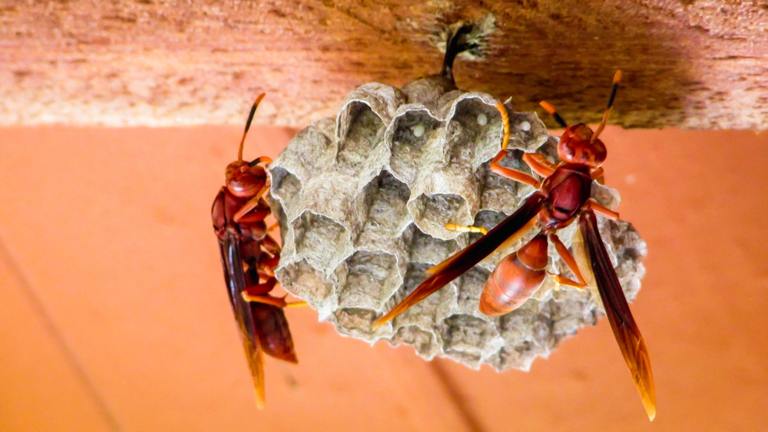
Paper wasps build open comb nests that often hang under eaves, porch ceilings, patio furniture, or railings. You may be able to see the exposed cells. These wasps are generally less aggressive when left alone, but they will defend the nest if someone gets too close, touches it, or creates vibration nearby.
According to university guidance on open paper wasp nests and enclosed yellowjacket or hornet nests, nest shape and location are useful clues for identification. That said, any active nest near a family entrance or gathering space should be treated seriously.

Why are ground nests a bigger concern?
Ground nests are often associated with yellowjackets. These nests may be hidden in old rodent burrows, landscape beds, slopes, or gaps near pavers. Homeowners usually notice them when insects fly in and out of one low opening.
Ground nests are risky because they are easy to disturb by accident. A lawn mower, string trimmer, child’s footstep, dog digging, or garden tool can trigger defensive activity. Guidance on yellowjackets around yards and outdoor spaces emphasizes watching for wasps repeatedly entering and leaving one location and avoiding that area.
What about nests inside walls or attic vents?
Wall and attic nests are some of the trickiest problems. You may not see a paper nest at all. Instead, you may notice insects entering a gap under siding, around a window frame, through a soffit, or near a roofline.
Do not seal the hole while insects are active. It can trap the colony inside and may cause wasps to search for another exit, sometimes into the home. These situations are one of the clearest reasons to choose professional wasp nest removal.
Why Wasp Nest Removal Is Safer With Professional Help
DIY efforts can make a wasp problem worse when the species, nest location, or colony size is misread. Spraying from too close, treating the wrong opening, using the wrong product, or disturbing a nest during peak activity can increase sting risk.
Professional wasp nest removal usually includes:
- Identifying the insect and nest location
- Evaluating nearby risk areas such as doors, patios, playsets, and pet zones
- Choosing a treatment method matched to the nest type
- Treating the active nest or entry point with appropriate equipment
- Removing accessible nest material when it is safe and practical
- Checking for conditions that may attract future nesting
This approach is especially important for large nests, ground nests, wall voids, attic areas, steep rooflines, and nests that require a ladder. Extension guidance on stinging insect nest treatment and removal safety notes that nest removal can depend on the insect and the situation, and that hard-to-reach or hazardous nests are often best handled by trained professionals.

What Should Homeowners Avoid Doing?
A homeowner’s first instinct is often to knock down the nest or spray whatever is nearby. That can be dangerous.
Avoid these common mistakes:
- Do not throw rocks, spray water, or swing tools at the nest.
- Do not burn the nest or pour gasoline into a ground opening.
- Do not use indoor foggers in wall voids, attics, or outdoor nest openings.
- Do not seal an active entrance hole.
- Do not climb a ladder while wasps are flying around the nest.
- Do not treat a nest if anyone nearby has a known sting allergy.
- Do not assume all flying insects are wasps. Bees require different handling.
If a nest is active and close to people, the safest move is to keep distance, mark off the area, and avoid vibration nearby until it can be evaluated.
How Do Wasps Fit Into the Bigger Outdoor Pest Picture?
Wasps are often part of a larger yard pattern. They hunt insects, scavenge protein, visit sugary spills, and use sheltered areas around structures. If the yard has heavy pest activity, standing water, open trash, fruit drop, pet food, or overgrown vegetation, wasps may have more reasons to linger.
This does not mean every yard with insects will develop a nest. It does mean exterior maintenance helps. Homeowners dealing with repeated outdoor pressure may also benefit from broader services such as mosquito control around patios and lawns, ant control near foundations and outdoor kitchens, and spider control around eaves and porch areas.
A good exterior pest strategy looks at food, water, shelter, entry points, and nesting sites together. That is how professionals reduce repeat problems instead of reacting to one nest at a time.
What Attracts Wasps Near Patios, Doors, and Yard Areas?
Wasps are not usually attracted to a home for one single reason. Several small conditions can combine to make a property more inviting.
Common attractants include:
- Open garbage cans or recycling bins
- Sugary drink spills on patios or outdoor tables
- Ripe fruit dropping from trees
- Pet food left outside
- Grease residue around grills
- Dense shrubs against the house
- Hollow posts, gaps, and protected cavities
- Standing water or damp outdoor areas
- Other insect activity that provides prey
Routine cleanup helps, but it is not a guarantee. Wasps can still nest around well-maintained homes if the structure gives them a protected site.

How Can You Reduce Future Wasp Nesting?
Prevention works best before nests become established. In many warm climates, wasp activity builds through spring and summer, and nests can become much more noticeable later in the season.
Helpful prevention steps include:
- Inspect eaves, porch ceilings, sheds, and play equipment regularly.
- Keep garbage cans closed and rinse sticky residue from bins.
- Pick up fallen fruit and clean outdoor eating areas after use.
- Store pet food indoors.
- Trim shrubs away from siding, vents, and roof edges.
- Seal small exterior gaps during low-activity seasons.
- Keep screens, vent covers, and weatherstripping in good condition.
- Schedule exterior pest service when recurring outdoor pests are creating pressure around the home.
Because wasps feed on other insects, general pest control can also reduce the conditions that support nesting and foraging. Services such as cockroach control for sanitation-sensitive areas and flea control for pet and yard pressure may be part of a broader plan when multiple pest problems are present.
Can You Remove an Old Wasp Nest Yourself?
An old, inactive nest is different from an active one. Many wasp nests are not reused the next season, but that does not mean every visible nest is empty. Before touching anything, confirm there is no flight activity.
Watch the nest during warm daylight hours from a safe distance. If insects are entering or leaving, treat it as active. If there is no activity for several days and the season or weather suggests the colony is gone, removal may be lower risk. Still, nests in walls, attics, or high areas should be handled carefully because other pests may use the same voids later.
If there is any doubt, it is better to have the area inspected.
What Happens During Professional Wasp Nest Removal?
A professional visit starts with inspection. The technician looks for the active nest, flight paths, entry points, species clues, nearby human activity, and conditions that could lead to future nesting.
From there, the plan depends on the nest:
- An exposed paper wasp nest may be treated directly and removed when safe.
- A ground nest may require a targeted approach at the entrance.
- A wall-void nest may require careful treatment of the access point without forcing insects deeper indoors.
- A large aerial nest may require specialized equipment and timing.
- A recurring nest area may need exclusion or habitat correction after the active threat is addressed.
Wasp nest removal is not always instant in the way homeowners expect. Some activity can continue briefly after treatment as foragers return. A professional will explain what is normal, what should improve, and when follow-up is needed.
Why Does Timing Matter?
Wasps are more active during warm daylight hours. They also become more defensive as colonies grow and food demands increase. By late summer, some nests are much larger than they were earlier in the year.
Timing matters for three reasons:
- Smaller nests are often easier to address than mature colonies.
- Treatment is safer when activity patterns are understood.
- Preventive work is most effective before new queens establish nesting sites.
If you find a nest in a high-traffic area, waiting usually does not make it safer. The colony may continue to grow, and normal household activity can raise the chance of accidental disturbance.

What If Someone Gets Stung?
Most stings cause temporary pain, swelling, redness, and itching. Some people can have severe allergic reactions. If someone has trouble breathing, swelling of the face or throat, dizziness, fainting, chest tightness, or a known severe allergy, seek emergency medical help right away.
For typical stings, follow basic first-aid guidance, monitor symptoms, and contact a medical professional if swelling worsens, signs of infection appear, or the person has health concerns. Pest control professionals can reduce the source of the risk, but medical questions should always go to a healthcare provider.
The Bottom Line on Wasp Nest Removal
A wasp nest near the home deserves respect, not panic. The safest response is to identify the activity from a distance, keep people and pets away from the area, avoid disturbing the nest, and decide whether the location creates a real sting risk.
Wasp nest removal is most important when nests are active, close to daily activity, hidden in structures, located in the ground, or connected to aggressive behavior. Professional service helps homeowners avoid unnecessary risk while addressing the source of the problem, not just the insects they can see.
When wasps are using the same spaces your family uses, informed action is the difference between a manageable pest issue and a painful surprise.