What Attracts Ants? Why They Follow Hidden Trails to Pet Food and Other Indoor Sources

Published: September 23, 2026
Introduction
A line of ants disappearing beneath a baseboard can look like a small surface problem. In reality, it is often a visible section of a much longer route. Workers may be traveling through a wall void, under flooring, along a foundation edge, or through a narrow gap in the trim. Once one ant finds food, it can help recruit others to the same spot.
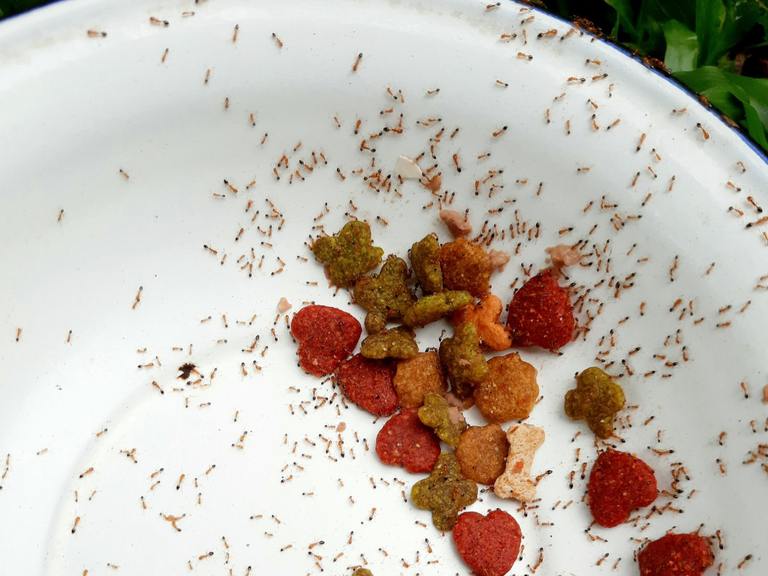
Pet food bowls are especially useful for showing how this happens. Dry kibble contains fats, proteins, and carbohydrates. Wet food is even more aromatic, and crumbs can remain around a bowl long after a pet finishes eating. A nearby water bowl adds moisture to the same small area. To an ant colony, that corner of the room may offer food, water, shelter, and an easy travel lane all at once.
Understanding what attracts ants helps homeowners respond to the cause instead of chasing the insects they can see. The food matters, but so do the hidden entry point, the established trail, the ant species, and the location of the colony.
What Attracts Ants Inside a Home?
Ants usually enter homes while searching for one or more basic resources: food, water, or protected nesting space. A scout may wander through a tiny opening and find a crumb, grease residue, a drop of water, or a pet bowl. If the source is useful, the worker can return to the colony while laying a chemical trail that other workers follow.
That is why a few ants can seem to become a steady line overnight. The ants are not appearing at random. They are moving along a repeatable route between a nest and a resource.
Common indoor attractants include:
- Pet kibble, canned food, treats, and crumbs around feeding mats
- Sugar, syrup, juice, soda, fruit, and sweet residue
- Grease, meat, cheese, nuts, and other protein-rich foods
- Crumbs beneath appliances, cabinets, dining tables, and furniture
- Unsealed pantry goods, recycling, and food residue in trash cans
- Water from pet bowls, plumbing leaks, condensation, and damp sponges
- Protected gaps beneath trim, flooring, cabinets, and wall coverings
Different ant species prefer different foods, and those preferences can change with the colony's needs. Some readily collect sweets, while others respond more strongly to fats or proteins. Household ants may feed on starches, meats, fats, sweets, and insect-produced honeydew. This is one reason a bait or home remedy that interests one trail may be ignored by another.
For homeowners who want a broader overview of common species and warning signs, the ant pest control library explains how food, water, entry points, and colony behavior contribute to recurring activity.

Why Do Ants Travel Along Baseboards?
Baseboards give ants two advantages: cover and direction. The seam where a wall meets the floor creates a protected edge that workers can follow. Small gaps behind the trim may connect to wall voids, slab cracks, plumbing penetrations, door frames, or exterior openings. The visible ants may be using only the last few feet of a route that begins well outside the room.
Ants commonly follow edges because those routes are easier to navigate than open floor space. A baseboard also shields a trail from foot traffic and household cleaning. When ants appear to be coming from beneath the trim, it does not automatically mean they are eating or damaging the baseboard. They may simply be traveling behind it or emerging through an opening.
In some cases, however, ants can nest in protected indoor voids. Some household ant species nest behind moldings, baseboards, countertops, or inside walls. Repeated activity from the same crack, especially when it continues after food is removed, deserves closer inspection.
Are the ants tunneling into the house?
Small household ants often exploit openings that already exist. A foundation crack, an unsealed utility line, a gap beneath a threshold, or space behind trim can become a travel route without the ants creating structural damage.
Carpenter ants are different because they excavate wood to make nesting galleries. They do not eat wood, and a trail near a baseboard alone is not enough to identify them. Larger workers, coarse sawdust-like debris, moisture-damaged wood, or nighttime activity can justify a closer look. This distinction is why identification should come before treatment.
Tiny species can be difficult to identify without magnification. For example, ghost ants can enter through very small openings and may form multiple nesting sites in kitchens, bathrooms, wall voids, or other protected areas. Bigheaded ants often move from soil and exterior edges into kitchens while looking for food. The right control strategy depends on which behavior is actually occurring.

What Attracts Ants to Pet Food Bowls?
Pet food is concentrated nutrition, and it is often available at floor level near the edges ants already use. Kibble dust can settle into grout lines, beneath a feeding mat, or under the lip of a bowl. A pet may carry pieces a short distance away, leaving a scattered food source that is easy to miss.
Several conditions make a feeding station especially attractive:
- Food remains available for hours. Free-feeding gives scouts time to find the bowl and reinforce a trail.
- Crumbs collect around the station. Small particles may be enough to keep workers returning even after the bowl is lifted.
- Water is close by. Splashes, condensation, and a constantly filled water bowl provide moisture.
- The bowl sits near a wall. Ants can leave a concealed baseboard route and reach the food without crossing much open floor.
- Food is stored nearby. An open or loosely closed bag of kibble can become a second, larger target.
Homeowners are advised not to leave pet food out overnight. This does not mean a pet should lose access to needed meals or water. It means the feeding routine and cleanup plan should fit the animal's health needs while limiting unattended food residue.
Can ants contaminate pet food?
Once ants are actively moving through a bowl, the safest practical response is to remove the food, clean the bowl and surrounding floor, and provide a fresh meal in a clean location. Do not apply insecticide to a food bowl, feeding mat, or surface where a pet eats unless the product label explicitly permits that use. In most household situations, keeping treatments away from feeding surfaces is the sensible approach.
If a pet requires continuous access to food because of age, a medical condition, or a veterinarian-directed feeding plan, ask the veterinarian before changing the schedule. A pest professional can then build an inspection and control plan around that requirement.
How Does One Scout Ant Turn Into a Trail?
A foraging worker explores beyond the nest. When it finds a useful resource, it can lay a pheromone trail on the return trip. Other workers detect that chemical signal and follow it. As more ants successfully reach the food and travel back, the route becomes easier for the colony to use.
This recruitment system explains several common observations:
- The trail often hugs a wall, pipe, cabinet edge, or baseboard.
- Activity may surge soon after food is placed on the floor.
- Ants can return after the visible workers are wiped away.
- Moving the bowl a few feet may not solve the problem if crumbs or trail cues remain.
- A trail can appear to stop at a crack even though workers continue through a hidden void.
Cleaning the route with ordinary soap and water can remove food residue and temporarily interfere with trail-following. It is useful housekeeping, but it is not the same as eliminating the colony. If workers still have access to the room or another food source, a new route may form.

What Attracts Ants Even in a Clean House?
A clean home can still develop an ant problem. Sanitation reduces available food, but it cannot remove every reason ants enter. Outdoor colonies may be close to the foundation, and weather can change their behavior. Heavy rain may flood nesting areas. Hot or dry conditions can increase the search for moisture. Landscaping can give workers protected routes to the structure.
Other less obvious attractants and access conditions include:
- A slow leak beneath a sink or behind a refrigerator
- Condensation around pipes or air-conditioning components
- Damp wood near a window, door, roofline, or crawl space
- Mulch, leaf litter, landscape timbers, or debris against the foundation
- Branches and vines touching walls or the roof
- Gaps around cables, plumbing, vents, thresholds, and expansion joints
- Honeydew-producing insects on plants near the home
The issue is therefore not a judgment about housekeeping. It is an inspection problem. Good home pest control considers the interior trail, exterior conditions, moisture, entry points, and species together.
What Should You Do When Ants Reach a Pet Bowl?
Start by protecting the pet and preserving useful evidence. A clear photo or short video of the ants, their size, and their route can help with identification. If possible, observe where the trail enters the room before cleaning it away.
Then work through these steps:
- Move the pet away from the active trail. Prevent curious sniffing, licking, or pawing at ants and any control product.
- Discard infested food. Do not return food containing ants to the storage bag.
- Wash bowls and feeding mats. Use normal dishwashing practices appropriate for the bowl material.
- Vacuum or sweep crumbs thoroughly. Check beneath the mat, along the baseboard, under nearby furniture, and around food storage.
- Clean the travel line. Soap and water can remove residue and reduce the trail signal on washable surfaces.
- Inspect the food container. Transfer dry food to a clean, pest-resistant container with a secure lid if needed.
- Check for moisture. Look for spills, leaks, condensation, and water trapped beneath mats.
- Document the entry point. Note the crack or gap, but avoid sealing active ants inside before the infestation has been assessed.
Ant-management guidance also recommends picking up pet food bowls when an animal is not eating and locating potential entry points. These steps reduce resources and improve exclusion, but a large or persistent colony may still require targeted control.

Should You Spray the Ant Trail?
Spraying the workers you see can provide immediate visual relief, but it may do little to the hidden colony. Only a portion of the colony is typically out foraging. Queens, developing ants, and many workers remain protected in the nest.
Some household ant species can also respond poorly to repellent treatments or disturbance. Colonies with multiple queens or multiple nesting sites may spread, reroute, or continue from another location. Randomly combining sprays, baits, cleaners, essential oils, or homemade mixtures can make activity harder to interpret and may create unnecessary exposure around pets.
If using any pesticide, read and follow the complete label. Keep pets away for the required period, place products only where the label allows, and never assume that a product described casually as natural is automatically safe for every animal. Cats, birds, fish, reptiles, and small mammals can have different sensitivities. Our guide to pet-friendly pest control explains why product selection, placement, preparation, and reentry instructions all matter.
When Is Professional Ant Control the Better Next Step?
An occasional scout near an open door is different from a developed trail emerging beneath a baseboard. Professional inspection becomes more useful when:
- Ants return soon after repeated cleaning
- A dense trail is active every day
- Workers emerge from walls, outlets, cabinets, or flooring
- More than one room has activity
- The species cannot be identified confidently
- Large ants, winged ants, or wood debris are present
- Activity is close to pet food, children's areas, or sensitive pets
- Store-bought products have not reached the source
A technician can trace the trail in both directions, inspect the exterior, identify likely nesting sites, and select a method suited to the species. That may involve baiting, targeted crack-and-crevice work, exterior treatment, exclusion, moisture correction, or a combination of methods. The goal of professional ant control services is to address colony activity and the conditions supporting it, not simply erase the visible line for a day.
What should you tell the technician?
Share when the ants are most active, where they first appear, what they are feeding on, and which products have already been used. Mention every pet in the home, including fish, birds, reptiles, and small caged animals. Show the technician the video or photos before the trail is disturbed if possible.
This information helps guide inspection and placement decisions. A thoughtful treatment plan should account for how the household uses the space and how the pet eats, drinks, rests, and explores.

How Can You Keep Ants From Returning to the Feeding Area?
Once the active infestation is addressed, a few routine changes can make the feeding station less rewarding and the room harder to enter.
- Serve measured meals when appropriate for the pet, then remove leftovers after feeding.
- Keep water available as the pet requires, but wipe up splashes and clean beneath the bowl.
- Wash feeding mats regularly and inspect their grooves and undersides.
- Store kibble and treats in secure containers rather than relying on a rolled bag top.
- Vacuum edges, grout lines, and the spaces beneath nearby furniture.
- Seal confirmed gaps after active colony movement has been controlled.
- Repair leaks and moisture-damaged materials.
- Trim vegetation away from the structure and keep debris away from the foundation.
- Recheck the same baseboard route after rain, irrigation changes, or treatment.
Learning what attracts ants is useful because it turns a frustrating trail into a set of clues. The bowl reveals the food source. The baseboard reveals the travel route. The point where the ants disappear may reveal an entry gap or protected void. Taken together, those clues help determine whether simple sanitation and exclusion are enough or whether the colony needs professional attention.
The Trail Is a Clue, Not the Whole Problem
Ants moving from beneath a baseboard to a pet bowl are showing exactly how well a colony can connect shelter, access, and food. Cleaning the bowl area is important, but lasting control also requires understanding where the ants enter, what species they are, whether moisture is involved, and where the colony is likely located.
Homeowners do not need to wait until several rooms are involved. Repeated trails, hidden void activity, uncertain identification, or ants returning despite careful cleanup are all good reasons to arrange an inspection. A colony-focused plan can protect the feeding area while keeping the pet's routine and safety at the center of the work.