
Introduction
Termites are among the most destructive pests homeowners can encounter. These insects are small and easy to overlook, yet they are capable of causing significant structural damage over time. Unlike many other pests that make their presence obvious, termites typically remain hidden behind walls, beneath flooring, or inside wooden structures while feeding. Because of this secretive behavior, infestations can grow for months or even years before homeowners realize there is a problem.
Across the United States, termites are responsible for billions of dollars in property damage each year. What makes them particularly concerning is their ability to quietly consume wood from the inside out. A beam, baseboard, or support structure may appear perfectly normal on the outside while termites are actively feeding within it.
One of the most common questions homeowners ask when they begin researching termites is simple: what do termites look like? Being able to recognize these insects is an important first step in identifying potential activity around your home. The sooner termites are identified, the sooner steps can be taken to prevent larger structural issues.
Learning what termites look like can also help homeowners avoid confusing them with other insects such as flying ants. Many infestations are first noticed when winged termites appear near windows, lights, or doorways. Without knowing the visual differences, it can be easy to dismiss these insects as harmless.
In this guide, we will break down what termites look like in different stages of their life cycle and explain how they differ from other insects commonly mistaken for them. We will also cover several physical characteristics that can help you identify termites more confidently if you encounter them around your home.

What Do Termites Look Like?
So what do termites look like when you see them up close? Termites are small social insects that live in organized colonies. Within each colony there are different roles, including workers, soldiers, and reproductive termites. Each of these groups has slightly different physical features, but they all share several key traits that make them recognizable.
Termites primarily feed on cellulose, a material found in wood, paper, and many plant based products. Because of this diet, they are naturally attracted to wooden structures and building materials used in homes. Once a colony establishes itself near a property, termites can travel through soil, mud tubes, and hidden pathways to reach food sources.
Most termites share the following physical characteristics:
- Soft bodies that are usually pale, cream colored, or light brown
- Straight antennae rather than bent antennae
- Thick waists that do not have a narrow "pinched" section
- Six short legs attached to the thorax
- Wings that are equal in length when present
One detail that often surprises people researching what termites look like is their size. Worker termites are typically very small, usually measuring about one quarter of an inch long. Because of their pale color and small size, they can easily blend into wood or soil environments.
Another important characteristic is how termites move and behave. Unlike ants that frequently travel in open areas, termites prefer to stay hidden. They often travel through mud tubes or inside wood galleries, which protects them from light and dry air.
Termite colonies can grow extremely large. According to research discussed by Entomology Today, a single colony may contain thousands or even millions of individuals working together to consume wood continuously. This cooperative feeding behavior is one of the reasons termites can cause serious damage once an infestation becomes establish.
Because termites rarely expose themselves in open spaces, many homeowners only encounter them during swarming events or when damaged wood is broken open. Understanding these physical traits can make it much easier to recognize termites if they appear around your home.
How to Identify Termite Workers
Worker termites make up the largest portion of a termite colony. In many colonies, workers represent the vast majority of individuals and are responsible for the day to day survival of the entire colony. When people ask what do termites look like, they are most often referring to worker termites because these are the termites that actually feed on wood and create structural damage.
Worker termites are small and delicate insects that typically measure around one quarter of an inch in length. Their bodies are soft and pale, often appearing cream colored, milky white, or slightly translucent. Because their bodies contain very little pigmentation, they can appear almost ghostlike when exposed to light.
Worker termites typically have the following characteristics:
- Cream colored or translucent bodies
- No wings
- Soft exoskeletons that dry out quickly in open air
- Small rounded heads with powerful jaws used for chewing wood
The mandibles of worker termites are specifically designed to break down cellulose fibers found in wood. Once the wood is chewed, workers process the material and share nutrients with other termites in the colony through a process known as trophallaxis. This allows the entire colony, including soldiers and reproductive termites, to survive even though only workers actually digest wood.
Another reason worker termites are rarely seen is because they are extremely sensitive to light and dry conditions. Their soft bodies lose moisture quickly, so they prefer to remain in dark, humid environments. For this reason, workers typically stay inside wood, underground tunnels, or protective mud tubes that connect the soil to a food source.
Homeowners usually only see worker termites when wood is broken open during repairs or inspections. If you ever split a damaged board and notice small pale insects quickly retreating from the light, those insects are very likely worker termites.
Because workers operate continuously, they are the termites responsible for most of the structural damage associated with infestations. A large colony of workers can quietly consume wooden beams, flooring, framing, and other structural components over time while remaining completely hidden from view.
How to Recognize Termite Soldiers
Soldier termites serve a very different role within the colony. Instead of feeding on wood, their primary responsibility is defense. Termite colonies must constantly protect themselves from predators, especially ants, which are one of their biggest natural threats.
When homeowners are researching what do termites look like, soldier termites are often easier to recognize because their heads are much larger than those of workers. This enlarged head houses powerful mandibles that are used to attack or deter invading insects.
Key identifying features of soldier termites include:
- Enlarged rectangular or block shaped heads
- Strong curved mandibles used for defense
- Pale or creamy colored bodies similar to workers
- No wings
Although soldier termites have intimidating jaws, they are not capable of feeding themselves. Their large mandibles are designed for defense rather than chewing wood. Because of this, soldier termites rely entirely on worker termites to feed them.
In many species, soldiers position themselves near entry points, tunnels, or damaged wood areas where predators might attempt to enter the colony. When a threat is detected, soldiers will use their jaws to block tunnels or attack invading insects.
Some species of termites even produce defensive secretions to help repel predators. These chemical defenses, combined with their strong mandibles, help protect the colony while workers continue gathering food.
If you happen to see termites with noticeably larger heads mixed among pale worker termites, those individuals are most likely soldiers. However, just like workers, soldiers usually remain hidden within wood galleries or underground tunnels.

How to Identify Flying Termites
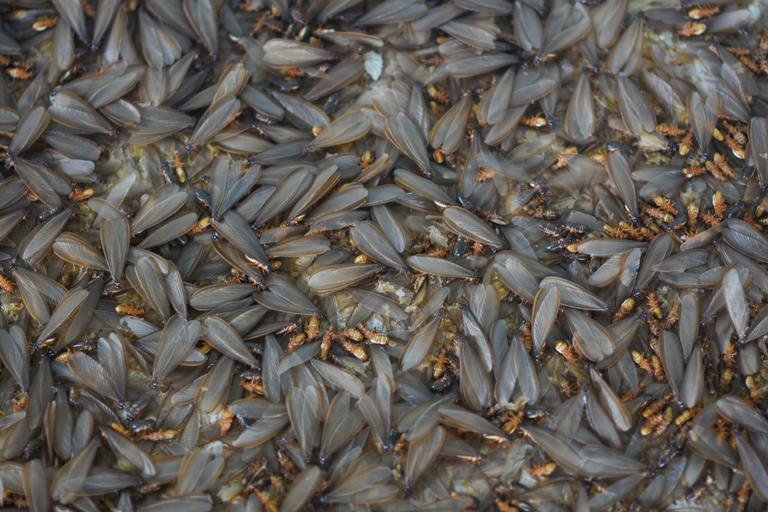
Flying termites are often the stage that homeowners notice first. These reproductive termites are called swarmers or alates, and they play a critical role in the expansion of termite colonies.
When a termite colony matures, it begins producing swarmers that will eventually leave the nest to form new colonies. During a swarm, hundreds or even thousands of winged termites may emerge at the same time. This sudden appearance often surprises homeowners and leads many people to search online for answers to the question: what do termites look like?
Swarming usually occurs during warm and humid conditions, often after rainfall. In Florida and other warm climates, termite swarms commonly appear during spring or early summer. Swarmers are strongly attracted to light, which is why they often gather near windows, glass doors, outdoor lighting, and interior light fixtures.
Flying termites typically have several identifying features:
- Dark brown or black bodies
- Two pairs of wings that are equal in size and shape
- Straight antennae rather than bent ones
- A thick waist with no narrow separation between body segments
Their wings are one of the most noticeable characteristics. Termite swarmers have four wings that are nearly identical in length. These wings are delicate and slightly translucent, often extending well past the length of the body.
Once swarmers find a suitable place to land, they quickly shed their wings. After losing their wings, male and female termites pair up and begin searching for a location where they can establish a new colony. This is why piles of small wings are often one of the first signs homeowners notice.
Common places where discarded termite wings appear include:
- Windowsills
- Door frames
- Entryways
- Light fixtures
- Garage floors
Seeing swarmers indoors does not always mean the colony originated inside the home, but it is often a strong indication that termites are active somewhere nearby. Because swarmers are reproductive termites, their presence may signal that a mature colony exists in the area.
In the image below you find a comparison between and ant swarmer (left) vs a termite swarmer (right.)

Comparison between and ant swarmer (left) vs a termite swarmer (right)
Termites vs Ants: How to Tell the Difference
Termites are frequently mistaken for ants, especially when they appear in their winged swarmer stage. At a quick glance the two insects can look similar, which is why many homeowners are unsure whether they are seeing termites or flying ants.
Understanding the differences between these insects can make it much easier to identify a potential termite problem early. While ants and termites share some similarities, their body structures are actually quite different.
Here are some of the most noticeable differences when comparing termites and ants:
Termites
- Straight antennae
- Thick waist without a narrow middle section
- Wings that are equal in size
- Bodies that may appear pale, cream colored, or dark depending on caste
Ants
- Bent or elbowed antennae
- Narrow pinched waist between body segments
- Front wings longer than back wings
- Harder, more defined body shape
Another noticeable difference is how the insects move. Ants are generally more active and easier to see traveling across surfaces. Termites prefer to stay hidden and are more likely to remain inside wood or mud tubes.
Winged ants also tend to appear at different times of year depending on the species. Because both insects can swarm, homeowners sometimes mistake an ant swarm for termites or vice versa.
If you notice winged insects indoors and are unsure what they are, paying attention to the antennae shape and wing length can often provide a helpful clue. Straight antennae and equal sized wings are strong indicators that the insects may be termites rather than ants.

Identifying Subterranean Termites
Subterranean termites are the most common type found in Florida and throughout much of the United States. These termites live in underground colonies and build mud tubes to travel between the soil and wood sources. Because their nests are located below the surface, they are rarely seen out in the open unless the colony becomes disturbed or swarmers emerge.
When people search for what do termites look like, they are often describing subterranean termites without realizing it. The worker termites in these colonies are pale, soft bodied insects that appear cream colored or milky white. They are small, usually about one quarter of an inch long, and have no wings. Their heads are slightly darker than their bodies and contain strong jaws used for chewing through wood and other cellulose materials.
Soldier termites within subterranean colonies look somewhat different. They still have pale bodies, but their heads are larger and darker, and they possess powerful mandibles used for defense. These soldiers protect the colony from predators such as ants while worker termites continue gathering food.
During swarming season, subterranean termite colonies also produce winged reproductive termites known as swarmers. These swarmers are darker in color, typically brown or black, and have two pairs of wings that are equal in length. Many homeowners first notice termites during these swarming events when winged insects suddenly appear near windows, lights, or doors.
One of the most distinctive signs of subterranean termites is the mud tube. These pencil sized tunnels are constructed from soil, saliva, and wood particles. The tubes allow termites to travel safely between the soil and the wood structures of a home while protecting them from dry air and predators.
Research from the USDA Forest Service notes that subterranean termite colonies can grow extremely large and remain active for many years as long as food and moisture sources are available. Some colonies can contain hundreds of thousands of termites working together beneath the surface.
Because they remain hidden underground or inside walls, homeowners often discover subterranean termites only after visible damage appears. Understanding the appearance of workers, soldiers, and swarmers can help confirm whether termites may be responsible. By that point, the colony may have already been feeding on structural wood for a long period of time.
Why Are Termites Hard to Spot?
Even when homeowners understand what do termites look like, these pests can still be surprisingly difficult to detect. Unlike insects that travel openly across floors or countertops, termites prefer to remain hidden and protected from the outside environment.
Termites are extremely sensitive to dry air and sunlight. Their soft bodies lose moisture quickly, which means they must stay in dark, humid environments to survive. Because of this, termite colonies usually remain inside wood, underground soil, or protected tunnels where conditions are stable.
Their ability to stay concealed is one of the reasons termite infestations can go unnoticed for long periods of time. In many cases, termites may be feeding inside walls, support beams, or flooring while the exterior surface still looks perfectly normal.
Several factors contribute to why termites are so difficult to spot:
- They avoid light and open air whenever possible
- They travel through mud tubes that keep them hidden from view
- They feed inside wood rather than on the surface
- Colonies may operate behind walls or beneath flooring
- Infestations can remain active for months or years before visible signs appear
Another challenge is that termite damage often occurs from the inside out. Termites hollow out the interior of wooden structures while leaving the outer layer intact. This means wood may appear solid until it is tapped, cut, or broken open during repairs.
Homeowners sometimes notice subtle warning signs such as bubbling paint, sagging wood, or hollow sounding boards before they ever see actual termites. In many cases, swarmers or discarded wings are the first visible clue that a colony exists nearby.
Because termites work quietly and out of sight, infestations are often discovered during routine inspections, renovations, or when damage becomes obvious. Understanding how termites behave and where they hide can make it easier to recognize early warning signs before the problem becomes more serious.

What Other Signs Suggest Termites Are Present?
Since termites often remain hidden, visual sightings are not the only way to detect them. In fact, many homeowners never see a termite directly until an infestation has already been active for some time. Instead, subtle warning signs around a home often provide the first clues that termites may be present.
Understanding these indicators can help homeowners identify a potential issue earlier and take action before significant damage occurs. If you know what to look for, small changes around your home can reveal termite activity long before structural problems become severe.
Look for these common indicators:
- Mud tubes along walls, foundations, or crawl spaces
Subterranean termites build narrow tunnels made of soil, wood particles, and saliva. These mud tubes protect termites from dry air and predators while they travel between the soil and wooden structures. Tubes often appear along foundations, inside crawl spaces, or along basement walls. - Hollow sounding wood when tapped
Termites consume wood from the inside out, leaving a thin outer layer intact. When you tap on infested wood, it may sound hollow or papery because the interior structure has been eaten away. - Discarded wings near windows or doorways
After swarmers land and begin forming new colonies, they shed their wings. Homeowners may notice small piles of identical wings near windowsills, light fixtures, or entryways. - Small piles of frass or termite droppings
Some species of termites leave behind small pellet shaped droppings known as frass. These can accumulate near baseboards, wooden structures, or beneath infested wood. - Bubbling, cracked, or uneven paint on walls
Moisture created by termite activity can cause paint to bubble or surfaces to appear warped. This may resemble water damage, but termites can sometimes be the underlying cause.
Other subtle indicators may include doors or windows that suddenly become difficult to open, sagging floors, or wood that appears blistered or damaged. While these signs do not always confirm termite activity, noticing several of them at the same time can be a strong indication that termites may be present nearby.
If multiple warning signs appear around a home, it is often a good idea to investigate further. Termites rarely disappear on their own, and early attention can prevent the situation from becoming more serious.
When Do Termites Usually Appear?
Many homeowners first notice termites during swarming season. Swarming occurs when a mature termite colony produces reproductive termites that leave the nest to start new colonies. This event can happen suddenly and may involve hundreds or even thousands of winged termites emerging at once.
Because swarms are highly visible, they often lead people to begin searching online for answers to questions like what do termites look like. Swarmers are frequently mistaken for flying ants, but they are actually reproductive termites looking for a place to establish a new nest.
In warmer regions like Florida, termite swarming activity commonly occurs during the spring and early summer months. Swarms are often triggered by environmental conditions such as warm temperatures, increased humidity, and rainfall.
Swarmers are strongly attracted to light sources, which is why they often gather around:
- Windows and sliding glass doors
- Exterior porch lights
- Interior light fixtures
- Garage lighting
While seeing swarmers does not always mean termites are actively feeding inside your home, it often indicates that a mature colony exists somewhere nearby. The colony may be located in soil around the home, in nearby trees, or potentially inside structural wood.
Because swarmers are reproductive termites, their appearance signals that the colony has grown large enough to expand. This is one reason termite swarms are taken seriously by pest professionals.
Why Early Identification Matters
Understanding what do termites look like and recognizing the signs of their presence can make a major difference in protecting a home. Termites work continuously and colonies rarely stop expanding as long as food and moisture are available.
Unlike many pests that cause immediate and visible damage, termites can remain active for long periods without drawing attention. They quietly tunnel through wood and structural materials while remaining hidden from view.
Over time, this constant feeding can weaken important parts of a home, including:
- Structural beams
- Floor supports
- Wall framing
- Wooden siding
- Furniture and cabinetry
Because termite damage often occurs inside wood or behind walls, homeowners may not realize there is a problem until repairs become necessary. In some cases, infestations may remain active for years before being discovered.
Recognizing the early warning signs of termites allows homeowners to respond before the damage becomes extensive. Identifying swarmers, mud tubes, or damaged wood early can help prevent a small issue from turning into a larger structural problem.
When it comes to termites, early awareness and timely action can significantly reduce the potential impact on a home. If you are unsure about an insect you have discovered, comparing its body shape, antennae, and wings to the characteristics outlined above can provide helpful clarity.
How Professionals Identify Termite Activity
While basic identification can help homeowners recognize potential issues, termite inspections often require a much more detailed and systematic approach. Because termites spend most of their lives hidden inside wood or underground, trained professionals know where to look and what subtle clues may indicate an active colony.
A professional inspection typically focuses on areas of the home that provide termites with food, moisture, and shelter. Inspectors evaluate both visible signs of activity and conditions that could make a property more vulnerable to infestation.
During an inspection, pest professionals often look for several key indicators including:
- Mud tubes or shelter tubes along foundations, crawl spaces, and structural supports
- Distinct wood damage patterns that indicate termites have been feeding inside structural wood
- Moisture issues such as leaks, condensation, or poor drainage that may attract termites
- Swarm evidence, including discarded wings or dead swarmers near windows and lights
- Structural entry points where termites may gain access to wood components of the home
In addition to these signs, inspectors may gently probe exposed wood to check for hollow areas or internal galleries. Termite damage often follows the grain of the wood and can appear layered or etched beneath the surface.
Because termite colonies can exist underground or inside walls, inspections often include areas homeowners rarely check themselves. This can involve examining crawl spaces, attics, garages, exterior foundations, and landscaping features located close to the structure.
Experienced pest professionals are trained to recognize patterns that suggest termite activity even when the insects themselves are not visible. For example, subtle mud lines along concrete, blistered paint on wooden trim, or moisture damaged wood can all point toward a possible infestation.
Inspections performed by All "U" Need Pest Control are designed not only to identify active termite activity but also to evaluate conditions that could attract termites in the future. By understanding both the signs of infestation and the environmental factors that allow termites to thrive, professionals can help homeowners stay ahead of potential problems.
Routine inspections can be especially valuable in regions like Florida, South Carolina, and Texas where termite pressure remains high for much of the year due to warm climates and moisture levels that support termite activity. Even when no termites are found, identifying risk factors early can help protect a home before an infestation begins.

Monitoring Termites with Sentricon
In addition to inspections, modern termite management often includes monitoring systems designed to detect termite activity early. One of the most widely used technologies for this purpose is the Sentricon® system.
Sentricon stations are installed in the soil around the perimeter of a home. These stations are designed to attract foraging subterranean termites before they reach the structure. When termites begin feeding in the stations, pest professionals can identify the activity and introduce targeted bait that is carried back to the colony.
Because termites share food within the colony, the active ingredient spreads among other termites and can eventually eliminate the colony itself. This approach focuses on monitoring and colony control rather than simply reacting after damage has already occurred.
Sentricon systems also allow professionals to continually check for termite activity during routine service visits. By monitoring stations placed around the property, technicians can identify termite pressure early and take action before termites reach structural wood.
Routine inspections can be especially valuable in regions like Florida, South Carolina, and Texas where termite pressure remains high for much of the year due to warm climates and moisture levels that support termite activity. Even when no termites are found, identifying risk factors early can help protect a home before an infestation begins.
Protecting Your Home From Termites
Protecting a home from termites usually requires more than just reacting after damage appears. Because termite colonies often remain hidden underground or inside structural wood, prevention and early monitoring play an important role in keeping properties protected.
Homeowners can reduce the chances of termite activity by addressing conditions that attract these insects. Termites are strongly drawn to moisture, exposed wood, and areas where soil and wood come into contact.
Some practical steps that can help reduce termite risk include:
- Keeping wood, lumber, and mulch several inches away from the foundation
- Repairing leaking pipes, irrigation issues, or areas where moisture collects
- Sealing cracks and openings around the exterior of the home
- Reducing wood to soil contact around decks, fences, and siding
- Maintaining proper drainage around the structure
While these preventative measures are helpful, termites can still find their way into homes, especially in regions where termite activity is common. Colonies may already exist underground near the property, or swarmers may establish new colonies in nearby soil.
For this reason, many homeowners choose to take a proactive approach by having their property monitored and inspected periodically. Regular inspections can identify early signs of termite activity and reveal environmental conditions that may increase the likelihood of an infestation.
With the right monitoring and preventative strategies in place, termite activity can often be detected early before serious structural damage occurs. Staying ahead of termite pressure is one of the most effective ways to protect the long term health and stability of a home.
Final Thoughts
If you have ever wondered what do termites look like, the answer depends on the type of termite and its role in the colony. Workers appear pale and wingless, soldiers have large defensive heads, and swarmers have wings used for reproduction.
Although termites are small, their ability to work together in large colonies allows them to cause serious structural damage over time.
Learning to recognize their appearance and warning signs can help homeowners respond sooner and reduce the risk of long term damage to their homes.
When it comes to termites, awareness and early detection can make all the difference.