Yellow Jacket Nests: What Homeowners Should Know Before Someone Gets Stung

Published: June 9, 2026
Introduction
A yellow jacket nest can turn a normal yard, porch, shed, or wall void into a high-risk area fast. Yellow jackets are social wasps, which means one nest can hold a large colony that works together, defends the same space, and reacts aggressively when the nest is disturbed. For homeowners, the problem is not just seeing a few wasps around the grill. The real concern is figuring out where they are coming from and what to do before someone, especially a child, guest, pet, or allergy-sensitive family member, gets too close.
Yellow jackets are often mistaken for bees, paper wasps, or hornets. That matters because their nesting habits and defensive behavior are different. Some nests are underground. Some are tucked into wall voids, attics, sheds, soffits, or hollow landscape features. Some are not visible at all until repeated flight traffic gives them away.
This guide explains how to recognize yellow jacket activity, where nests are usually found, why they become more intense as the season goes on, and when professional help is the safer choice.
What Is a Yellow Jacket Nest?
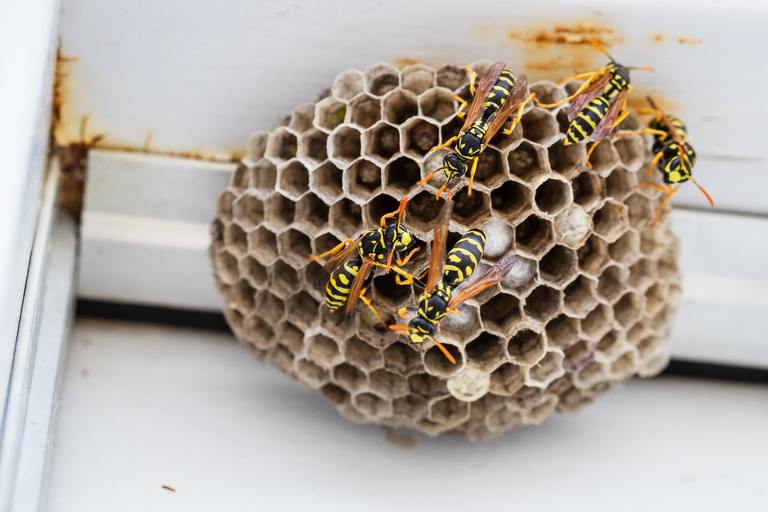
A yellow jacket nest is a colony structure built by social wasps in the yellow jacket group. It is made from a paper-like material created when workers chew wood fibers and mix them with saliva. Inside, the nest contains comb layers where larvae develop and workers care for the colony.
Unlike exposed paper wasp nests, which often look like an open umbrella under an eave or porch ceiling, many yellow jacket nests are hidden. According to university integrated pest management guidance, ground and cavity nesting yellowjackets often defend their nests vigorously, especially as colony size increases later in the season.
That hidden location is what makes yellow jackets so risky around homes. A homeowner may mow over a ground entrance, move a storage bin near a wall void, open a shed door, or let a dog dig near an active nest without realizing what is there.
How are yellow jackets different from bees?
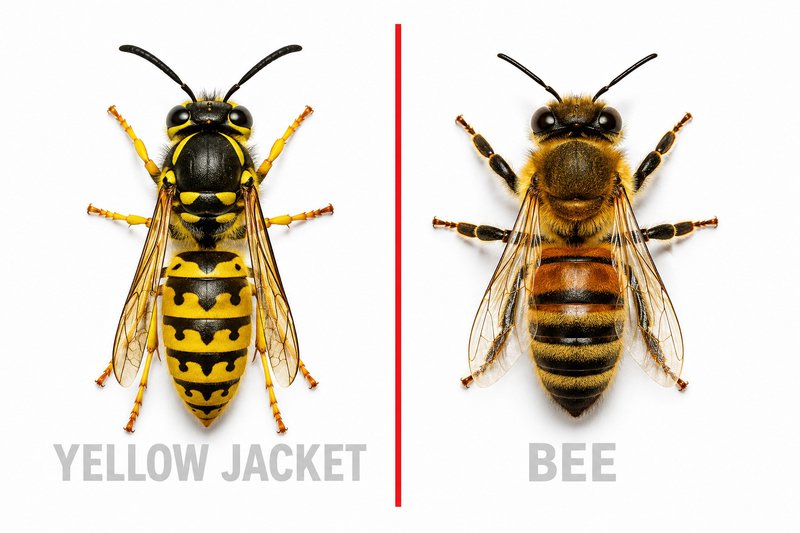
Yellow jackets are wasps, not bees. They usually have a smooth, shiny body with bold yellow and black markings. Honey bees are generally fuzzier and more likely to be seen around flowers. Yellow jackets are more likely to show up around meats, sugary drinks, trash, outdoor meals, and hidden nesting cavities.
A few key differences help homeowners understand the risk:
- Yellow jackets can sting repeatedly.
- They are more defensive near the nest.
- They often nest underground or inside enclosed spaces.
- They are attracted to proteins earlier in the season and sweets later in the season.
- Their activity can increase around patios, garbage cans, grills, pet bowls, and fruit trees.
Bees are important pollinators and should not be treated casually. Yellow jackets can also prey on other insects, but once a colony is nesting near people, pets, or traffic areas, the safety concern becomes more urgent.
Where Do Yellow Jackets Build Nests Around Homes?
Yellow jackets choose nesting sites that offer protection. Homeowners often assume a nest will be hanging in plain sight, but yellow jackets commonly use spaces that already exist in the landscape or structure.
Common nest locations include:
- Abandoned rodent burrows or holes in the lawn
- Gaps under landscape timbers, railroad ties, or edging
- Wall voids behind siding, brick gaps, or utility penetrations
- Attics, soffits, fascia gaps, and roofline openings
- Hollow tree bases, stumps, or root cavities
- Sheds, garages, crawl space openings, and storage areas
- Dense shrubs, ivy, or ground cover near paths and patios
MedlinePlus notes that yellow jackets mostly build their nests below the ground surface, while wasps and hornets may also use trees, bushes, overhangs, house walls, and attics. Around homes, that means the entrance can be much smaller than the colony itself.
What does yellow jacket flight traffic look like?
The most reliable clue is repeated, direct flight into and out of one spot. A few random wasps near flowers does not automatically mean a nest is nearby. A steady line of wasps entering the same hole, crack, shrub base, wall gap, or soffit edge is much more suspicious.
Watch from a safe distance and look for patterns such as:
- Wasps disappearing into a single ground opening.
- Wasps landing on siding and crawling into a gap.
- Wasps flying under a deck board or porch step.
- Wasps hovering near one section of a shed or garage.
- Wasps repeatedly entering a hole near a play area, walkway, or pet zone.
Do not block the hole, poke it, spray it at close range, or pour anything into it. Disturbing the entrance can trigger a defensive response from the colony.

Why a Yellow Jacket Nest Gets More Dangerous Later in the Season
A yellow jacket nest usually starts small in spring when a queen establishes the colony. As workers mature, they expand the nest, feed larvae, and gather food. By summer and into early fall, colonies can become much larger and more noticeable.
This is also when yellow jackets tend to interfere more with people. Outdoor dining, backyard grilling, pool time, lawn care, and trash storage all overlap with their food-seeking behavior. The colony is bigger, workers are more active, and the nest is more likely to be disturbed by normal household routines.
Why are yellow jackets attracted to cookouts and trash?
Yellow jackets search for protein and sugar. Early in colony development, protein helps feed larvae. Later, workers often seek sugary foods and liquids. That is why they may show up around:
- Soda cans and juice boxes
- Fruit, desserts, and sticky spills
- Grilled meat and pet food
- Trash cans and recycling bins
- Compost areas
- Fallen fruit beneath trees
Tightly covered trash, prompt cleanup, and keeping food covered outdoors can reduce foraging pressure. It will not remove an established nest, but it can lower the number of yellow jackets gathering around people.
Can a yellow jacket nest be inside a wall?
Yes. A yellow jacket nest can develop inside a wall void, ceiling void, soffit, or attic space if workers find access. Homeowners may notice buzzing, repeated exterior flight at a siding gap, or wasps appearing indoors near windows and lights.
This is one situation where DIY attempts can make the problem worse. Sealing the outside entrance while the colony is active can push wasps deeper into the structure. Spraying blindly into a wall can scatter wasps, leave dead insects inside the void, or fail to reach the colony. A professional inspection is safer because the technician can identify the entry point, activity level, and best treatment approach.
For structure-related wasp issues, All U Need Pest Control’s professional wasp removal and prevention page is a natural next step for homeowners who are seeing repeated wasp activity near rooflines, siding, attics, or outdoor living spaces.

What Should You Do If You Find a Yellow Jacket Nest?
If you find a yellow jacket nest, the safest first step is to create distance. Do not test the colony’s reaction. Do not send a child or pet away through the flight path. Do not try to knock down, dig out, flood, burn, or seal the nest.
Here is a safer homeowner response:
- Mark the area from a distance so others avoid it.
- Keep children, pets, and guests away from the flight path.
- Move outdoor meals, toys, and pet bowls away from the nest area.
- Avoid mowing, trimming, or pressure washing near the entrance.
- Watch the activity from a safe location if you need to describe it.
- Contact a pest control professional if the nest is near people, pets, doors, patios, play areas, or walls.
If someone is stung, basic first aid matters. CDC workplace safety guidance for stinging insects recommends washing the sting site, applying ice, avoiding scratching, and watching for allergic reaction signs. Seek emergency care right away for trouble breathing, throat or tongue swelling, severe chest symptoms, faintness, or other signs of a serious allergic reaction.
Should homeowners use store-bought spray?
Over-the-counter wasp sprays may seem simple, but yellow jackets are not a simple pest when the nest is hidden or heavily populated. A direct hit on a small exposed nest is different from treating a colony inside soil, siding, block walls, or attic voids.
DIY sprays can be risky when:
- The nest entrance is close to where people stand.
- The colony is underground and the nest chamber is not visible.
- Wasps are entering a wall, soffit, or roofline gap.
- The homeowner has limited mobility or poor visibility.
- Someone in the home has a known sting allergy.
- The nest is near a pool, playset, grill, doorway, or pet area.
Even if some workers die, the colony may remain active if the treatment does not reach the core nest. That is why a visible drop in activity for a few hours does not always mean the problem is solved.

How Professionals Handle a Yellow Jacket Nest
Professional treatment starts with identification and inspection. That sounds basic, but it is the part that prevents the wrong treatment from being used in the wrong place. Yellow jackets, paper wasps, hornets, bees, and other flying insects can overlap around the same property, especially in warm climates.
For a yellow jacket nest, a trained technician typically looks at:
- Flight direction and entry points
- Whether the nest is ground-based, structural, or aerial
- Nearby people, pets, doors, and outdoor-use areas
- Landscaping that hides the entrance
- Wall void or attic access concerns
- Whether other nests or attractants are present
From there, the treatment plan depends on the nest location. Ground nests, wall voids, soffit gaps, and exposed aerial nests are handled differently. The goal is not just to spray visible workers. The goal is to reach the colony safely and reduce the chance of continued activity.
All U Need Pest Control’s customized pest control program is built around inspection, treatment, and prevention, which is especially important for pests that use hidden entry points or change behavior through the season.
Why nest location changes the treatment plan
A ground nest may require careful treatment at the entrance, with attention to the direction workers are flying. A wall void may require a different approach because the nest is behind a finished surface. A soffit or attic nest may involve height, access, heat, and ventilation concerns. A nest near a pool, playground, lanai, or outdoor kitchen needs extra planning because people naturally return to those spaces.
That is why there is no one-size-fits-all answer. The same can be said for other stinging pests. Fire ants, for example, create a very different yard risk and require a different control strategy. Homeowners dealing with mound activity can review All U Need’s ant control services for a clearer sense of how yard-based stinging pests are evaluated and treated.
How to Reduce Yellow Jacket Pressure Around the Yard
Prevention is partly about making your property less attractive and partly about catching nest activity early. You cannot eliminate every yellow jacket that flies through a yard, but you can reduce the conditions that invite them to linger.
Helpful prevention steps include:
- Keep trash lids tight and rinse food residue from outdoor cans.
- Clean grills, patio tables, and outdoor kitchen surfaces after use.
- Pick up fallen fruit before it ferments or attracts foraging wasps.
- Avoid leaving pet food outdoors.
- Seal visible gaps around siding, utility lines, fascia, and soffits when no active nest is present.
- Keep shrubs trimmed away from entries, windows, and high-use paths.
- Watch for repeated wasp traffic before mowing over suspicious holes.
- Schedule inspection when wasp activity appears in the same location for more than a day or two.
These steps are especially useful before and during warm-weather outdoor living season. If your household spends a lot of time outside, or if your property has dense landscaping, sheds, wood piles, or drainage features, routine pest monitoring can help spot problems before they become urgent.
Homeowners who are unsure whether service is available in their area can check All U Need Pest Control’s current service areas and find the nearest local team.
Are traps enough to solve the problem?
Traps can catch some foraging yellow jackets, but they are not a complete nest-removal plan. They may reduce nuisance activity in certain settings, especially away from patios or trash areas, but they do not necessarily eliminate the colony. If the nest is close to a walkway, wall void, lawn area, or outdoor gathering space, trapping alone can leave the main hazard in place.
Traps also need thoughtful placement. Putting an attractant trap too close to where people sit may pull more wasps toward the exact area you are trying to protect.

When Should You Call for Professional Wasp Control?
Call for professional help when yellow jackets are nesting where people or pets may cross their flight path. That includes ground holes near lawns, playsets, gardens, gates, patios, pool decks, lanais, sheds, garages, trash storage, and doorways. It also includes any suspected wall void or attic nest.
Professional help is especially important if:
- You see frequent wasp traffic entering one spot.
- The nest is underground or hidden inside a structure.
- Wasps are showing up indoors.
- Someone in the home has a sting allergy.
- The activity is near children, pets, guests, or outdoor workers.
- You have already tried a spray and the activity returned.
- You cannot safely inspect the area from a distance.
All U Need Pest Control’s pest control process emphasizes inspection, communication, and a customized plan. That kind of approach matters because yellow jacket problems are often less about what you can see and more about what is happening behind the entry point.
Final Thoughts
A yellow jacket nest is not something homeowners should ignore, especially when it is close to daily activity. Yellow jackets can be useful predators in the broader environment, but a hidden colony near your home can create real sting risk. The safest path is to recognize the signs early, avoid disturbing the entrance, reduce attractants around outdoor spaces, and bring in experienced help when the nest is active, hidden, or close to people.
With the right inspection and treatment plan, homeowners can protect the areas they use most without guessing, escalating the colony, or putting family members and pets in the flight path.