Carpenter Ants: How Small Intruders Can Cause Big Problems

Published: November 3, 2026
Introduction
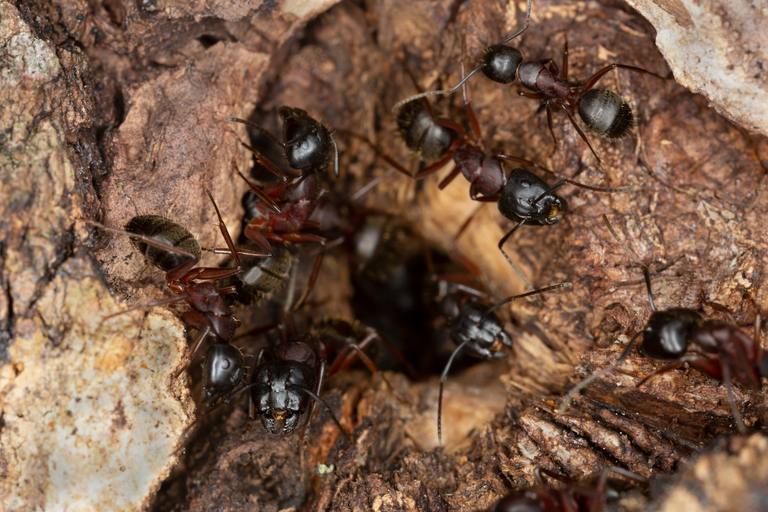
An outdoor pump, air-conditioning unit, irrigation system, or well can stop working for many reasons. Sometimes the clue is surprisingly small: ants moving around a pressure switch, control box, relay, disconnect, or wire opening. Carpenter ants are usually discussed as wood-nesting pests, but they can also travel into protected equipment housings while following utility lines, searching for shelter, or moving between outdoor and structural nesting areas.
That does not mean carpenter ants eat wires. They do not. The concern is that ants, dead bodies, soil, wood fragments, and other debris can interfere with sensitive switching parts. In some situations, enough ants can bridge open electrical contacts, be electrocuted, and leave a buildup that contributes to a short circuit or failed connection. Effective carpenter ant control around outdoor equipment begins with correct identification, safe equipment service, and finding the colony that is feeding the activity.
Can Carpenter Ants Damage Pressure Switches and Outdoor Controls?
Yes, carpenter ants can contribute to problems inside switching mechanisms, but the exact failure should be confirmed by a qualified equipment professional. A pressure switch contains contacts that open or close in response to pressure. Similar exposed or partially enclosed contacts appear in relays, contactors, circuit breakers, pump controls, and other devices.
Research-based guidance on ants entering electrical switching mechanisms explains that workers from several ant groups, including carpenter ants, can build up inside this type of equipment. When ants bridge the gap between open contacts, current can pass through their bodies. The dead ants and debris that remain can interfere with contact movement or contribute to short-circuit conditions.
A technician may find one or more of the following:
- Live ants moving through the housing
- Dead ants packed around contacts or terminals
- Soil, frass, insect parts, or other nest debris
- Burned, pitted, or fouled contact surfaces
- A switch that sticks, chatters, or fails to open or close reliably
- Moisture, corrosion, or a damaged gasket that helped insects enter
The ants may be part of the failure, but they may not be the only cause. Outdoor controls also face heat, humidity, condensation, rain intrusion, corrosion, loose connections, aging components, and vibration. A pest inspection and an electrical or equipment diagnosis answer different questions, and both may be necessary.

Why Would Carpenter Ants Enter a Pressure-Switch Housing?
Outdoor control boxes offer shade, tight spaces, protection from weather, and convenient entry gaps around conduit or wiring. They may also sit beside conditions that carpenter ants already use, including damp wood, tree roots, landscape timbers, utility posts, sheds, pump houses, deck framing, and irrigation lines.
Carpenter ants commonly nest in decayed or moisture-damaged wood. They may maintain a main nest outdoors and one or more satellite nests closer to a building or dependable food source. Workers can travel along permanent routes and use plumbing, cable, and electrical penetrations as access points. The guidance for preventing carpenter ants specifically recommends sealing openings where electrical and other utility hardware enters a structure after the activity has been addressed.
An equipment housing does not need to contain a full colony to have a problem. Foraging workers may repeatedly enter it as they travel. A nearby nest can keep supplying new workers even after the visible ants inside the box are removed.
Are Carpenter Ants Attracted to Electricity?
Some ant species are strongly associated with electrical equipment, and research has documented responses to fields around switching mechanisms. Still, it is too simple to say that every carpenter ant is there because it “likes electricity.” Shelter, warmth, moisture, access gaps, and the location of nearby trails can all contribute.
Species identification matters. Fire ants, crazy ants, acrobat ants, and other ants can also enter outdoor controls. Some are especially well known for accumulating in electrical housings. A large ant near a failed switch may be a carpenter ant, but size alone is not proof. Treating the wrong species with the wrong strategy can waste time while equipment remains vulnerable.
Which Outdoor Systems Can Be Affected?
Any weather-exposed control with an accessible housing can become an insect harborage or travel point. Homeowners and service technicians most often need to pay attention to equipment that sits near soil, vegetation, moisture, or wood.
Well Pumps and Water-System Pressure Switches
A well pressure switch tells the pump when to start and stop as system pressure changes. Ants or debris around the contacts may contribute to erratic cycling, failure to start, failure to stop, or visible arcing. Those symptoms can also result from pressure-tank, pump, wiring, or switch problems, so an ant sighting should be treated as evidence, not a complete diagnosis.
Well equipment requires extra care because pesticide use around a wellhead creates contamination concerns. Do not pour, spray, or dust a product into a well control housing. A licensed professional should select any treatment used near the equipment and follow the product label for the pest, site, and application method.
Pool Pumps and Irrigation Controls
Pool and irrigation equipment often sits beside damp soil, mulch, plantings, valve boxes, fences, sheds, or wooden enclosures. Those surroundings can support ant trails and make small equipment openings easy to reach. A malfunction may appear as a pump that will not start, a controller that behaves inconsistently, or a breaker that trips.
Water and electricity are a hazardous combination. Keep the cover closed, keep people away from exposed components, and have the system serviced before trying to clean or test anything inside.
HVAC Contactors, Relays, and Disconnects
Outdoor HVAC units contain components that switch substantial electrical loads. Ants and debris can collect near contactors and wiring compartments, while vegetation and wall penetrations provide routes into the area. If an air conditioner stops running, buzzes, cycles irregularly, or repeatedly trips protection, turn the system off and arrange qualified service. Do not assume that removing visible ants makes an electrically damaged part safe to reuse.
Gate Operators, Lighting Controls, and Other Exterior Boxes
Landscape-lighting transformers, gate controls, alarm housings, outdoor receptacles, and utility cabinets can develop similar issues. The basic pattern is the same: a protected enclosure, a small access gap, nearby pest pressure, and sensitive parts that were not designed to hold insects or debris.
What Are the Warning Signs Around Outdoor Equipment?
The most useful clues connect equipment symptoms with repeated ant activity. Look from a safe distance and document what you see without opening energized equipment.
Warning signs include:
- A steady ant trail leading to conduit, cable, tubing, or a housing seam
- Ants entering through a missing plug, cracked gasket, knockout, or drain opening
- Dead ants appearing beneath a control box or around its cover
- Coarse wood-like debris near the mounting board, post, shed wall, or enclosure
- A musty, damp, or decayed area beside the equipment
- Repeated switch, pump, or controller failures after components are replaced
- Ant activity that increases after rain, irrigation, or humid weather
- A trail connecting the equipment area with a tree, stump, firewood stack, fence, or structural void
Coarse debris deserves special attention. Carpenter ants do not consume wood. They excavate it and push unwanted material out of their galleries. Our guide to identifying carpenter ant frass and recurring debris explains how those piles differ from ordinary sawdust and why insect fragments may be mixed in.
What Should You Do If Ants Are Inside a Pressure Switch?
Treat the situation as an equipment-safety issue first and a pest issue second. A homeowner should not remove a cover, touch terminals, scrape contacts, blow compressed air into the housing, or apply a household insect spray to energized components.
1. Keep Clear of the Equipment
Do not touch an exposed, wet, buzzing, smoking, or visibly damaged control. Keep children and pets away. If there is smoke, burning odor, sparking, or heat, use the appropriate emergency response and contact the relevant utility or qualified service provider.
2. Shut Down the System Only If You Can Do So Safely
Use a normal, clearly identified disconnect or breaker only if it is safe and you know which control serves the equipment. Do not open an enclosure to create a shutoff point. When in doubt, leave the equipment alone and call a licensed electrician, HVAC technician, pump professional, pool professional, or utility provider as appropriate.
3. Document the Ant Trail
Photograph the ants, their route, the housing exterior, nearby vegetation, and any debris. Note when the equipment failed and whether the activity followed rain or irrigation. These observations can help both the repair technician and pest professional.
4. Have the Equipment Inspected and Cleaned Properly
A qualified equipment professional can de-energize the system, determine whether the switch or another component has been damaged, remove debris safely, and replace parts when necessary. Equipment repair should follow the manufacturer’s requirements and applicable electrical codes.
5. Identify and Address the Colony
Cleaning the box without resolving the source invites a repeat visit. A professional ant inspection should follow the trail beyond the equipment, evaluate surrounding wood and moisture, and determine whether the activity is coming from a nearby outdoor nest, a structural satellite nest, or another ant species. The company’s ant control service is designed around identification and colony-focused treatment rather than repeated removal of the workers in view.

What Does Carpenter Ant Control Around Equipment Involve?
Good carpenter ant control does not begin by spraying into a switch box. It begins by separating responsibilities. An equipment professional handles the energized components and repairs. A pest professional identifies the insect, traces the route, locates likely nesting areas, and selects labeled treatment methods for the surrounding site.
A thorough plan may include:
- Identifying collected ants instead of relying on color alone
- Inspecting trees, stumps, posts, sheds, decks, fences, and woodpiles
- Checking utility penetrations and trails along conduit or service lines
- Looking for leaks, condensation, irrigation overspray, and decayed wood
- Treating confirmed nesting or foraging sites with an appropriate method
- Correcting moisture and replacing damaged wood after the colony is controlled
- Sealing suitable access points after technicians confirm that doing so will not trap moisture or interfere with equipment ventilation
- Monitoring the area after repair and treatment
The carpenter ant control process for Florida properties provides more detail on parent nests, satellite nests, moisture clues, and the value of mapping nighttime trails.
Why Surface Sprays Often Miss the Real Problem
Aerosol spray may kill the ants standing on the outside of a box. It may also erase a trail that would have helped locate the source. If the queen and nesting areas remain active, more workers can return.
Liquids around electrical equipment add another hazard. Extension guidance warns against using water-based or wet formulations around outlets, switch plates, and energized voids because of shock, fire, and equipment-damage risks. Pesticide labels also limit where and how each product may be applied. Never improvise by injecting a product into a control housing.
Colony-focused carpenter ant control may use baits, targeted void applications, direct outdoor nest treatment, or another method chosen for the identified species and site. The method should fit the biology of the ant and stay separate from unapproved treatment of live electrical parts.
How Can You Prevent Carpenter Ants From Returning?
Prevention should protect the equipment without blocking drainage, airflow, pressure relief, or manufacturer-required openings. A pest professional and the relevant equipment technician can help determine which gaps are appropriate to seal.
Reduce Nearby Nesting Conditions
- Remove decaying stumps, buried scraps, and rotted landscape timbers when practical.
- Store firewood off the ground and away from equipment and buildings.
- Repair damp mounting boards, shed walls, posts, trim, and enclosures.
- Direct sprinklers and roof runoff away from equipment pads and vulnerable wood.
- Trim branches and vegetation that create bridges to walls, roofs, posts, or service lines.
- Keep mulch and leaf litter from piling against housings and wood supports.
University extension specialists note that carpenter ants often use overhanging branches and even utility wires as routes to buildings. Their carpenter ant prevention guidance emphasizes correcting moisture, locating nests, and trimming those access routes.
Maintain the Housing
Ask the appropriate technician to replace cracked gaskets, missing plugs, loose covers, or damaged conduit fittings with parts approved for the equipment. A weather-resistant enclosure only works when its seals and fittings remain intact. Improvised caulk, tape, foam, or pesticide-impregnated materials can trap water, violate equipment requirements, or create a service hazard.
Watch the Area After Rain and Repairs
Recheck for trails after heavy rain, landscaping changes, equipment replacement, or tree work. A repaired switch may solve the immediate failure but not the pest pressure around it. Continued monitoring is part of effective carpenter ant control, especially when mature trees or moisture-prone structures remain nearby.

When Should Carpenter Ant Control Include a Structural Inspection?
Equipment activity becomes more concerning when it appears alongside damp or damaged wood. Schedule a closer structural assessment when you find recurring frass, ants emerging from a wall or post, soft trim, stained siding, indoor swarmers, or repeated nighttime trails into the building.
The amount of damage cannot be judged from the number of visible ants. A small pile may come from a larger concealed gallery, while many outdoor foragers may originate from a tree that is not damaging the house. Our guide to evaluating carpenter ant damage and repair order explains why the sound sequence is to identify, control, correct moisture, evaluate the wood, and then repair.
Homeowners who are unsure whether the insects are carpenter ants can also review the ant identification and warning-sign library. The identification step matters because electrical housings can attract or shelter several different ants, each with different colony behavior.
A Safer, More Complete Response
Carpenter ants can enter pressure switches and other outdoor control housings, where live workers and accumulated debris may interfere with moving contacts or contribute to electrical failure. They do not chew electricity, and an ant sighting does not prove the exact cause of a malfunction. It does tell you that the equipment and the surrounding property deserve attention.
The right response joins two kinds of expertise. A qualified equipment professional makes the system electrically safe, diagnoses the failed component, and completes repairs. A pest professional identifies the ants, traces the trail, addresses the colony, and recommends changes to moisture, wood, vegetation, and access points.
That combined approach is what makes carpenter ant control last. It fixes the immediate equipment problem without leaving the nearby colony free to send another trail into the same protected space.