Ghost Ants in the House: How to Identify Them and Stop the Colony

Published: October 27, 2026
Introduction
A few nearly invisible ants on a kitchen counter can be easy to dismiss. By the next morning, however, a faint trail may be moving between the sink, a cabinet seam, and a drop of something sweet. That pattern often points to ghost ants, a tiny tropical species that can nest both outdoors and inside a home.
These ants do not damage wood like carpenter ants or sting like fire ants. Their real challenge is persistence. A colony may use several protected nesting sites, contain multiple queens, and shift activity when disturbed. Killing the workers you can see may clean up the counter for a day without reaching the larger population.
Effective control begins with correct identification, patient observation, and a plan that addresses food, water, travel routes, and hidden nests together. Here is what homeowners should know before reaching for a spray or wiping away the only trail that could reveal where the ants are coming from.

What Do Ghost Ants Look Like?
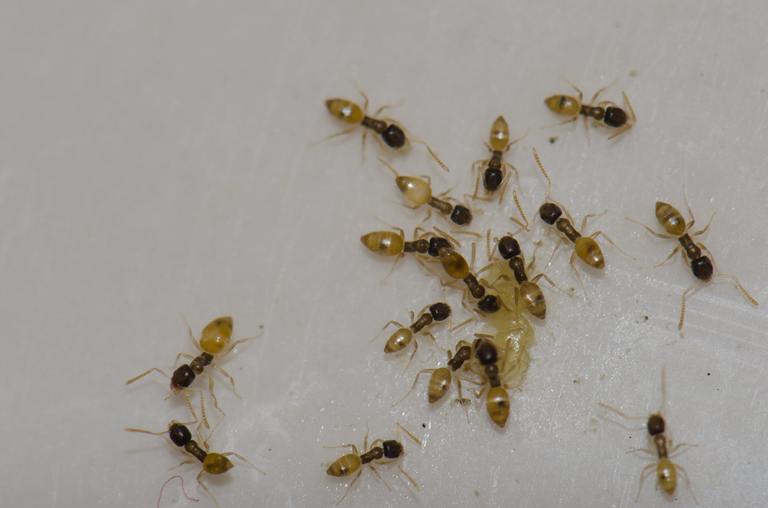
The worker ant is extremely small, measuring about 1.3 to 1.5 millimeters long. Its head and middle body section are dark brown to nearly black, while its legs and abdomen look pale, yellowish, or almost translucent. Against a light countertop, those pale body parts seem to disappear, leaving what looks like a moving dark speck.
The contrast between the dark front half and pale rear half is the most useful visual clue. University entomologists describe the same small size and distinctive color pattern, along with the species' lack of a stinger. A phone camera with a macro setting or a hand lens may make the markings easier to see.
Other clues include:
- Workers are generally the same tiny size.
- Trails may look faint because much of each ant's body blends into the surface.
- Ants often scatter quickly and run erratically when disturbed.
- Crushed workers may produce a musty or coconut-like odor, although crushing ants is not a reliable identification method.
- Activity commonly appears around sinks, counters, cabinets, windows, baseboards, potted plants, and plumbing penetrations.
Homeowners can compare these traits with the company's ghost ant identification and service guide before deciding what kind of control makes sense.
Are They the Same as Sugar Ants?
“Sugar ant” is a casual label people use for several small ants that feed on sweet materials. It is not a precise identification for the ants commonly found in American kitchens. A sweet-feeding trail might consist of ghost, pharaoh, Argentine, odorous house, rover, or another ant species.
That distinction matters because species differ in nesting behavior, colony structure, food preferences, and response to treatment. A technician does not identify an ant solely by where it was found or what it was eating. Color, size, body features, trail behavior, nesting clues, and local distribution all contribute to the diagnosis.
Why Do Ghost Ants Come Inside?
Indoor spaces can provide everything an ant colony needs: dependable moisture, protected cavities, warmth, and small amounts of food. A few crumbs or drops are enough to support foraging workers, even when a kitchen looks clean at first glance.
Common attractants include:
- Syrup, juice, soda, honey, fruit, frosting, and other sugary residue
- Grease, food crumbs, and residue beneath appliances
- Pet food and water bowls
- Damp sponges, sink edges, condensation, and plumbing leaks
- Recycling containers with unrinsed cans or bottles
- Honeydew-producing insects on outdoor plants
- Moist potted plants brought indoors
Food is only part of the picture. The route itself may be more important. Workers can travel along utility lines, pipes, window frames, branches, vines, and palm fronds. The guide to how landscaping can bridge ants onto a structure explains why a seemingly good foundation barrier may not stop ants arriving above ground.
Rain and changing moisture conditions can also shift activity. Saturated outdoor nesting areas may become unsuitable, while dry weather can push workers toward dependable indoor water. A sudden trail does not always mean a colony formed overnight. It may mean workers discovered a new resource or moved to a more stable part of an existing network.

Where Do Ghost Ants Nest?
Outdoors, nests may occur beneath loose bark, stones, leaf litter, plant debris, palm frond bases, or objects resting on soil. Indoors, the ants can use wall voids, cabinet gaps, baseboard spaces, potted plants, and other narrow protected cavities. Workers seen inside may belong to an indoor nest, an outdoor nest, or connected nest sites on both sides of the building.
Their colony structure helps explain why the problem can feel unpredictable. Research-based descriptions of multiple queens and interconnected nest sites show that these ants do not always operate from one obvious central nest. Portions of a colony may exchange workers and brood among several locations.
New nest groups can form through budding. In this process, one or more reproductive females leave with workers and sometimes brood to establish another site. That is different from a homeowner's mental picture of one queen living at the center of one nest. It also means that a treatment focused on one visible trail may leave other parts of the colony untouched.
What Does a Trail Tell You?
A trail is useful evidence. It may reveal an entry gap, a moisture source, a food source, or the direction of a hidden nest. Before cleaning it away, observe it for several minutes and note where it begins and ends.
Check these areas without opening walls or disturbing electrical equipment:
- Follow the trail in both directions from a safe distance.
- Look beneath sink rims and around plumbing openings.
- Inspect cabinet seams, baseboard edges, window trim, and door frames.
- Check nearby potted plants and the trays beneath them.
- Look outside on the opposite side of the wall for vegetation, mulch, utility lines, and moisture.
- Photograph the ants and record when activity is strongest.
The broader guide to reading ant trails and entry routes can help homeowners turn a frustrating sighting into useful inspection information.
How to Get Rid of Ghost Ants Without Making the Problem Harder
The goal is not simply to kill workers on contact. It is to reduce the colony network while correcting the conditions that keep attracting or supporting it. That process often takes longer than a quick spray, but it is far more likely to produce lasting improvement.
1. Confirm the Species
Do not assume every tiny kitchen ant is the same. Capture several workers on clear tape or in a sealed container without crushing them. A clear close-up photograph may also help. Keep the sample away from children and pets, and never handle ants you cannot identify if stinging species are possible.
Professional identification is valuable when the ants are too small to photograph, appear in several rooms, or do not match the expected color pattern. The company's ant pest library and species overview provides a useful starting point, but an on-site inspection can connect the specimen to actual nest and travel evidence.
2. Remove Competing Food and Water
Wipe counters with ordinary soap and water, clean beneath small appliances, and store sweet foods in sealed containers. Rinse recyclables, empty trash regularly, and clean residue from bottle caps and pantry shelving. Feed pets on a schedule when practical, then clean the surrounding floor and follow veterinary guidance before changing access to water.
Repair leaking faucets and supply lines. Dry sink rims and counters at night, clear standing water from plant saucers, and address recurring condensation. These steps will not eliminate a developed colony by themselves, but they reduce alternative resources and make monitoring or baiting more meaningful.
The article on hidden indoor food and moisture sources that attract ants offers a room-by-room way to find the small residues homeowners often miss.
3. Avoid Random Contact Spraying
Aerosol or surface spray may kill exposed workers while doing little to the queens, brood, or other nest sites. Repellent products can also disrupt a trail and make it harder to determine where ants are traveling. In a species with mobile, interconnected nest groups, chasing visible ants from one spot can shift activity without solving the source.
Never apply an outdoor pesticide indoors, spray a countertop or food-contact surface unless the label specifically permits it, or inject a product into an outlet or wall void. Do not mix household chemicals or improvise pesticide recipes. More product is not better.
4. Use Ant Baits Carefully and According to the Label
Foraging ants can carry an attractive bait back toward nestmates, which is why an appropriate, slow-acting bait may reach beyond the visible workers. Product choice and placement still matter. Ant feeding preferences can change, and a bait that is ignored cannot help the colony.
If using a consumer ant bait:
- Choose a product whose label permits use for ants in the intended indoor or outdoor location.
- Follow the label exactly for placement, quantity, inspection, and replacement.
- Keep every bait inaccessible to children and pets.
- Place it near observed activity only where the label allows.
- Do not spray cleaners or insecticides on or immediately around the bait.
- Check whether ants are feeding, and do not increase the amount beyond label directions.
Federal guidance recommends reducing food and water sources first and using pesticides only as directed on the label. If activity involves food-preparation equipment, medical settings, sensitive occupants, or inaccessible voids, professional service is the safer choice.
5. Correct Exterior Access and Harborage
Once active routes are understood, trim branches, palm fronds, and vines away from the roof and walls. Move firewood and plant debris away from the structure. Avoid piling thick, damp mulch against the foundation, correct irrigation overspray, and clean clogged gutters.
Seal gaps around windows, doors, utility penetrations, and plumbing after confirming that the repair will not trap an unresolved pest problem inside. Replace worn weatherstripping and repair damaged screens. Inspect potted plants before bringing them indoors, especially after they have been outside in warm, humid conditions.

Why Do Ghost Ants Keep Coming Back?
Recurring activity usually means at least one part of the system remains in place. The original nest may not have been reached, another connected nest may still be active, or outdoor workers may be using a route that was never found. Food, water, and humid shelter can also keep drawing ants to the same room.
Common reasons for a rebound include:
- Treating only the workers visible on the counter
- Using a bait the ants are not accepting
- Letting bait dry out, become contaminated, or run empty
- Cleaning the trail before identifying its direction
- Missing a leak, condensation source, or plant saucer
- Leaving vegetation in contact with the building
- Bringing an infested potted plant or item indoors
- Sealing one gap while another travel route remains open
A day with no visible ants is encouraging, but it is not proof that every nest is inactive. Continue sanitation and monitoring, record new sightings, and compare activity across rooms. A sustained decline with no new trails is more meaningful than a brief disappearance immediately after workers were killed.
Are Ghost Ants Dangerous?
These ants do not have stingers and are not known for damaging structural wood. For most homeowners, they are primarily a nuisance and sanitation concern. Workers travel between hidden nesting areas, damp locations, and food surfaces, so exposed food should be discarded when ants have reached it. Clean affected surfaces before preparing food again.
An unexplained skin reaction should not be diagnosed from the presence of ants alone. Many insects, irritants, and medical conditions can cause similar marks. Seek medical advice for severe swelling, breathing trouble, widespread hives, or other concerning symptoms.
When Is Professional Ant Control the Right Next Step?
Professional help makes sense when trails return after careful sanitation and label-directed baiting, activity appears in several rooms, ants emerge from wall or cabinet voids, or the likely nesting areas cannot be accessed safely. It is also appropriate when children, pets, food handling, electrical equipment, or a medically sensitive household member complicates product placement.
A thorough professional ant control inspection should do more than treat a countertop. The technician should identify the species, map indoor and outdoor routes, evaluate moisture and vegetation, select treatment methods suited to the colony, and explain what improvement should look like over time.
Useful questions to ask include:
- What identification features confirm the ant species?
- Does the evidence suggest indoor nests, outdoor nests, or both?
- Which food, water, or landscape conditions are supporting activity?
- How will treatments avoid scattering activity or contaminating food areas?
- What should remain untouched while ants interact with bait?
- When should activity decline, and when is follow-up needed?

A Colony-Level Plan Brings Lasting Relief
Ghost ants are easy to overlook and difficult to control with surface cleanup alone. Their tiny bodies let them use narrow gaps, while multiple queens and connected nest sites allow the population to persist beyond one visible trail. The most effective response combines correct identification, observation, sanitation, moisture correction, careful bait use, exterior maintenance, and follow-up monitoring.
When the ants keep returning, that is not a sign to spray more aggressively. It is evidence that another route, resource, or nest remains. A species-specific inspection can turn scattered sightings into a clear map of the problem and help protect the home without unnecessary pesticide use.