
Introduction
Finding a small silk pouch in a closet corner, garage shelf, porch ceiling, attic, or storage box can be unsettling. Most homeowners do not notice the adult spider first. They notice webbing, a fuzzy sac, or tiny spiderlings spreading from a quiet corner and wonder how big the problem is going to get.
Spider eggs are not usually an emergency by themselves, but they are a sign worth taking seriously. An egg sac tells you that at least one adult spider found enough shelter, food, and protection to reproduce in or around your home. That does not always mean you have a major infestation, but it does mean the conditions are attractive enough for spiders to stay.
The right response is not panic and it is not random spraying. The better approach is to identify where the egg sacs are, remove them safely, reduce the insects spiders are feeding on, and close off the quiet hiding areas that let the cycle continue. This guide explains what homeowners should know, what to avoid, and when professional help makes sense.

What Do Spider Eggs Look Like?
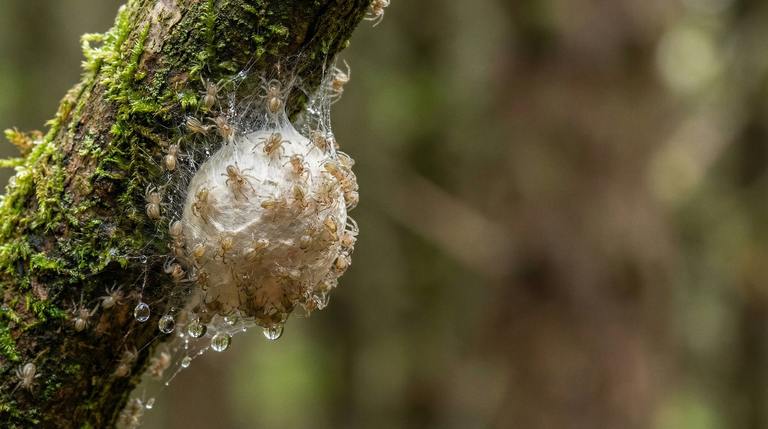
Spider eggs are usually hidden inside silk egg sacs. Homeowners often describe these sacs as small white, cream, tan, gray, or brown balls, pouches, or fuzzy patches. Some are round and firm looking. Others are loosely wrapped in webbing. Depending on the species, the sac may be attached to a web, tucked into a corner, hidden behind stored items, carried by the female spider, or placed in a protected outdoor area.
A single sac can hold many young spiders. Extension resources note that spider egg sacs may contain dozens or even hundreds of eggs, depending on the species and conditions. Some spiderlings remain in the sac briefly after hatching, while others disperse soon after they emerge. In many species, young spiders spread by climbing upward and using silk to catch air currents, a process often called spiderling ballooning.
The most common signs include:
- Small silk sacs attached to webs, corners, shelves, stored boxes, eaves, or patio furniture
- Dusty webbing that keeps returning after cleaning
- Tiny pale spiderlings clustered near a sac or spreading across a wall
- Adult spiders appearing in the same room, closet, garage, or patio area
- Egg sacs near other pest activity, such as flies, ants, or roaches
If you are unsure whether you are seeing an egg sac, avoid touching it with bare hands. Some sacs are easy to confuse with lint, dust, moth cocoons, or debris. A careful inspection can help separate a harmless bit of dust from a developing spider problem.
Where Do Spider Eggs Hide Around a Home?
Spiders choose protected places where the egg sac is less likely to be disturbed. That is why homeowners commonly find them in areas that are quiet, cluttered, dark, humid, or close to insect activity.
Why are egg sacs common in garages, closets, and storage areas?
Garages and closets are ideal hiding spots because people store items there for long periods. Cardboard boxes, holiday decorations, shoes, sports gear, tools, bins, shelving, and folded fabrics all create small protected spaces. Spiders do not need much room. A small gap behind a box or under a shelf can provide enough shelter.
Attics, crawl spaces, sheds, pool equipment areas, utility rooms, and storage closets are also common locations. These areas usually have fewer disturbances, more hiding places, and more opportunities for spiders to feed on small insects.
Around the exterior, egg sacs may appear under eaves, behind shutters, around porch lights, under patio furniture, in corners of screened enclosures, beneath deck rails, inside sheds, and around stacked firewood or yard clutter.
What attracts spiders to these areas?
Spiders are predators. They are usually not in a home because they are interested in crumbs, stored food, or people. They are there because the location gives them prey, shelter, and a safe place to reproduce.
Common attractants include:
- Other insects in the home or around the exterior
- Exterior lights that draw flying insects at night
- Gaps under doors, loose screens, and unsealed utility openings
- Cluttered storage areas with little airflow
- Damp garages, crawl spaces, sheds, or patios
- Webs that are removed from visible spots but not from hidden corners
- Outdoor harborage such as stacked items, leaf litter, wood piles, and dense vegetation
This is why effective professional spider control usually looks beyond the egg sac itself. The adult spiders and the conditions attracting them matter just as much.

Are Spider Eggs Dangerous?
In most cases, spider eggs are not dangerous to touch from a distance, and the egg sac itself will not bite. The concern is what may be nearby. An adult spider may be guarding or staying close to the sac, and some spider species are more medically important than others.
Most household spiders are nuisance pests. They may startle people, leave webs, and create ongoing discomfort, but they are not typically aggressive. However, homeowners should be cautious around egg sacs they cannot identify, especially in garages, sheds, crawl spaces, and outdoor storage areas where venomous spiders may hide.
The CDC notes that black widow and brown recluse spiders are among the venomous spiders of concern in the United States, and bites usually happen when a spider is trapped or touched. That is why reaching blindly into boxes, shoes, corners, or stored materials is a bad idea.
If you suspect black widow spiders or brown recluse spiders are present, do not handle webs or egg sacs directly. Use caution, wear gloves when moving stored items, and consider a professional inspection.
How Should You Remove Spider Eggs Safely?
Removing spider eggs can reduce the chance of spiderlings spreading indoors, but removal needs to be done carefully. Crushing a sac with a tissue or broom is not always effective, and it can scatter debris or spiderlings if the sac has already hatched.
A safer homeowner approach is:
- Put on gloves before moving items or cleaning corners.
- Use a vacuum hose to remove the sac, webbing, and nearby spiders when reachable.
- Empty the vacuum contents into a sealed bag outside the home.
- Wipe the area afterward to remove web residue.
- Check nearby shelves, corners, boxes, and baseboards for additional sacs.
- Reduce clutter and move stored items away from walls when possible.
- Monitor the area over the next few weeks for new webbing or spiderlings.
University extension guidance also recommends vacuuming visible webbing, spiders, and egg sacs, then sealing and disposing of the vacuum bag or contents. That step matters because simply vacuuming and leaving debris inside the vacuum can allow some pests or egg material to remain in the home.
What should homeowners avoid doing?
Avoid spraying unknown products directly onto egg sacs in living areas, especially around children, pets, food storage, or HVAC airflow. Over-the-counter sprays may kill visible spiders but often miss hidden adults, egg sacs in protected voids, and the insect activity feeding the problem.
Also avoid:
- Picking up egg sacs with bare hands
- Crushing sacs on walls or furniture
- Reaching blindly into stored boxes or shoes
- Burning webs or using heat-based methods
- Mixing cleaning chemicals
- Treating attics, crawl spaces, or wall voids without knowing what is present
If egg sacs keep returning, the problem is probably not the one sac you found. It is the larger environment supporting spider activity.
Why Do Spider Eggs Keep Showing Up?
Spider eggs keep appearing when adult spiders are still present and conditions remain favorable. Removing one sac is useful, but it does not address entry points, hiding spaces, or the prey insects that make the area attractive.
In many homes, repeat spider activity points to one or more of these issues:
- Gaps around garage doors, exterior doors, utility lines, or vents
- Damaged window screens or loose door sweeps
- Exterior lighting that attracts flying insects
- Roach, ant, fly, or other insect activity
- Unused storage areas with cardboard and clutter
- Damp crawl spaces, sheds, or garages
- Dense vegetation touching the structure
- Webs and sacs hidden behind shelves, appliances, or stored items
Spiders follow food. If your home has steady prey activity, spider control needs to include broader pest pressure. For example, recurring roaches can support spider activity, which makes cockroach control part of the bigger picture in some homes. The same is true when ants are drawing attention in kitchens, bathrooms, patios, or foundation areas, where targeted ant control can help reduce one of the food sources that attracts spiders.

What If You See Spiderlings?
Tiny spiderlings are often the clearest sign that an egg sac has hatched. They may appear as dozens of small pale or brown specks near a ceiling corner, window frame, patio screen, garage wall, or webbed storage area.
Seeing spiderlings does not always mean all of them will survive. Many young spiders die from lack of food, drying out, predation, or simple exposure. Still, spiderlings indoors mean the egg sac was successful enough to hatch, so the area should be cleaned and monitored.
Should you wait to see if they go away?
If you see one small group outside on a porch or garden area, you may choose to remove the webbing and watch the area. If you see spiderlings indoors, especially in multiple rooms or repeated locations, waiting is less practical. The longer they spread, the harder it becomes to know where the original sac was and whether more sacs are hidden nearby.
A professional inspection is especially wise when spiderlings appear in:
- Bedrooms or closets
- Children’s play areas
- Garages with frequent storage access
- Attics or crawl spaces
- Sheds or workshops
- Areas where venomous spiders have been seen
- Homes with recurring insect problems
How Professionals Approach Spider Egg Sac Problems
A good spider service is not just a quick web knockdown. The goal is to understand why the spiders are there and how to reduce the chance of repeat activity.
A professional inspection may include:
- Identifying the spider type when possible
- Checking corners, shelves, garages, attics, crawl spaces, patios, and eaves
- Removing reachable webs and egg sacs
- Looking for prey insects that support spider activity
- Inspecting door seals, screens, vents, utility penetrations, and foundation gaps
- Treating targeted areas where spiders hide and travel
- Recommending clutter reduction, exclusion, and lighting adjustments
This is where spider pest control becomes more reliable than treating only what is visible. Egg sacs are a reproductive sign. The better long-term strategy is to reduce adult spider activity, reduce prey insects, and make the home less inviting.
What about wolf spiders and egg sacs?
Some spiders do not leave egg sacs attached to a web in the same way others do. Wolf spiders are a good example because females carry their egg sacs with them. After the young hatch, they may ride on the female’s back for a period of time. That can be startling when a homeowner tries to remove or disturb one and suddenly sees many tiny spiders scatter.
If you see a large spider carrying a round sac or covered with tiny spiderlings, avoid swatting it indoors. Vacuuming may be safer than crushing, and professional help may be the better option if sightings continue.
How to Prevent Future Egg Sacs
Prevention works best when it focuses on both spiders and the insects they eat. You do not need to make your home sterile. You need to reduce access, reduce shelter, and reduce prey.
Start with these practical steps:
- Vacuum corners, closets, baseboards, garage edges, and storage areas regularly.
- Store seasonal items in sealed plastic bins instead of open cardboard.
- Shake out gloves, shoes, and stored fabrics before use.
- Seal gaps around doors, windows, vents, and utility lines.
- Repair torn screens and add door sweeps where light shows underneath.
- Keep firewood, bins, and stacked materials away from exterior walls.
- Trim plants so they do not touch siding, windows, or rooflines.
- Reduce porch light attraction by switching bulbs or limiting unnecessary nighttime lighting.
- Keep garages and sheds drier and less cluttered.
- Address other insect activity instead of treating spiders as an isolated issue.
These steps help make the property less comfortable for spiders to hide, hunt, and reproduce.

When Should You Call for Help?
A single egg sac in a garage corner may be manageable with careful vacuuming and cleanup. Repeated sacs, spiderlings, venomous spider concerns, or egg sacs in hard-to-reach areas are different. Those situations deserve a closer look.
Call a professional when:
- Egg sacs keep returning after cleaning
- You see spiderlings in multiple areas
- You suspect black widows or brown recluses
- Webs are heavy around eaves, patios, garages, or storage rooms
- You are uncomfortable handling the area safely
- Other pest problems are active in the home
- Spiders are showing up in bedrooms, closets, or play areas
Professional service gives homeowners a clearer answer. Instead of guessing whether one sac is the whole problem, an inspection can show whether the activity is isolated or part of a larger pest pattern.
Final Thoughts
Spider eggs are a sign that a spider found a protected place to reproduce. Sometimes the solution is simple cleanup. Other times, recurring egg sacs point to hidden webs, prey insects, entry gaps, or storage conditions that keep attracting spiders.
The most effective response is calm and practical: remove visible sacs safely, clean nearby webbing, reduce clutter, seal entry points, and watch for repeat activity. If the problem keeps coming back, professional spider control can help identify the source and reduce the conditions that allow spiders to settle in.
A home does not have to be overrun for spider activity to deserve attention. Catching the pattern early is often the easiest way to keep egg sacs, spiderlings, and recurring webs from becoming a larger nuisance.