How to Keep Spiders Away When Webs Build Up Outside Your Home

Published: August 24, 2026
Introduction
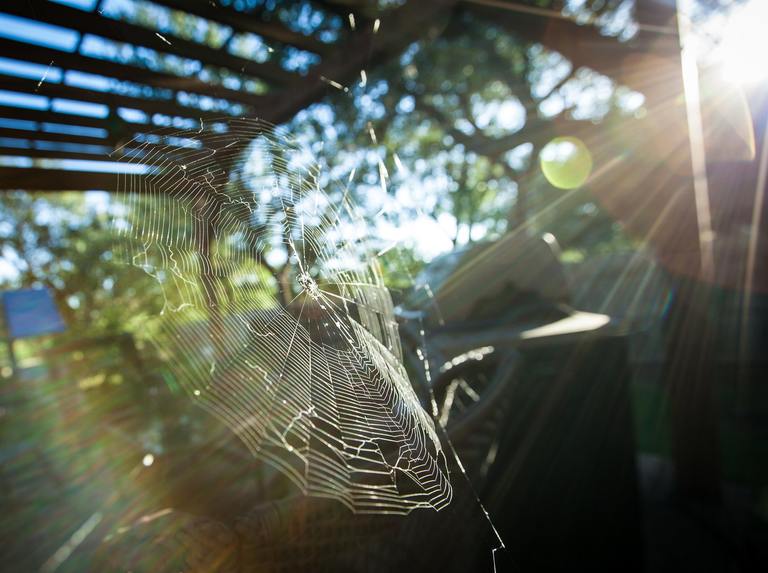
Spider webs can make a clean, well-maintained home look neglected almost overnight. You sweep the porch, clear the eaves, and brush silk away from the windows, only to find new strands in the same places a few days later. The problem is especially noticeable around entry lights, lanais, soffits, gutters, shutters, garage doors, and covered patios.
Repeated web buildup does not necessarily mean your home is infested. It usually means the exterior is giving web-building spiders what they need: steady insect prey, protected anchor points, moisture, and places where webs remain undisturbed. Learning how to keep spiders away starts with understanding and changing those conditions, not simply removing the silk you can see.
This guide explains why webs return, how to clean them up safely, which exterior changes have the greatest effect, and when recurring activity deserves a professional inspection.
Why Do Spider Webs Keep Building Up on a House?
A spider chooses a web site for practical reasons. It needs sturdy attachment points and enough passing insects to make the effort worthwhile. Eaves, porch ceilings, light fixtures, window frames, screened enclosures, railings, and the gaps around shutters offer both.
Many of those areas are also sheltered from direct rain and strong wind. A protected corner lets a web stay functional longer, while a bright light draws moths, flies, mosquitoes, and other small insects into the spider's hunting zone. Web-building spiders are most likely to gather where insects are abundant, including around porch lights, windows, woodpiles, and water sources, according to guidance on the conditions that support outdoor web-building spiders.
Common reasons one part of a home collects more silk than another include:
- Exterior lights that remain on for much of the night
- White or reflective walls and windows near a light source
- Shrubs, vines, or tree branches touching the structure
- Damp mulch, leaking spigots, clogged gutters, or overwatered beds
- Gaps and deep joints around soffits, siding, trim, and fixtures
- Porch furniture, stored items, grills, toys, and decor left undisturbed
- High numbers of flying or crawling insects around the perimeter
The location of the webs often tells us more than the number of spiders seen. Webs concentrated beside one sconce point toward a lighting and insect issue. Silk collecting near a damp corner may indicate moisture and prey activity. Repeated webs between a shrub and the siding suggest that vegetation is providing a convenient bridge and anchor.
Are Cobwebs and Active Spider Webs the Same Thing?
Homeowners often use “cobweb” to describe any dusty strand of silk, but it helps to separate an active web from an abandoned one.
An active web may look cleaner, more organized, and recently repaired. It may hold a spider, fresh prey, or a protected retreat nearby. Some spiders build recognizable circular orb webs between landscaping, porch posts, or roofline features. Others create irregular, tangled webs in sheltered corners.
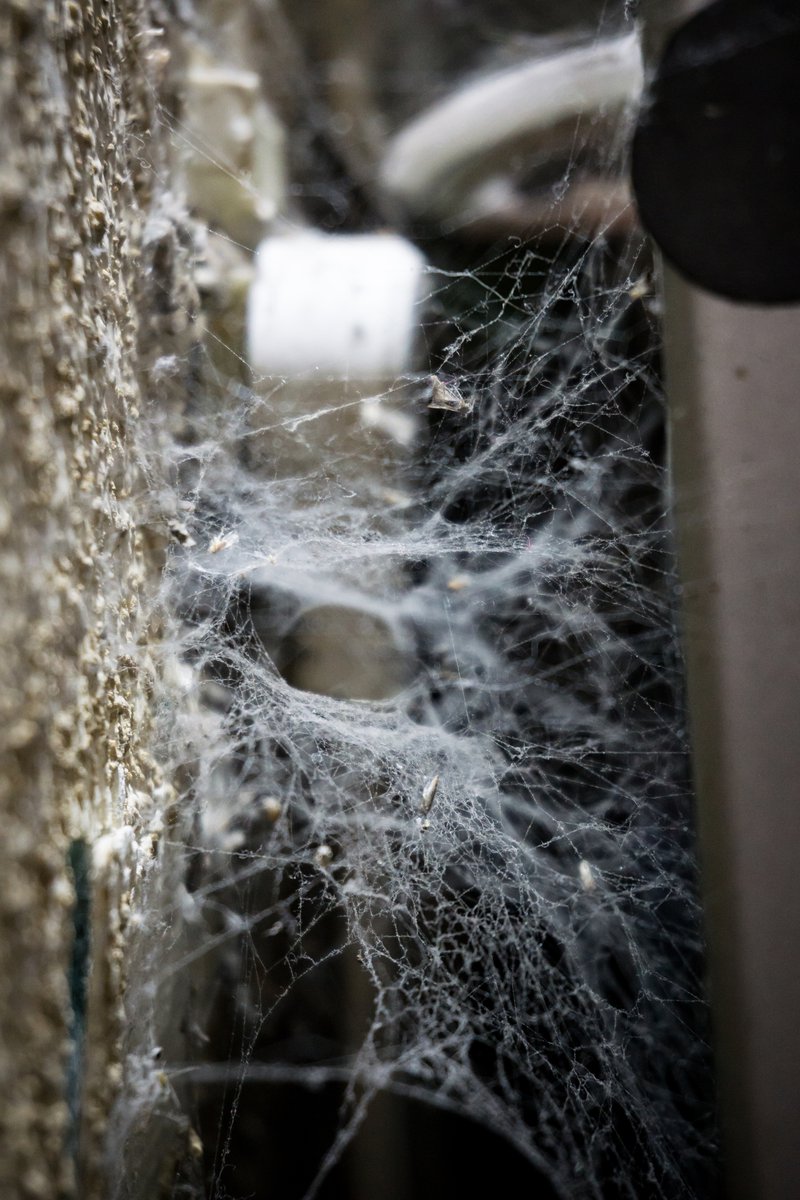
An old web becomes a cobweb after the spider leaves and dust, pollen, grass clippings, and debris collect on the silk. Cobwebs can linger under covered entries and eaves long after the original spider is gone. That is why a house can appear to have heavy spider activity even when many of the visible webs are no longer occupied.
The distinction affects what you do next. A dusty, empty strand calls for cleaning. A fresh web that returns in the same location points to an attractive site that needs closer attention. Egg sacs, repeated live spiders, or dense silk in low, protected areas deserve extra caution. Homeowners concerned about species or risk can review our spider identification and control information before disturbing the area.
How to Keep Spiders Away From Porches, Eaves, and Siding
The most reliable approach combines web removal with changes to the environment around the structure. If you only knock down silk, another spider can use the same productive location. If you reduce prey and make the site harder to use, rebuilding becomes less rewarding.
1. Remove webs on a consistent schedule
Use a long-handled web brush, soft broom, or exterior vacuum attachment to remove reachable webs from porch ceilings, window frames, soffits, railings, and light housings. A firm stream of water can clear many exterior surfaces if the material and finish can tolerate it. Extension guidance confirms that periodic removal with a broom, vacuum, or hard spray of water is a reasonable outdoor management step.
Remove the whole web instead of breaking its center. Clear anchor lines, wrapped prey, and accessible egg sacs as well. Wear gloves, keep your hands out of hidden recesses, and do not reach blindly behind shutters, furniture, electrical boxes, or stored materials.
For high eaves or steep rooflines, stay on the ground and use an extension tool. Do not lean from a ladder to reach a distant corner. A web is not worth a fall, and a pest professional can address areas that cannot be reached safely.
2. Change the exterior lighting pattern
Outdoor lighting does not feed spiders directly, but it can collect the flying insects they eat. A bright fixture mounted beside a door creates a concentrated feeding area on the exact surface you want to keep clear.
Turn off decorative lights when they are not needed, use timers or motion sensors, and consider moving a light source away from the wall while aiming it toward the entry. Yellow or other less insect-attractive bulbs may also reduce the number of insects gathering at the structure. The National Pesticide Information Center recommends adjusting outdoor lighting to attract fewer insects as part of spider management.
Do not expect one bulb change to eliminate every web. Lighting works best as part of a broader plan that also addresses moisture, vegetation, and prey.
3. Trim away web anchors and pest pathways
Cut back shrubs, palms, vines, and branches that touch siding, screens, gutters, or the roofline. Aim for enough separation to allow inspection, airflow, and routine cleaning. Remove leaf litter, stacked pots, unused decor, and other protected clutter from the foundation edge.
This step removes convenient supports for large exterior webs and reduces hiding places for many insects. It can also make cracks, water damage, and pest activity easier to see. If insect pressure remains high around the foundation, home general pest control can address the wider food-source problem rather than treating webbing as an isolated cosmetic issue.
4. Correct moisture and drainage problems
Check for dripping hose bibs, clogged gutters, condensate discharge, leaking irrigation, and beds that remain wet against the house. Moisture supports mosquitoes, flies, cockroaches, and other organisms that can become spider prey. It also creates protected microhabitats around mulch, debris, and foundation joints.
Empty small containers that hold rainwater, clean gutters, repair leaks, and adjust irrigation so walls and planting beds are not constantly wet. Where standing water is contributing to biting-insect activity, a focused mosquito control plan may help reduce one part of the exterior prey supply.
5. Seal gaps and repair screens
Although exclusion is often discussed as an indoor-spider solution, it matters outside too. Gaps around soffits, doors, windows, utility lines, vents, and siding create protected recesses where spiders can retreat between feeding periods. Damaged screens may also allow insects into a porch or lanai, where spiders follow the available food.
Replace torn screening, renew worn weatherstripping, and seal appropriate cracks with a product made for that building material and location. Do not block drainage openings or necessary ventilation. If you are unsure whether a gap is intentional, ask a qualified building professional before sealing it.

Where Should You Look for the Cause of Web Buildup?
Walk the exterior after sunset with a flashlight while staying on clear, stable ground. Nighttime observations can reveal which lights draw insects, where spiders occupy fresh webs, and which damp or sheltered zones remain active.
Inspect these areas first:
- Porch and garage lights, especially the wall above and below each fixture
- Window corners, shutters, door frames, and screened-enclosure joints
- Soffits, fascia transitions, gutters, downspouts, and roof overhangs
- Covered patios, grills, outdoor furniture, planters, and stored equipment
- Spigots, irrigation heads, condensate lines, drains, and damp mulch
- Shrubs, branches, vines, fences, and cables that touch or approach the house
- Low, dark recesses around utility boxes, crawl-space openings, and foundation gaps
Look inside the webs for clues. Numerous moths or small flies point toward lighting. Mosquitoes and moisture-loving insects suggest a water issue. Roach nymphs or other crawling insects near low webs may signal perimeter harborage. Our cockroach pest control guide can help homeowners understand why damp, protected exterior areas sometimes support prey that keeps spiders nearby.
Take a few photos and note where fresh webs return after cleaning. A simple location record turns a vague complaint into a useful pattern. It also gives a pest professional better information if the problem continues.
What Does Not Reliably Solve Exterior Web Buildup?
Homeowners understandably want one product that keeps every porch and eave clear, but recurring web buildup is usually an environmental problem with several causes. Be cautious about relying on:
- One-time web removal without changing the site
- Strong-smelling home remedies with inconsistent results
- Ultrasonic devices that do not address insects, moisture, or entry gaps
- Broad, repeated spraying without identification or a site plan
- Foggers used in garages, attics, or enclosed porches
- Sealing every opening without considering drainage and ventilation
Spiders do not groom themselves in the same way many insects do, and they spend much of their time above treated surfaces. That can make casual surface spraying disappointing. Even when a pesticide is appropriate, it must be labeled for the pest and application site and used exactly as directed. Targeted treatment works best when paired with web removal, prey reduction, exclusion, and monitoring.
The goal is also not to eliminate every spider from the landscape. Spiders are beneficial predators outdoors. A large orb web at the far edge of the yard can help capture insects without creating a problem for the household. Management makes the most sense where webbing interferes with doors, walkways, seating, play areas, screens, or the appearance and use of the home.

How to Keep Spiders Away Without Ignoring Warning Signs
Most exterior web builders are nuisance pests, but homeowners should not handle an unfamiliar spider or reach into a protected web site. Low, irregular, strong-looking webs in quiet areas such as under patio furniture, beside stored materials, inside meter enclosures, or near clutter deserve caution. If you suspect a widow, leave the area undisturbed and review black widow identification and control guidance.
It is equally useful to recognize that not every spider makes a prey-catching web. Wolf spiders are active hunters, so repeated sightings of large roaming spiders require a different inspection than web buildup does. Our wolf spider information page explains this common distinction.
Contact a professional when:
- Fresh webs return quickly across several sides of the home
- Webbing is concentrated too high to remove safely
- You find multiple egg sacs or many young spiders
- Spiders occupy electrical, utility, play, or high-traffic areas
- You suspect a medically important species
- Heavy fly, mosquito, roach, ant, or other pest activity is also present
- Moisture, drainage, or structural gaps appear to be supporting the problem
A thorough inspection should identify the spider or at least its web type, map the activity, check for prey insects, evaluate moisture and lighting, and locate hiding places and access gaps. Treatment, if needed, should be targeted to those findings.
Frequently Asked Questions About Webs on Homes
Why do webs come back right after I remove them?
The location is probably still productive. It may have good anchor points, shelter from weather, and a steady flow of insects. Repeated removal can make the location less stable, but the longer-term answer is to change what attracts spiders and prey to that exact spot.
Does pressure washing keep spiders away?
Pressure washing can remove silk, debris, and some insects from suitable exterior materials, but it does not correct lighting, moisture, landscaping, or hidden prey. It can also damage screens, seals, paint, stucco, wood, or electrical fixtures when used incorrectly. Use the gentlest effective cleaning method and follow the surface manufacturer's care guidance.
Do porch lights cause spider webs?
Porch lights can indirectly contribute by attracting flying insects. Spiders then build close to the feeding opportunity. Shorter operating times, motion activation, a less insect-attractive bulb, or a fixture positioned away from the wall can reduce this effect.
How often should I remove exterior webs?
During periods of high activity, inspect problem zones weekly and remove new silk before dust and debris accumulate. The right interval depends on insect levels, weather, landscaping, and the design of the home. If several webs return within days, shift your attention from cleaning frequency to the underlying attraction.
What is the best first step for how to keep spiders away?
Start by removing existing webs and observing where they return. Then reduce insects around lights, correct damp areas, trim vegetation away from the building, clear sheltered clutter, and close appropriate gaps. Those steps reveal whether the issue is routine exterior activity or a larger pest problem.

A Cleaner Exterior Starts With the Cause
Spider silk on a porch or eave is more than a housekeeping issue. It is evidence that the location offers food, shelter, and reliable attachment points. The best strategy for how to keep spiders away is therefore layered: remove the web, reduce insect prey, manage lights and water, create space around the structure, repair screens, and seal appropriate gaps.
Some outdoor spider activity is normal and beneficial. The practical goal is to keep webs away from the parts of the home people use and to respond carefully when activity becomes heavy, persistent, or potentially hazardous. When cleaning alone is not changing the pattern, a professional inspection can identify what the webs are telling you and address the conditions that keep drawing spiders back.
Meta description: Learn how to keep spiders away by reducing web buildup on eaves, porches, siding, and lights with practical cleaning and prevention tips for modern homes.