Love Bugs: Why They Swarm, When They Peak, and What Homeowners Should Actually Do

Published: May 27, 2026
Introduction
Many homeowners start searching for answers when love bugs suddenly seem to cover windshields, porch screens, garage doors, and walkways all at once. They show up fast, make a huge mess, and can leave people wondering whether they are dangerous, whether they are getting into the house for a reason, and whether spraying the yard will solve the problem.
From a pest control perspective, this is one of those insects that creates a lot of frustration without creating the kind of direct threat people usually expect from a serious infestation. The key is understanding what they are, what attracts them, what does not work, and what realistic prevention looks like when a seasonal swarm hits.

What Are Love Bugs and Why Do They Show Up in Such Big Numbers?
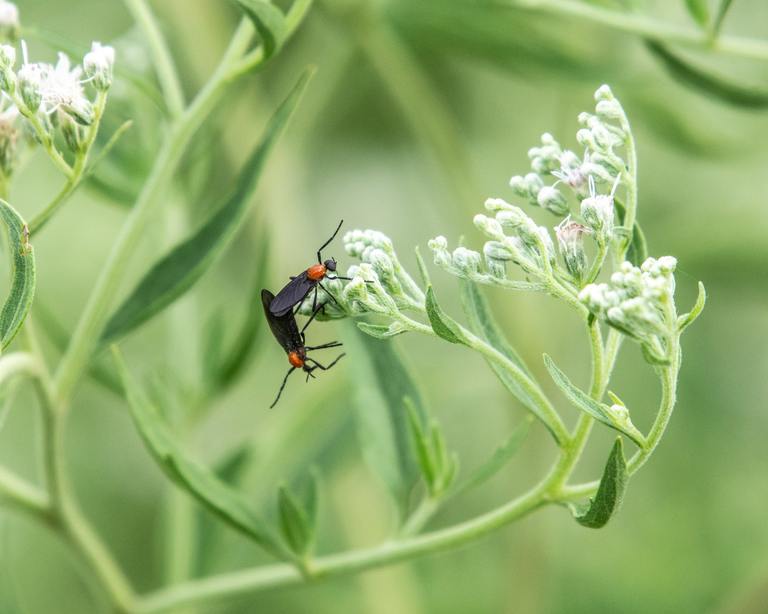
At the simplest level, love bugs are small flies that appear in noticeable seasonal waves, especially in Florida and across parts of the Gulf Coast and Southeast. According to research describing their biology, distribution, and nuisance behavior in southern states, they are a fly species rather than a beetle, wasp, or stinging pest.
What makes them so memorable is the way they are often seen attached in pairs while flying or resting on walls, plants, or cars. That pairing behavior is tied to reproduction, which is also why their activity can seem so intense all at once. During peak periods, homeowners may see them clustering near roadsides, grassy areas, mulch, and light-colored exterior surfaces.
Their immature stage develops in decaying organic matter. That matters because lovebug pressure often builds in areas with:
- thick grass thatch
- decaying plant debris
- damp organic buildup
- roadside vegetation
- warm, humid seasonal conditions
This is one reason a home can feel surrounded by them even when the insects are not truly breeding inside the structure itself. The yard, roadside, neighborhood landscape, and weather pattern all play a role.
If you are trying to make sense of broader seasonal insect pressure around the property, the company’s Florida pest library and customized pest control program are both helpful starting points for understanding how outdoor conditions influence what shows up around the home.
When Do Love Bugs Peak in Florida and the Southeast?
For most homeowners, the most important timing question is not whether these insects exist year-round in some form, but when they become visible enough to be a true nuisance. In Florida, the biggest flights usually happen in spring and again in late summer or early fall.
Mating peaks generally last about four weeks and are most noticeable in May and September, with activity strongest during the daytime. In practical terms, that means homeowners often notice sudden spikes rather than a slow, steady buildup.
Why do they seem worse on some days than others?
A few conditions tend to make swarms feel much heavier:
- Warm temperatures
- Bright daytime conditions
- Areas with low wind
- Roads and driveways that hold heat
- Neighborhoods with lots of grass, mulch, and roadside vegetation
This is why some homeowners barely notice them at home but get coated with them during a daytime drive, while others see them gathering on entryways, carports, lanais, or garage fronts.
Are they a sign of a dirty property?
Not necessarily. That is a common assumption, but it is not usually accurate.
A messy yard can contribute to more favorable conditions, especially if there is a lot of wet organic debris, but heavy flights are often driven by regional conditions rather than one homeowner doing something wrong. You may have a very clean property and still deal with a rough seasonal burst simply because the surrounding area is producing and funneling them.
That said, reducing excess organic buildup and keeping the landscape trimmed can still help lower resting and development sites. A strong lawn pest control program can also be valuable when a yard has multiple nuisance-pest issues tied to thick growth, damp thatch, and seasonal activity around the home.

Do Love Bugs Bite, Sting, or Damage Your Home?
This is usually the first thing worried homeowners want answered, and thankfully the answer is reassuring.
Love bugs do not bite, sting, or spread disease. They are mainly a nuisance and do not bite, sting, or transmit diseases. That means they are very different from pests that threaten health, damage wood, or establish indoor infestations.
What they can do is create secondary problems that feel serious in the moment:
- They can splatter heavily on cars and windshields.
- Their remains can be difficult to remove after baking in the sun.
- Large numbers around entryways can make outdoor areas unpleasant.
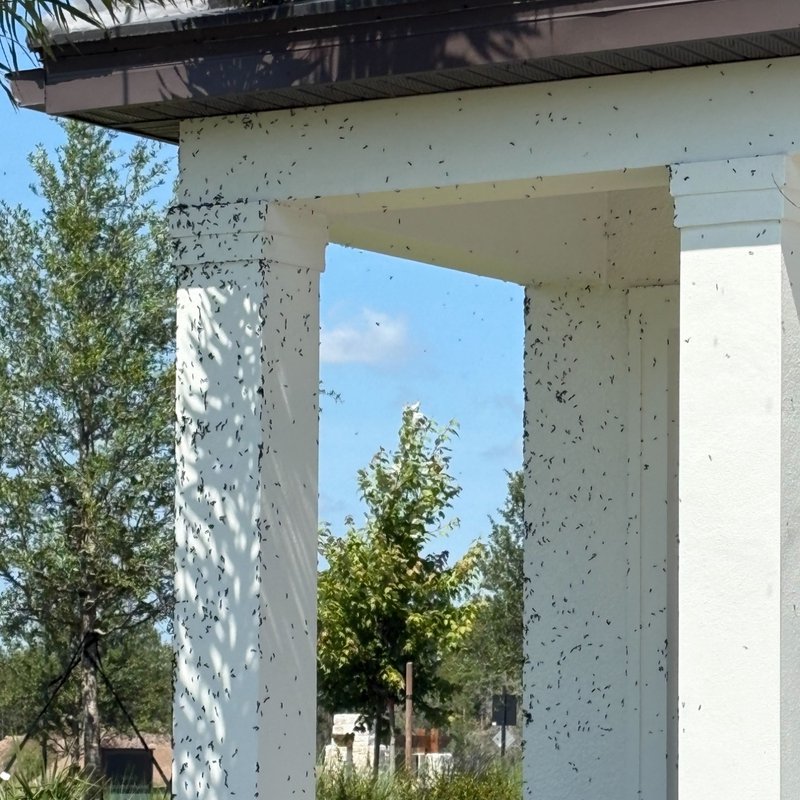
- They can accumulate on screens, siding, garage doors, and front porches.
- They can drift indoors through open doors or weak screening.
So while they are not dangerous in the way wasps, termites, or biting flies can be, they are still a legitimate homeowner nuisance.
Can they damage your house?
Usually not in a structural sense.
They are not wood-destroying pests. They are not chewing wiring. They are not nesting in walls the way more persistent indoor pests might. When homeowners feel overwhelmed by them, the issue is usually exterior annoyance, cleanup, and repeated seasonal pressure rather than property destruction.
If your concern is that outdoor insect pressure may be part of a bigger pattern around the structure, a broader Florida pest control inspection can help distinguish between a short seasonal swarm and a more persistent exclusion or harborage problem.
Why Are Love Bugs So Bad Around Roads, Cars, and Entryways?
This is where frustration peaks for most people. Love bugs often seem worst around highways, driveways, parking areas, and sun-exposed building fronts. That is not your imagination.
Researchers explain that heat and traffic-related conditions can intensify the problem, which is one reason these flies become such a headache for motorists. Their swarms are often more obvious around hot surfaces, vehicle movement, and open travel corridors than in shaded backyard corners.
For homeowners, that usually creates three major pressure points:
1. Vehicles
Cars pick up the worst of it because they move through active flight zones at the exact height where these insects are drifting and mating. Once splattered on the front of a vehicle, they can bake onto paint, grills, and glass quickly.
2. Light-colored exterior surfaces
Garage doors, soffits, lanais, entry columns, and bright walls often become temporary resting spots. The insects may gather there in noticeable numbers during a flight period, especially on warm afternoons.
3. Entry points
Open garage doors, torn screens, frequently used patio doors, and unsealed exterior gaps can let some of them drift inside. Usually this is incidental, but when swarms are heavy, even a small opening can turn into an ongoing annoyance.
This is similar to what homeowners experience with other outdoor nuisance insects. For example, seasonal flying pests may need a different response than mosquito control services, because mosquito reduction focuses heavily on breeding water and resting sites, while lovebug management is more about timing, exclusion, airflow, cleanup, and expectations.
How Can You Reduce Love Bugs Around Your Home and Vehicle?
This is the part people care about most, and it helps to be direct: there is no perfect one-step cure. A realistic plan works better than chasing a miracle spray.
Love bugs are best managed with a combination of prevention and nuisance reduction.
Start with the practical steps that help most
- Wash bug residue off vehicles quickly.
The longer remains stay on a hot vehicle, the harder they are to remove and the more likely they are to affect the finish. - Apply protective wax before heavy seasonal periods.
This does not stop impacts, but it can make cleanup easier. - Keep screens in good shape.
Repair torn screens, adjust door sweeps, and reduce the amount of time garage and patio doors stay open during peak daytime activity. - Use airflow where people gather.
Fans on patios, lanais, and porches can help because these insects are weak fliers. - Trim and clean the landscape.
Reduce excessive grass thatch, wet leaf buildup, and decaying organic debris where practical. - Plan outdoor tasks around peak activity.
Because flights are mainly daytime events, timing matters more than many people realize.
What usually does not work well?
This is where many homeowners lose time and money.
- Random over-the-counter sprays used after swarms arrive
- Treating only one small area of the yard
- Expecting one treatment to stop a region-wide flight
- Ignoring screens and door gaps while focusing only on chemicals
- Letting bug residue sit on cars for days
Chemical control is generally ineffective because the insects are widespread and continue drifting in from surrounding areas. That is an important reality check. If the surrounding neighborhood, roadside vegetation, and weather are all contributing, a quick spray alone will rarely give the kind of relief homeowners expect.

When does professional help make sense?
Even though they are short-lived seasonal pests, professional help can still be worthwhile when:
- swarms are repeatedly collecting on a specific part of the home
- screens, soffits, or entry gaps may be contributing to indoor drift
- the property has heavy outdoor pest pressure beyond lovebug season
- nuisance activity overlaps with other insects and the source is unclear
- the homeowner wants a broader inspection instead of guesswork
A good technician can help you think beyond the immediate swarm and evaluate whether the bigger issue is landscape conditions, exclusion gaps, recurring outdoor pressure, or the need for a more targeted seasonal plan. That same source-first approach is reflected in the company’s educational breakdown of how pest control works, which is much more effective than reacting to every insect with the same treatment.
What Should Homeowners Remember Most?
If you only remember a few takeaways, make them these:
- Lovebug swarms are dramatic, but they are usually temporary.
- They are messy and frustrating, but they are not biting or stinging pests.
- Car cleanup and entry-point prevention matter more than panic spraying.
- Yard conditions can influence pressure, but regional flights are a major factor.
- Professional guidance is most useful when the nuisance keeps repeating or overlaps with other outdoor pest issues.
Conclusion
Seasonal lovebug activity is one of those classic Southern and Florida homeowner headaches that feels bigger than it is. The insects show up in huge numbers, coat vehicles, crowd entryways, and make outdoor spaces irritating for a few weeks at a time. But they are mostly a nuisance, not a structural or health threat.
The smartest response is a calm one: clean vehicles quickly, protect paint, reduce open entry points, improve airflow around gathering areas, and keep the landscape from holding excess organic buildup. When swarms feel unusually intense or seem tied to broader outdoor pest problems, a professional inspection can help separate what is normal seasonal pressure from what deserves a more customized plan. For homeowners who want that next step, the contact page for an inspection request is the right place to start.