
Introduction
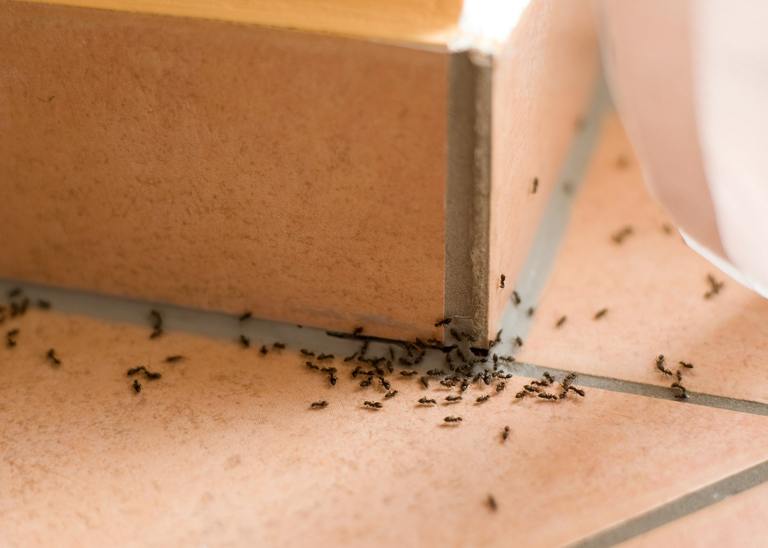
Ants are easy to overlook until a few scouts become a steady trail across the kitchen counter. Yet the behaviors that make an indoor ant problem frustrating are the same behaviors that make these insects remarkable. They cooperate, communicate, divide work, protect their young, and adjust to changing conditions as a colony.
These ant facts go beyond trivia. They explain why wiping up the ants you see may not solve the problem, why different species require different control strategies, and why a trail can reveal more about the colony than a single ant ever could.
Quick Ant Facts for Homeowners
Here is the short version:
- Ants are social insects that live in organized colonies.
- Most ants seen gathering food are female workers.
- Colonies communicate largely through chemical signals called pheromones.
- Workers can share liquid food with other colony members.
- An ant colony can function like one coordinated living system.
- Ants pass through egg, larva, pupa, and adult life stages.
- Winged ants are reproductive males and females, not a separate species.
- Some species form new nests through a process called budding.
- Different ant species prefer different foods and nesting conditions.
- Some ants bite, some sting, and many household species do neither unless disturbed.
- Carpenter ants excavate wood for nesting space but do not eat it.
- Reliable control depends on identifying the species and addressing the colony, not only visible workers.
For help comparing common species, nesting sites, and warning signs, the ant pest control library provides a useful homeowner overview.

Why Are Ant Colonies So Organized?
Ants are eusocial insects. In plain English, that means they live cooperatively, care for young together, and divide essential jobs among colony members. The queen's main role is reproduction. Workers gather food, feed larvae, maintain the nest, move brood, and defend the colony. Males and new queens are produced for reproduction.
Most workers are female. Depending on the species and the worker's age, one may serve as a nurse inside the nest before later shifting to foraging or defense. Some species also have workers of noticeably different sizes. Larger workers may be called majors or soldiers, although they are still members of the worker caste.
This division of labor helps the colony continue even when individual workers die. It also explains why killing the ants on a countertop rarely eliminates the source. Those foragers are only one working group connected to a larger nest.
Insect colonies are highly organized groups whose members use chemical signals and perform specialized roles. Scientists sometimes compare a colony to a single larger organism, called a superorganism, because its members work together as parts of one system. That coordinated colony structure is one of the most important reasons ants thrive in so many environments.
How Do Ants Communicate Without Talking?
Ants rely heavily on chemicals called pheromones. A foraging worker that finds food can leave a scent trail as it returns to the nest. Other workers detect the chemical with their antennae and follow the route. As more ants travel the same path, they can reinforce it.
That is why one or two ants near a pet bowl can become a defined line within hours. The ants are not arriving independently. They are responding to information left by earlier workers.
Pheromones can do more than mark food routes. Depending on the species and signal, they may help ants recognize nestmates, sound an alarm, organize defense, or guide colony movement. Ants also use touch and vibration. Some species create vibrations by rubbing body parts together or tapping against a surface.
For a homeowner, the visible trail is useful evidence. Before wiping it away, note where it begins, where it ends, and where the ants disappear into a crack or void. Our guide to the food, moisture, and hidden routes that attract ants explains how to read that path without assuming the nest is directly behind the wall.

Ant Facts About Food Sharing and Colony Survival
One of the most useful ant facts for understanding control is that workers can share liquid food. A forager stores food in a crop, sometimes described as a social stomach, and can pass it to another colony member mouth to mouth. The process is called trophallaxis.
Food sharing allows workers that remain inside the nest to receive nourishment. It can also help feed larvae, queens, and other ants that do not visit the original food source. This is one reason carefully selected ant baits can work differently from fast-acting contact sprays. A worker must survive long enough to carry an attractive bait back and share it within the colony.
The feeding preference matters. Some ants readily collect sugar-rich liquids, while others may respond more strongly to proteins, fats, seeds, dead insects, or honeydew produced by sap-feeding insects. Colony needs can change by season and life stage. A product that one species accepts may be ignored by another.
Homeowners should not mix pesticides, move bait placements randomly, or put repellents around a bait. Always follow the product label. When the ant species, nest location, or food preference is uncertain, a professional ant control inspection and treatment plan can match the response to the biology instead of relying on trial and error.
Are Ants Really Strong for Their Size?
Ants can carry loads that look enormous compared with their bodies, but simple claims such as "an ant can lift 50 times its weight" should be treated as a general illustration rather than a rule for every species. Carrying ability depends on the ant's size, body shape, species, the object, and whether the load is being lifted or dragged.
Their small scale gives them an advantage. As an animal becomes smaller, its body mass decreases faster than the cross-sectional area of the muscles that support it. An ant is not stronger than a person in absolute terms, but it can handle a much larger load relative to its own weight.
Cooperation adds another advantage. Several workers can surround a large food item, adjust their grip, and move it together. If you see ants hauling a dead insect or a large crumb, you are watching individual strength combine with group coordination.
How Do Ants Find Their Way Back to the Nest?
Pheromone trails are important, but ants do not all navigate in exactly the same way. Depending on the species, workers may also use visual landmarks, the position of the sun, ground texture, polarized light, or a learned sequence of turns. A worker can combine several cues to move between the nest and a food source.
Inside a home, edges make those routes easier to repeat. Baseboards, cabinet seams, plumbing lines, window frames, and countertop edges provide sheltered travel lanes. Outdoors, ants may follow foundations, landscape borders, utility lines, branches, or irrigation tubing.
This navigation ability is practical information for an inspection. A line moving along a wall does not prove the nest is in that wall. Workers may travel from an outdoor colony, pass through one tiny opening, and continue a considerable distance indoors. Homeowners can follow regular ant routes because a pheromone trail can help lead toward the nest.

What Is the Ant Life Cycle?
Ants undergo complete metamorphosis through four stages:
- Egg: A queen lays tiny eggs inside the protected nest.
- Larva: A legless, grub-like larva hatches and depends on workers for food and care.
- Pupa: The developing ant transforms into its adult form. In some species, the pupa is enclosed in a cocoon.
- Adult: The mature ant becomes a worker, queen, or male according to species biology and colony conditions.
Queens do not manage the colony like human rulers. Their essential function is reproduction. Workers make many local decisions in response to food, brood, nest conditions, and chemical cues. In a mature colony, the queen may remain deep inside while workers handle nearly every task around her.
Newly mated queens of many species start a protected chamber and raise the first brood. Once those workers mature, they take over foraging and brood care while the queen continues laying eggs. Some difficult household ants can also create new nests by budding, with queens and workers leaving together. This ant life cycle and budding behavior helps explain why species identification matters before treatment.
Why Do Some Ants Have Wings?
Winged ants are reproductive members of a mature colony. Males and unmated queens may leave the nest during a mating flight, often when temperature, humidity, and recent rainfall are favorable. After mating, a queen of many species sheds her wings and searches for a protected place to begin a colony. Males generally have a much shorter adult life.
A sudden indoor appearance of winged insects deserves attention because homeowners often confuse flying ants with termite swarmers. Ant swarmers have elbowed antennae, a narrow waist, and front wings longer than the rear wings. Termite swarmers have straighter antennae, a broader waist, and two pairs of wings that are close to equal in length.
Our guide to termite wings versus flying ant wings shows the fastest features to compare. Save a specimen or take clear photos instead of spraying and discarding all the evidence.
What Are Ant Supercolonies and Budding?
Not every ant colony is a single nest with one queen. Some species have multiple queens and many connected nesting sites. Workers from those nests may cooperate rather than fight, creating a broad network sometimes described as a supercolony.
Other pest ants spread through budding. A queen leaves with a group of workers and establishes a nearby nest without starting from scratch. Ghost ants, Argentine ants, some fire ants, and pharaoh ants can use this strategy.
Budding is more than an interesting biological detail. A poorly chosen repellent treatment may disturb certain multi-queen species and complicate their movement. The right response depends on knowing which ant is present, how the nests are connected, and what the label permits.
Big-headed ants offer another example of colony organization that matters around homes. Their colonies include small minor workers and larger-headed major workers, and extensive populations can create repeated soil deposits beside slabs and pavers. Homeowners seeing that pattern can review the guide to identifying and managing big-headed ants for more specific clues.

Do All Ants Bite or Sting?
No. Ant defenses vary widely.
- Some ants bite with their mandibles.
- Some can sting and inject venom.
- Some bite first and apply irritating chemicals to the skin.
- Many small household ants are mainly nuisance pests and do not pose a significant sting risk.
Fire ants are the household example most people recognize. When a mound is disturbed, workers can climb onto a person or animal and sting repeatedly. A localized burning sensation and itchy pustules can develop. Trouble breathing, throat swelling, dizziness, or a widespread severe reaction requires emergency medical help.
Avoid handling unidentified ants with bare hands, especially around mounds, landscape beds, woodpiles, and utility boxes. Keep children and pets away from active nests until the species and risk are clear.
Do Ants Damage Homes?
Most ants do not eat building materials. They may still contaminate food, become a persistent indoor nuisance, nest in protected voids, or sting around a yard. Carpenter ants are the important wood-related exception to understand.
Carpenter ants do not digest wood as termites do. They excavate galleries to create nesting space, often in damp, decayed, or moisture-damaged material. Coarse wood shavings, insect fragments, recurring indoor activity, or large ants emerging from trim can point to a nearby nest. The guide to recognizing carpenter ant frass explains how to document this evidence before repairs cover it.
Even with carpenter ants, the pest may be only part of the issue. A roof leak, plumbing problem, wet window frame, decayed porch post, or poorly ventilated crawl space may have made the site suitable. Lasting correction often includes colony control, moisture repair, and replacement of material that has lost strength.

What Do These Ant Facts Mean When Ants Enter Your Home?
The practical lesson is simple: visible ants are evidence, not the entire infestation. Use their behavior to guide the next step.
Start With Observation
Photograph the ants close up and note their color, size, trail, time of activity, and where they disappear. Preserve a few specimens in a sealed container if identification is uncertain.
Remove Easy Food and Water
Clean spills, vacuum crumbs, rinse recycling, secure pantry goods, and wash pet feeding areas. Repair leaks and dry damp surfaces. Sanitation can reduce resources, although it will not eliminate a well-established nest by itself.
Inspect the Route Indoors and Outside
Check gaps around windows, doors, utility penetrations, slab joints, rooflines, and plumbing. Trim branches and vegetation away from the structure. Move debris and damp wood away from the foundation.
Avoid Random Spraying
A contact spray may kill exposed workers while leaving queens, brood, and hidden workers untouched. With some species, repellent applications can also disrupt trails or alter nesting patterns. Do not apply pesticides to an unidentified insect or in a way that conflicts with the label.
Escalate When the Clues Point to a Larger Problem
Professional identification is especially useful when:
- Ants return after careful cleaning and exclusion.
- Activity appears in several rooms.
- Winged ants emerge indoors.
- Large ants are associated with damp wood or coarse debris.
- Mounds create a sting hazard for people or pets.
- The trail leads into an inaccessible wall, slab, roofline, or electrical area.
- DIY bait is ignored or activity becomes more scattered.
Fascinating Insects, Frustrating Houseguests
Ants succeed because the colony can do what one insect cannot. Workers share information, move food, protect brood, adjust their labor, and connect distant resources to a hidden nest. Those abilities deserve appreciation outdoors, but they also explain why an indoor trail can be so persistent.
The best response is not to treat every ant the same. Identify the species, preserve the trail as a clue, remove supporting food and moisture, correct access points, and use a colony-focused strategy when activity continues. Understanding these ant facts turns a confusing stream of insects into useful evidence and helps homeowners choose a safer, more effective next step.